


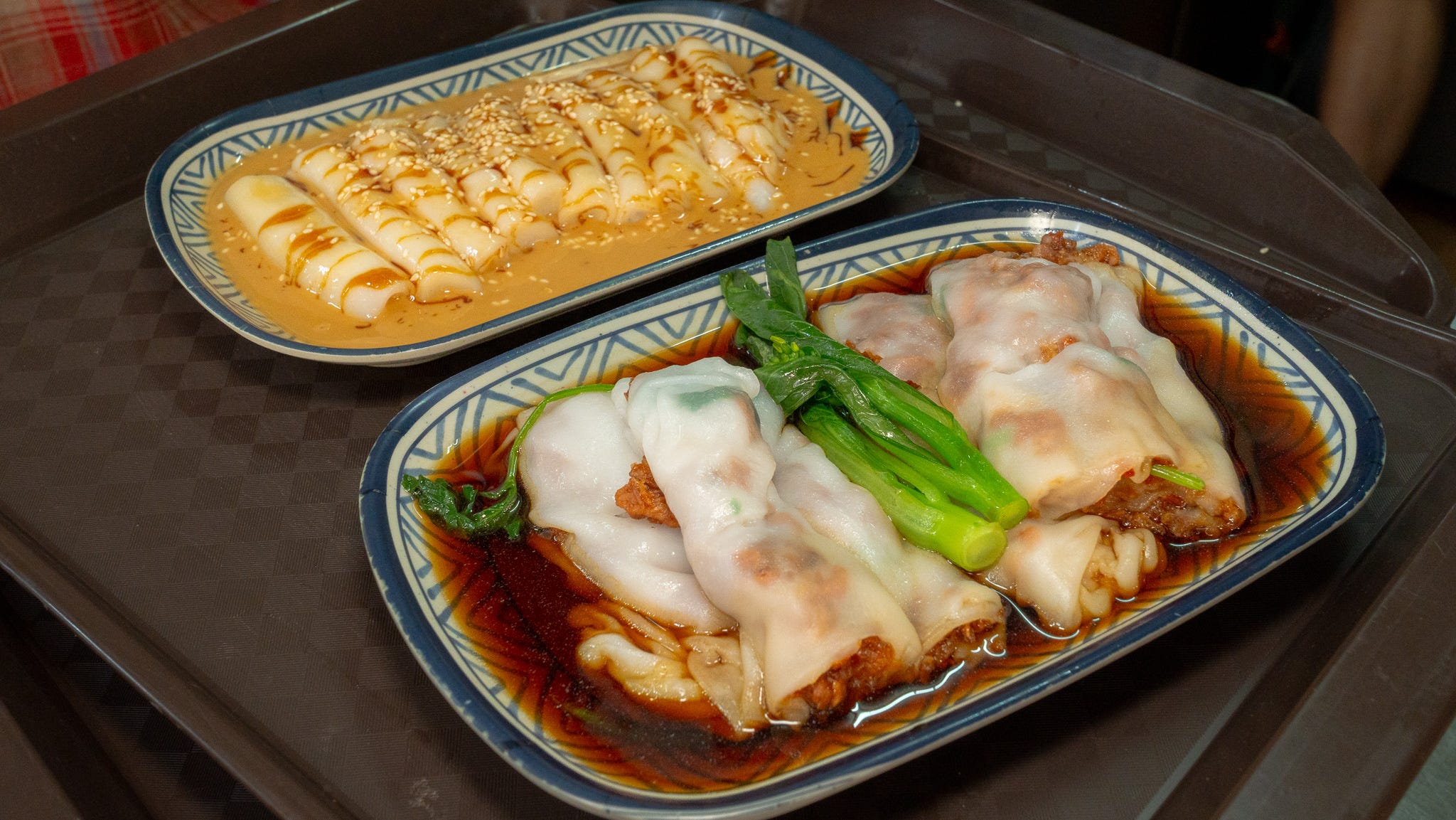
if you live in Singapore, you probably have a “default” breakfast. For most, it’s kaya toast with soft-boiled eggs. for me, it’s almost always Chee Cheong Fun.
one of the best things about this dish is how much variety you can find in a simple, single roll. you have the local style—thick rice rolls doused in that dark, sweet sauce with sesame seeds; the Hong Kong Style, where thin translucent sheets are wrapped around fillings like char siew or prawns; and the real traditional kind which is swimming in a rich, savoury-sweet peanut sauce.
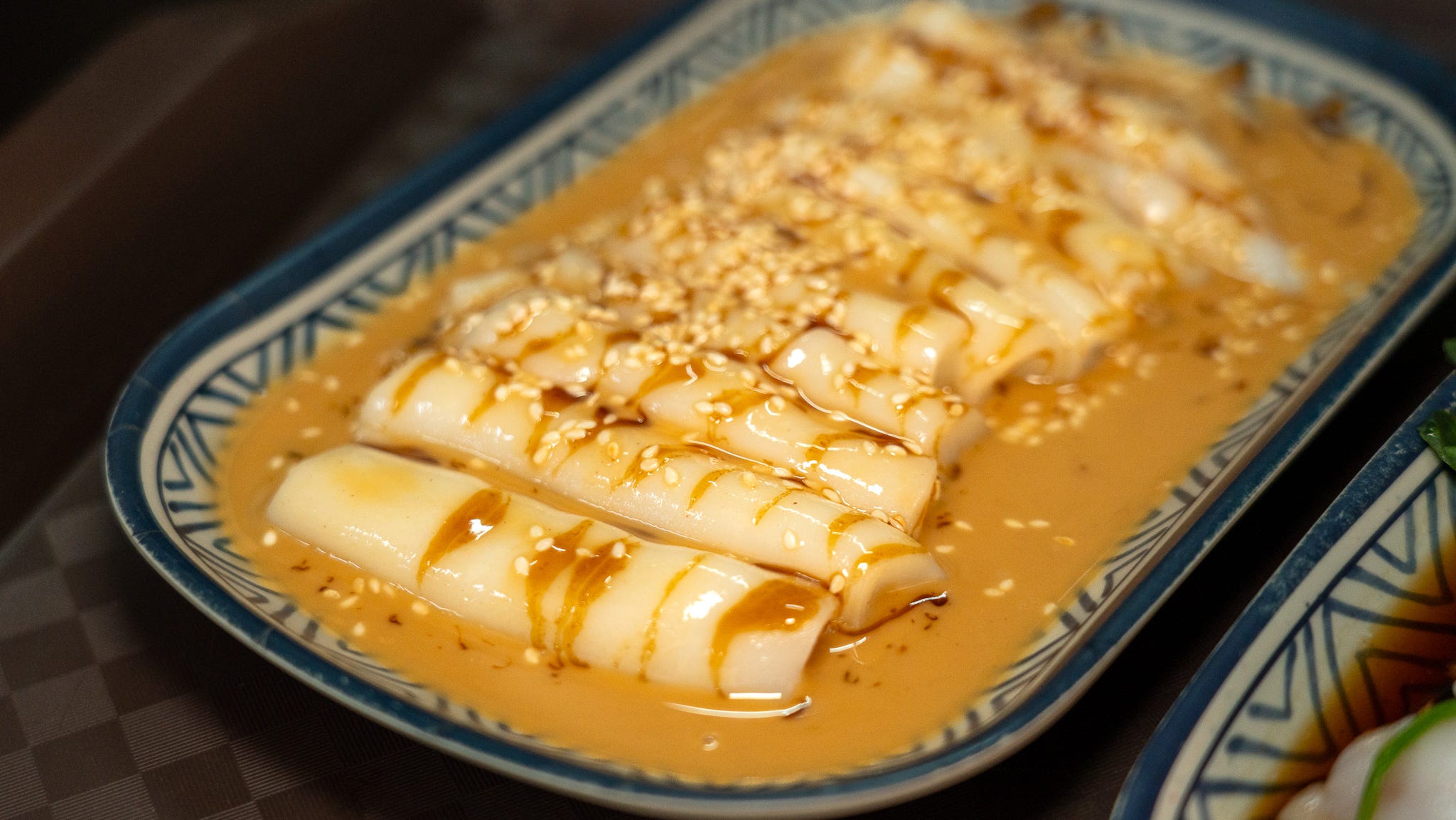
recently, I stumbled upon Xin Kee Hong Kong Cheong Fun, and it reminded me why I love the hawker scene here. it’s not just about the food; it’s about the people who are quietly perfecting a forgotten craft.
I took the courage to speak to the owner to find out more about this craft and his store. he even let me try my hand at rolling a rice roll! it looks incredibly simple when you’re just a customer, but the technique is actually quite demanding.
there’s a specific rhythm to it: the way he scoops exactly the right amount of batter, spreads it across the cloth in one smooth motion (the hardest part), then he lifts it off the steamer and rolls it into those perfect, uniform pieces. he moves with a kind of seasoned efficiency, that only comes from doing this thousands of times.
naturally, I asked him if this was something I could pull off in my own kitchen. He was honest: the texture will never be exactly the same. but, he told me if you aren’t affected by the texture, it’s definitely possible to make a respectable version at home. if you just want the flavour of a fresh rice roll, and the sense of achievement, the recipe below is a great place to start :)
 Tiktok failed to load.
Enable 3rd party cookies or use another browser
looking for more inspirations? check out the following recipes:
Lotus Leaf Glutinous Rice Chicken (珍珠雞)

we recently hosted Chef Vicky Lee, the Chef-Owner of Ayah Dim Sum in our kitchen where she taught us through the steps of making a POPULAR Hong Kong-style Dim Sum.
Pan Fried Dumplings (锅贴) - but HALAL!

you heard that right! this is a halal pan fried dumpling that you should definitely try for your next meal. its crispy and juicy at every bite!
Abacus Seeds (算盘子)

I’ve always heard people say that abacus seeds are a labour of love—and honestly, I never truly understood what that meant until I tried making them myself. For the longest time, I was on a mini quest to find someone Hakka who could teach me how to make this dish. I crave it once in a while, but it’s getting a little hard to find in Singapore these days…