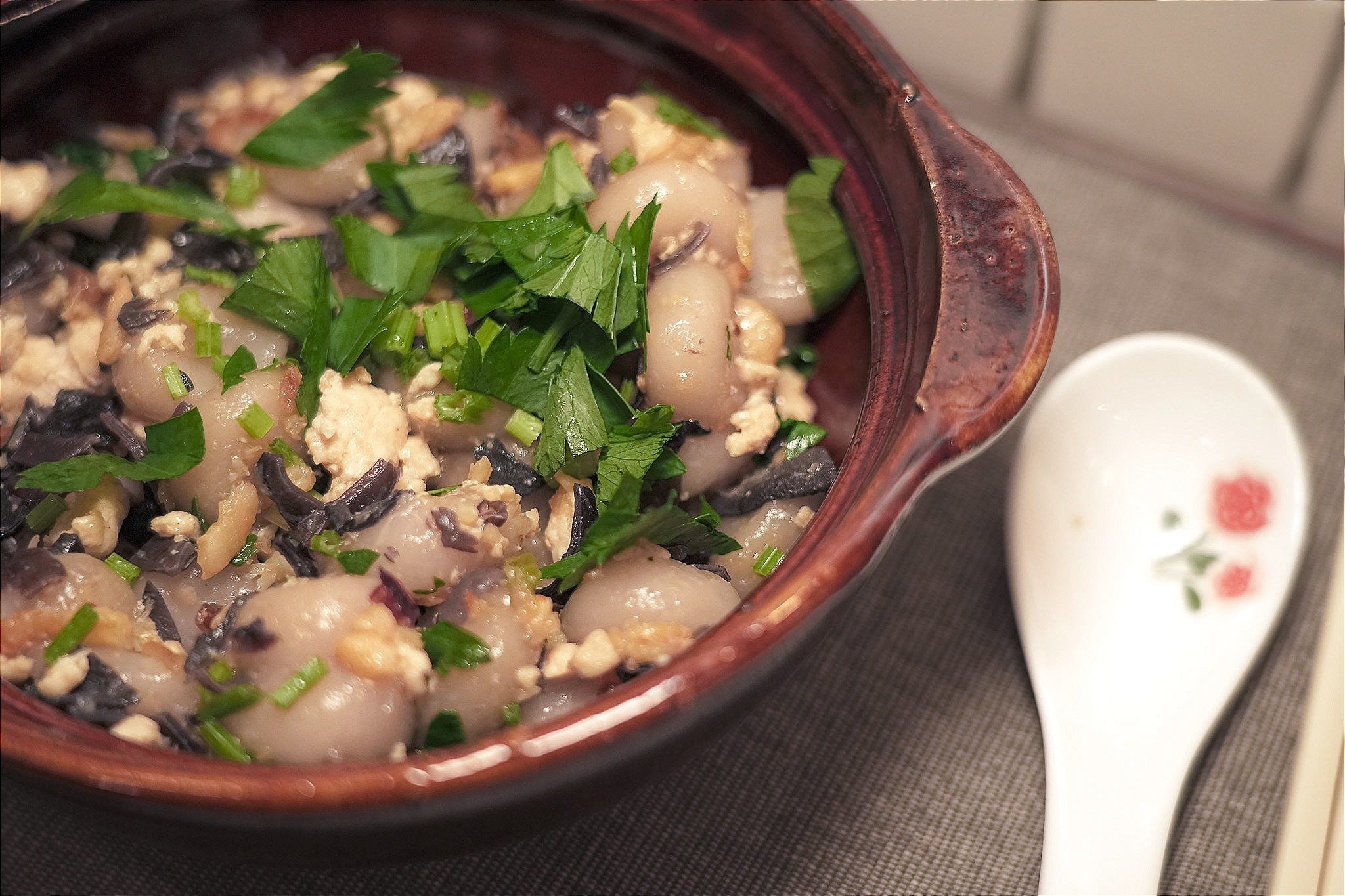
Abacus Seeds (算盘子)
some say you eat this to become smarter, others say you become richer, but why no one says I can be both?
I’ve always heard people say that abacus seeds are a labour of love—and honestly, I never truly understood what that meant until I tried making them myself. For the longest time, I was on a mini quest to find someone Hakka who could teach me how to make this dish. I crave it once in a while, but it’s getting a little hard to find in Singapore these days. I’d like to think it’s a dying dish here… which is such a pity, because they’re delicious!
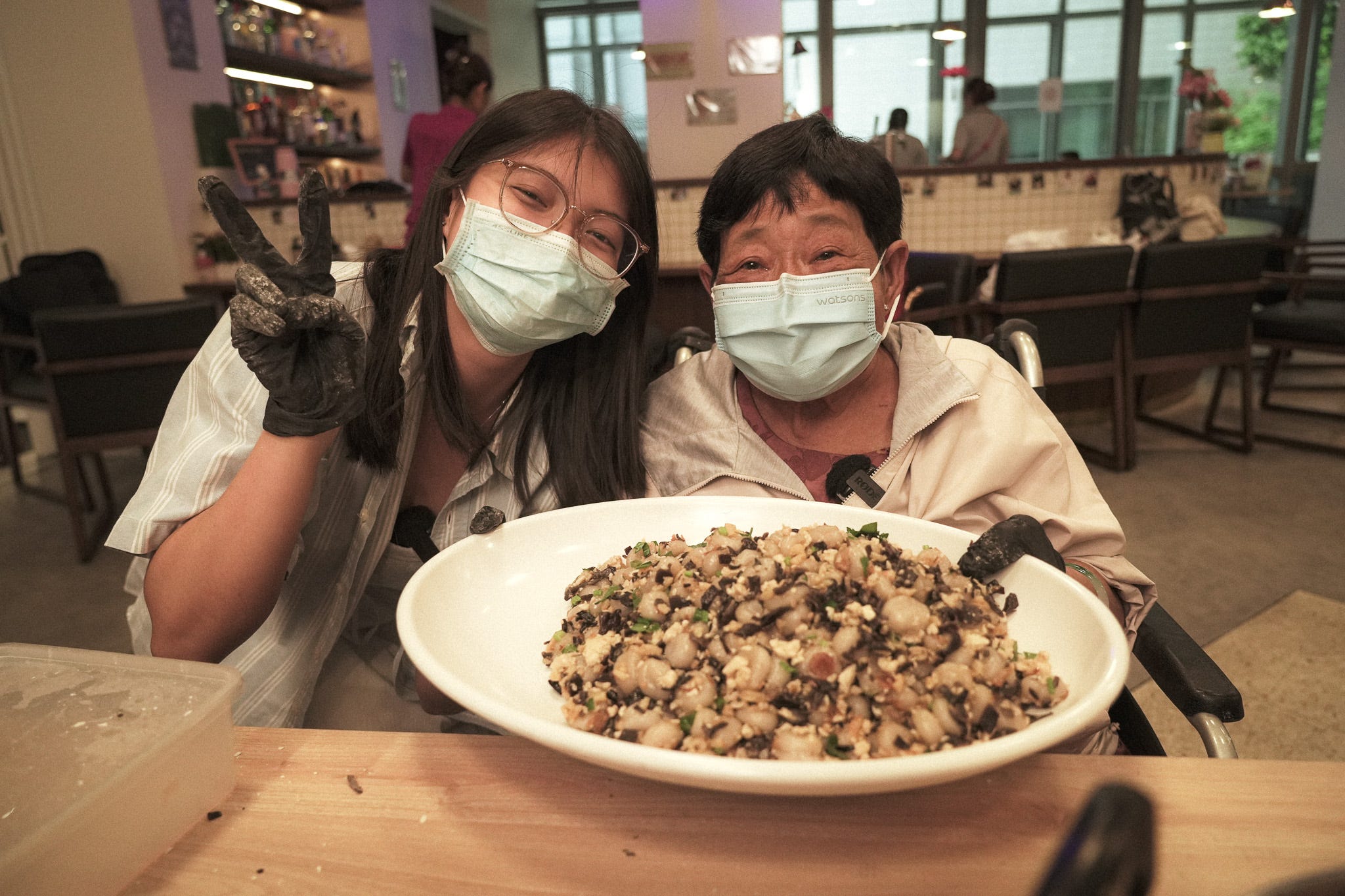
by sheer luck, I was eventually connected with Mdm Ang, an ex-hawker who knows how to make abacus seeds. she learnt it from her Hakka mother-in-law, and these days, she only prepares the dish upon request or during Chinese New Year—since abacus seeds symbolises money! she also told me that she hardly ever makes it alone because it takes forever, and honestly, after trying it myself… same. But she found that it has became a lovely family activity, something that requires everyone to gather around and make together.
while we cooked, she shared some super useful tips when it comes to picking ingredients. First: always choose a taro that’s more round in shape, and avoid any with black spots as those are early signs of spoilage. Next, you can swap pork for chicken (as in this recipe) to make it halal-friendly, though traditionally it’s cooked with pork. And lastly, black fungus and shiitake mushrooms are interchangeable, though the latter is known to give the dish a deeper flavour.
so without further ado… here is the recipe (agak agak style)!
Abacus Seed (算盘子)
(serves 6-10)
1 large taro (washed and peeled)
1 packet of tapioca starch
1/4 cup of water
1 packet of black fungus (washed and blanched) or shiitake
3 handful of haebee (soaked in hot water & reserved)
3 tbsp of oil
5-6 cloves of garlic (minced)
250g of minced chicken
1/2 tbsp oyster sauce (measured by taste)
1 tbsp of soya sauce (measure by taste)
1 bunch spring onions (washed and chopped garnish size)
1 bunch chinese celery (washed and chopped garnish size)
a dash of white pepper
directions
prepare a steamer over boiling water. slice the taro into small pieces, removing any black spots, and steam until soft—about 10–15 minutes, or until a fork goes through easily.
while the taro is steaming, prep the other ingredients: slice the black fungus or shiitake mushrooms, mince the garlic, soak the haebee, and slice the spring onions and Chinese celery for garnish.
transfer the steamed taro into a large mixing bowl and mash it into a smooth paste with no lumps. gradually add the tapioca starch. when the mixture starts to feel dry, add a little water at a time. repeat, alternating starch and water, until it forms a soft, bread-dough-like texture.
prepare a large tray. pinch off about 1 tsp of dough, roll it into a ball, and gently press the centre to create the indent. place each piece on the tray. cover both the tray and the mixing bowl with a damp cloth so the dough doesn’t dry out.
bring a large pot of water to boil and prepare an ice bath. add the abacus seeds in batches so the pot isn’t overcrowded. once they float, scoop them out with a strainer and transfer them into the ice bath. repeat until all are cooked.
heat some oil in a frying pan over medium-high heat. stir-fry the garlic, black fungus, and haebee until fragrant. add the minced chicken and fry briefly, seasoning with a splash of soy sauce and oyster sauce. when the chicken is cooked through, add the abacus seeds and season with the remaining soy sauce and oyster sauce. add a splash of the haebee/ shiitake soaking water for extra flavour and moisture. finish with white pepper to taste, garnish, and serve!
if you are looking for more heritage recipes, check out the following!
Ngoh Hiang
since young, i have always been going to my nai nai’s house once a week to have a meal with her. these are the days where i look forward to her innovative, sometimes traditional, but comforting food for the soul. now that she is growing older, her movements have also slowed down a lot, and that trickles down to the amount of dishes that she can cook too…


