


I recently found myself in Kuan’s home, learning how to make a dish I probably would not have encountered otherwise: Pachamulaku Aracha Kozhi, or Kerala Green Chilli Chicken. This is a recipe Kuan learnt from her Malayali in-laws, and one that has since become a special feature of the private dining she runs from her own home.
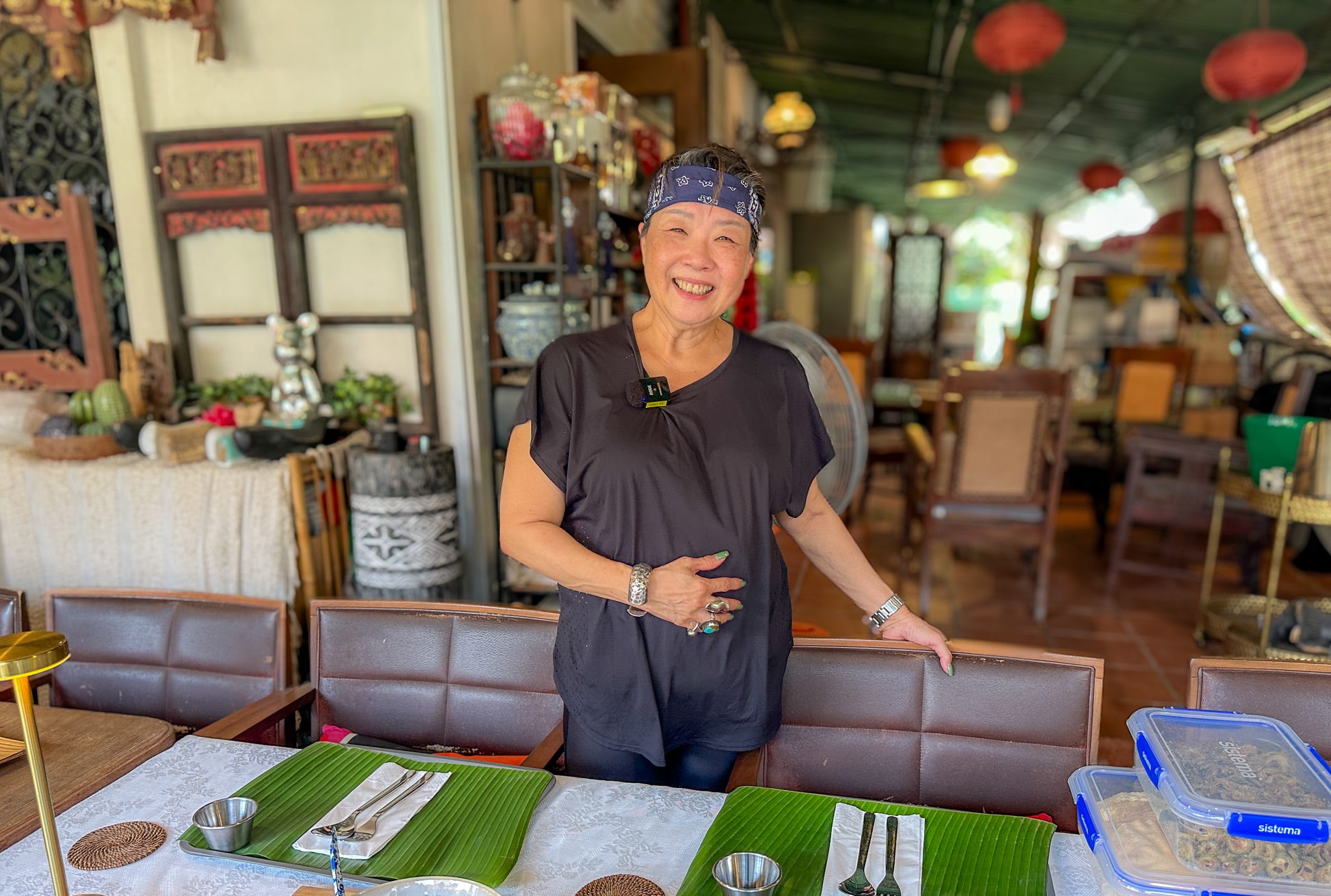
In 2024, at 61, Kuan was retrenched from her job at a law firm after spending decades in the workforce. As she puts it, she was initially a little lost about where her life would go next. She had been cooking and hosting for friends and family for years, and when her friends suggested that she turn that passion into something of her own, she decided to give it a shot.
What started as a way to support herself after retrenchment eventually became Kuan’s Table Private Dining. She now opens her home to guests, cooking the kinds of food she genuinely loves to eat — particularly dishes that you might not easily find on a restaurant menu. She has travelled to India and China to learn more dishes, while also drawing heavily from the food traditions within her own family.
And that family is a pretty good reflection of Singapore itself. Kuan is Chinese, while her husband, Sanjay, is Malayali, with grandparents from Kerala in South India. When they were living away in Australia for several years, Sanjay started missing the food he grew up with, so Kuan began learning to cook the dishes of his heritage. Over time, what began as cooking for her husband and family became something she could share with a much wider audience.
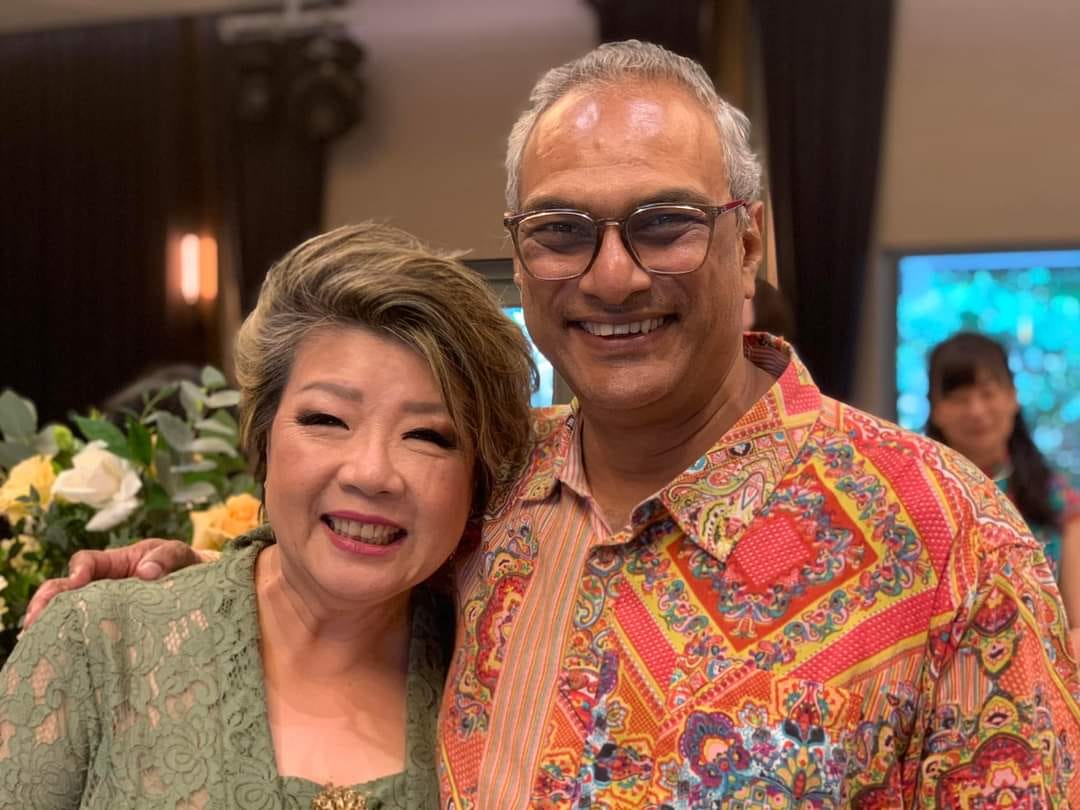
I find this particularly interesting because Kuan’s cooking doesn’t seem to be about staying neatly within one culinary box. Her Malayali dishes include favourites such as Wintermelon Pachadi and Salted Fish Achar, but she also cooks Chinese food from her own heritage when guests request it. She has made elaborate Pen Cai and black garlic black chicken soup for Chinese New Year, and she also cooks Peranakan dishes such as Itek Tim.
Her private dining setup is equally personal. Rather than operating out of a restaurant or commercial kitchen, Kuan hosts guests from her home, with dinners spilling out onto the front lawn. The menu is essentially a reflection of what she likes to cook and eat — a mixture of family food, dishes she has picked up along the way and recipes that she has travelled to learn.
It feels less like going to a restaurant and more like being invited to someone’s house who happens to be a very serious cook.
Which brings us back to this chicken.


The Kuttan family’s recipe of Green Chilli Chicken is a good example of why I enjoy learning recipes directly from people. On paper, the dish doesn’t look particularly complicated. There isn’t an enormous list of ingredients or some elaborate restaurant technique involved. Instead, the character comes from getting a few things right: building the masala, allowing the chicken to take on all those flavours, and adding the green chillies at the right point.
One ingredient that caught my attention was panch phoron, the whole-spice blend more commonly associated with Bengali and eastern Indian cooking. The name literally means “five spices”, and the usual combination is fenugreek, nigella, cumin, mustard and fennel seeds. They are used whole and tempered in hot oil, allowing each seed to release its own aroma and flavour.
And then there are the green chillies, which are added towards the end rather than cooked into oblivion from the beginning. Cooking them for too long dulls that bright green colour and takes away some of the fresh, herbaceous character that makes green chilli taste so different from dried chilli or chilli powder. Added later, they retain more of that freshness while still giving the chicken plenty of heat and aroma.


What I liked most about cooking this with Kuan, though, was that the recipe felt like a small window into her family. This wasn’t a dish she had simply found in a cookbook and decided to put on a menu. It came into her life because someone she loves missed the food of home, and she decided to learn how to make it.
That, to me, is one of the more interesting things about food in Singapore. We talk about our different cuisines as if they exist in separate categories — Chinese, Malay, Indian, Peranakan — but the reality inside our homes has always been much messier and much more interesting. Recipes cross kitchens through marriage, friendship, migration and sheer curiosity. Someone teaches you how their mother makes a dish, you cook it enough times to make it your own, and eventually it becomes part of your own culinary repertoire.
Kuan’s story is a reminder that food is one of the easiest ways we get to know the parts of Singaporean life that don’t necessarily belong to our own background. You don’t need to share someone’s ethnicity to inherit a recipe. Sometimes all it takes is a hungry husband, a generous sister-in-law, a few hours in the kitchen — and the willingness to learn.
And in a place as mixed as Singapore, perhaps that is how culture actually works: not by keeping traditions in separate boxes, but by letting them travel between people, homes and generations.
 Tiktok failed to load.
Enable 3rd party cookies or use another browser
Try out these other South Asian recipes we’ve made in the past!:

Chicken Varuval - a punchy South Indian dish which will make you go in for seconds!

we recently came together with our friend, Chef Annil (@annilravin) who runs a catering business specialising in several Indian dishes. as per our recent Deepavali-themed content piece, he shared with us a recipe for a dish which is synonymous to Chettinad cuisine, Chicken Varuval. as South Indian Chettinad food is known for being hot and fiery, this di…