


There was a time when you would hear the word mochi and probably think of a small, round Japanese sweet filled with red bean paste.
These days, in Singapore, that definition seems increasingly inadequate.
Walk into a bakery and you might find mochi buns, mochi croissants, mochi muffins or pastries with a chewy mochi centre. At Gokoku Japanese Bakery, there are even “Mochi Mochi” buns filled with cranberry, cheese or chocolate couverture. while Butter Bread has an Orh Nee Mochi Croissant combining yam paste and mochi with laminated pastry. Wu Pao Chun has also introduced Singapore-exclusive mochi buns, including a Kinako Red Bean Mochi and Chocolate Lava Mochi.
What we are really chasing, perhaps, is not mochi itself but mochi-NESS: that soft, elastic, slightly resistant chew that has become a texture people want to put into everything.
Traditional mochi is made from mochigome, a particularly glutinous short-grain rice. The rice is steamed and pounded until it becomes a smooth, sticky mass, then shaped into cakes or other forms. In Japan, mochi has long been associated not just with sweets but with ritual, seasonal celebrations and regional food traditions.
And perhaps this is why mochi has proved so easy to reinvent. It has never really been limited to one flavour or one format. Across Japan, there are sweet and savoury versions, mochi served with sauces, mochi incorporated into meals, and regional preparations that look very different from the little confectionery we usually encounter outside Japan.
Which brings us to the potato.
Potato mochi, or imo mochi, is a particularly good example of what happens when a food gets separated from its original ingredient but retains its essential character. In Hokkaido, where growing rice was historically difficult in the cold climate, potatoes became an important crop. Potatoes were mashed, mixed with starch and shaped into cakes that could be cooked much like mochi.
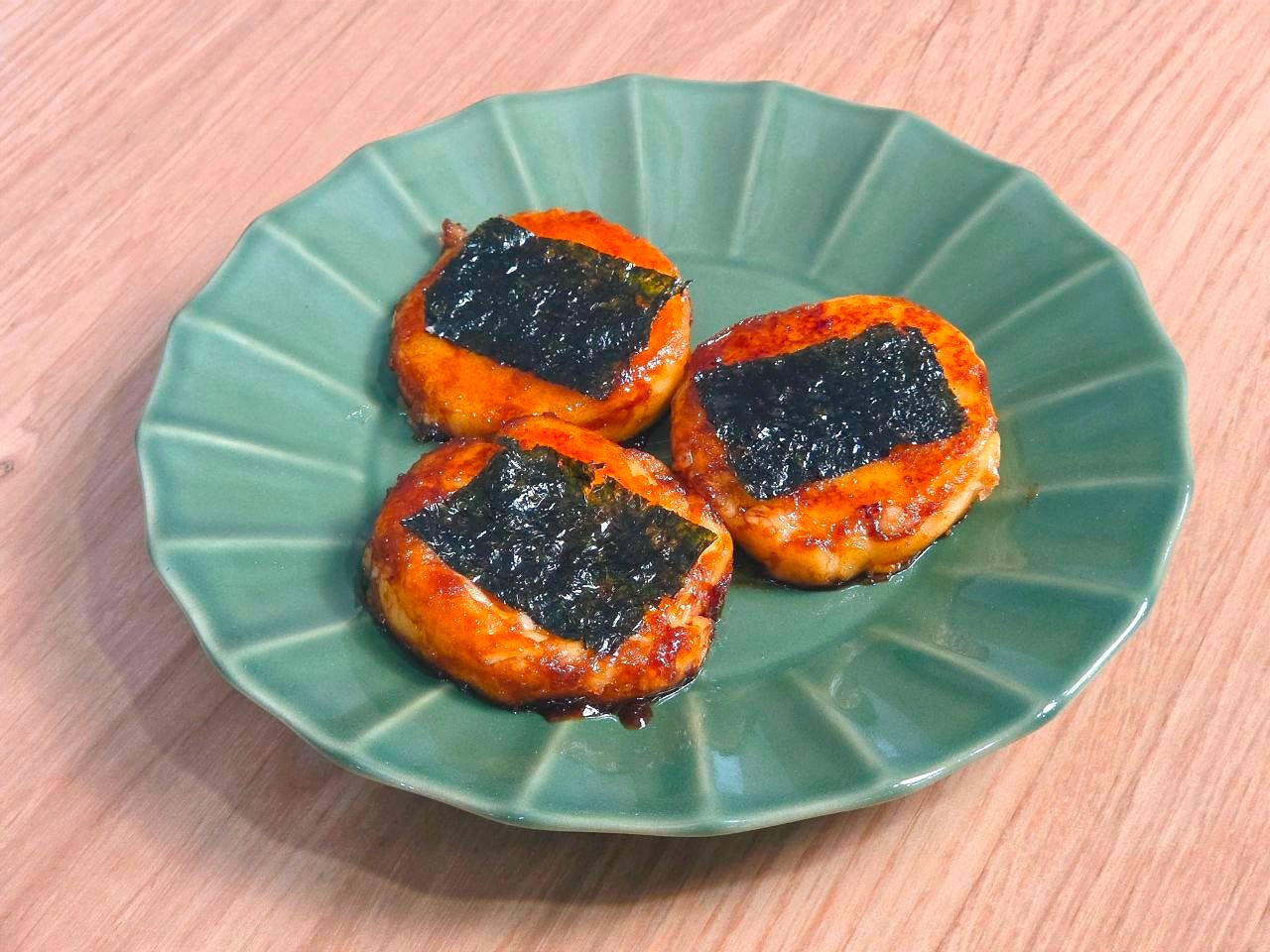
The version that has been circulating all over TikTok takes this idea and makes it incredibly accessible: mashed potato, starch, a hot pan and a simple sweet-umami soy glaze. Once the little cakes are crisp on the outside and chewy in the middle, they get brushed with that glossy sauce and finished with pieces of seaweed.
It is easy to understand the appeal. Potatoes are familiar. The ingredients are inexpensive. The technique is simple. But the finished thing has a texture that feels slightly unexpected — somewhere between a hash brown, a rice cake and a chewy snack.
And that, I think, is what makes potato mochi such a satisfying recipe to try at home. It is not really about reproducing some sacred or fixed idea of what mochi should be. It is about understanding what makes the original so appealing, then seeing what happens when that idea is given a different ingredient.
Food has always worked this way. A technique travels, an ingredient changes, someone experiments, and eventually something that once seemed unusual becomes completely ordinary.
So if you have a few potatoes sitting around, some starch in the cupboard and a bottle of soy sauce in the fridge, give this one a go. You might start out trying to make potato mochi because TikTok told you to. But you may end up understanding why chewiness itself has become a food trend.
Check out our other Japanese recipes below!:
Chicken Nanban - rich, creamy, oishii!

it always intrigues me whenever I learn about the origins of Yoshoku (洋食) or Western/European-influenced Japanese cuisine. this unique cultural phenomenon stems from the time of Meiji Restoration where trade and contact with Europe and the United States resulted in a fusion cuisine, producing Japanese dishes we come to love today. these include foods li…
Tamago Sando (Japanese-style Egg Sandwich)

if you’ve come this far into clicking onto this recipe post, we’re pretty sure you’re thinking ‘HOW ON EARTH could a simple egg sandwich recipe be any different from the rest?’