


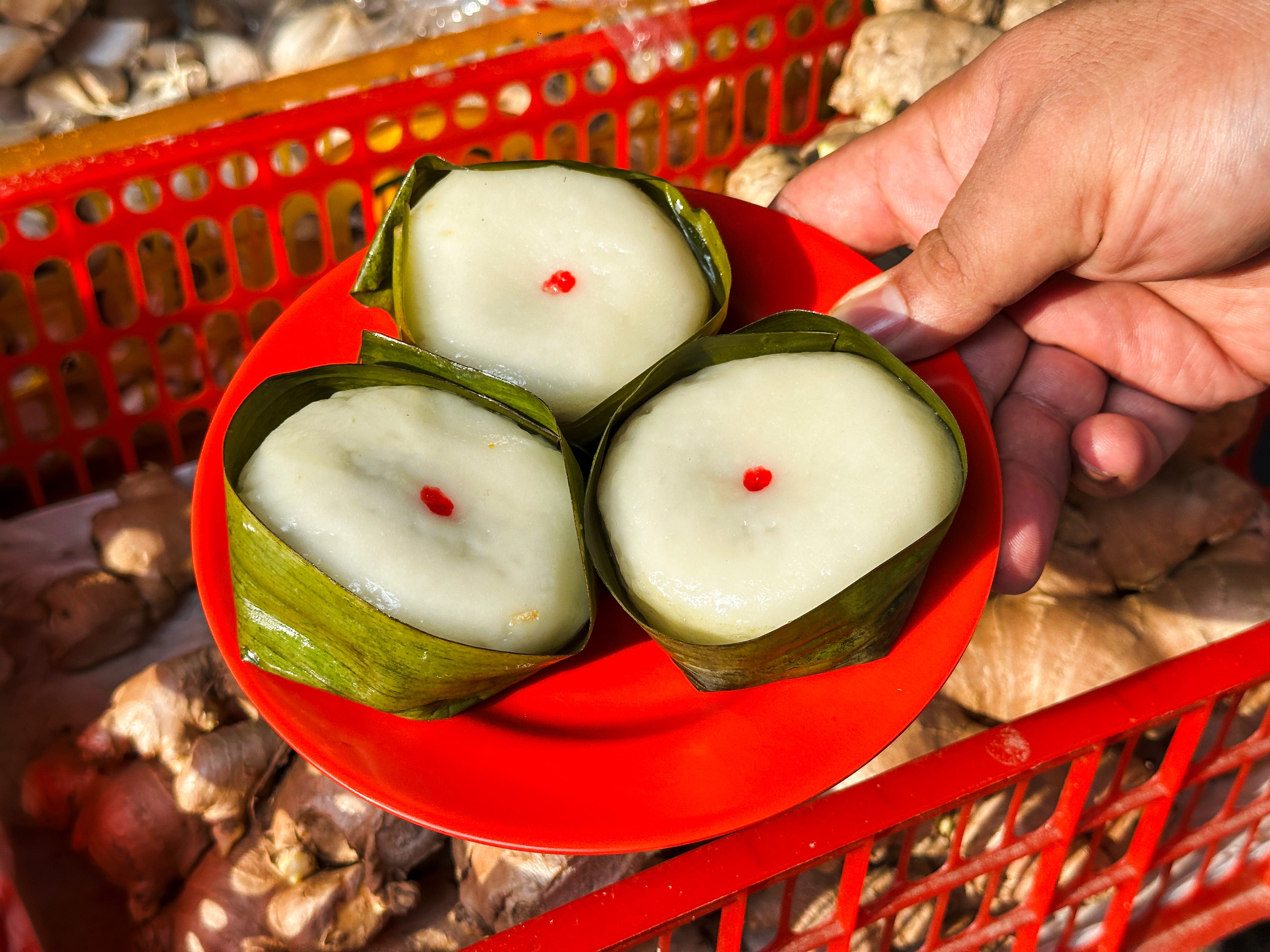
There are some traditional kueh that have become so familiar in Singapore that we seldom stop to consider the hands and histories behind them. Others, despite being equally deserving of recognition, have gradually slipped from public consciousness. Yi bua (薏粑), a traditional Hainanese glutinous rice kueh, belongs to the latter. And so, when I found myself at Hainan Xiaochi at Toa Payoh Lorong 7 Hawker Centre, I had a rather unusual opportunity: not only was I tasting this distinctive kueh for the first time, I was also learning how to make it from the second-generation owner, Mdm Goh See Mui.
Hainan Xiaochi is a family business with more than four decades of history. Its beginnings can be traced to Mdm Goh’s mother, Mdm Yeoh Min Lin, who started making and selling traditional Hainanese kueh alongside kaya bread in the 1970s to support her five children after the passing of her husband. Over the years, the business was passed on to Mdm Goh, who continues to uphold her mother’s methods and recipes. In an era where traditional kueh-making is increasingly difficult to sustain commercially, the family’s commitment to producing these delicacies by hand is a meaningful continuation of an otherwise easily overlooked culinary tradition.
To understand the significance of this little kueh, it helps to understand the community from which it comes. The Hainanese are an ethnic Chinese community originating from Hainan Island, a tropical island province in southern China. They were among the later Chinese immigrant groups to settle in Singapore, arriving predominantly in the late 19th century. With many initially finding work as cooks, domestic helpers, hotel staff and seafarers, the Hainanese gradually established a strong presence in Singapore’s food and beverage industry. Their influence can still be tasted today, from the familiar Hainanese chicken rice and kopi to the distinctly local interpretation of Western dishes such as chicken chop. Yet, beyond these more widely recognised contributions, traditional Hainanese delicacies like yi bua remain relatively obscure.


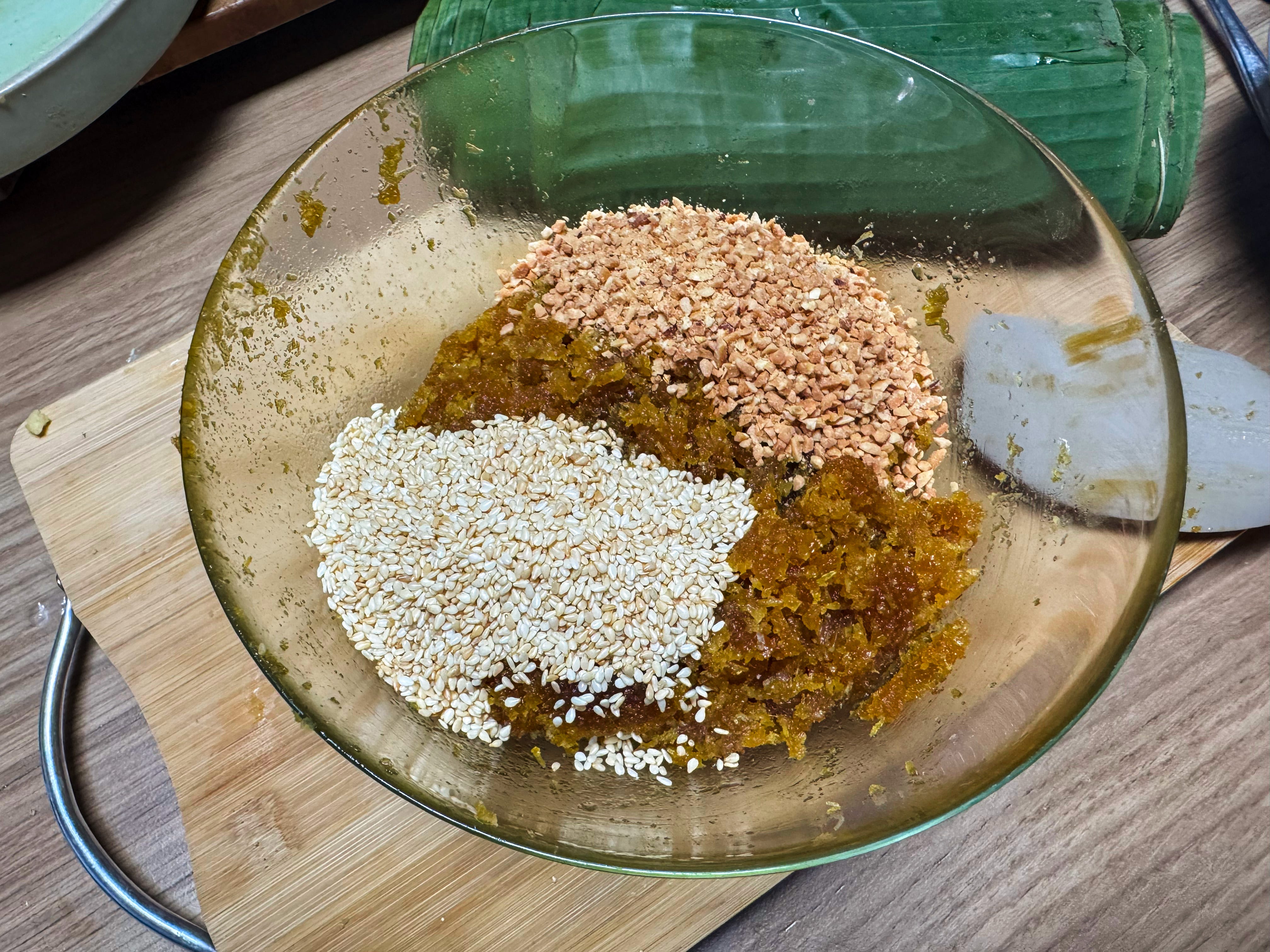
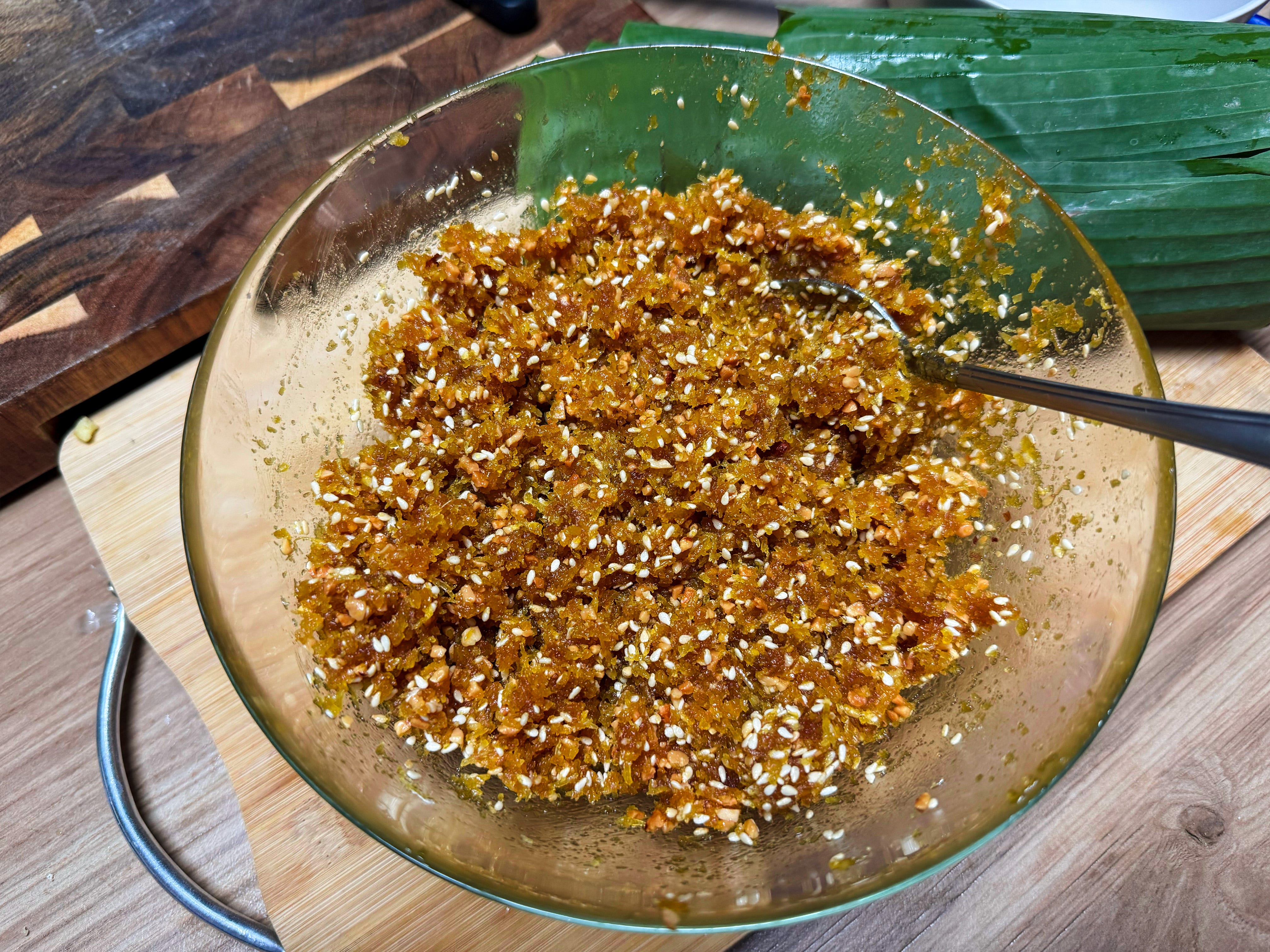
My first encounter with yi bua was a pleasant surprise. At first glance, its appearance reminded me of kueh kochi, another glutinous rice kueh with a sweet, coconut-based filling. The resemblance, however, ends somewhere around the first bite. What makes yi bua particularly distinctive is its generous use of ginger, which gives the coconut, peanut and gula Melaka filling a noticeable warmth and aromatic kick. Encased in a glutinous rice flour dough, the kueh has a wonderfully chewy, pillowy texture, almost reminiscent of Japanese mochi, with just the right amount of stretch.
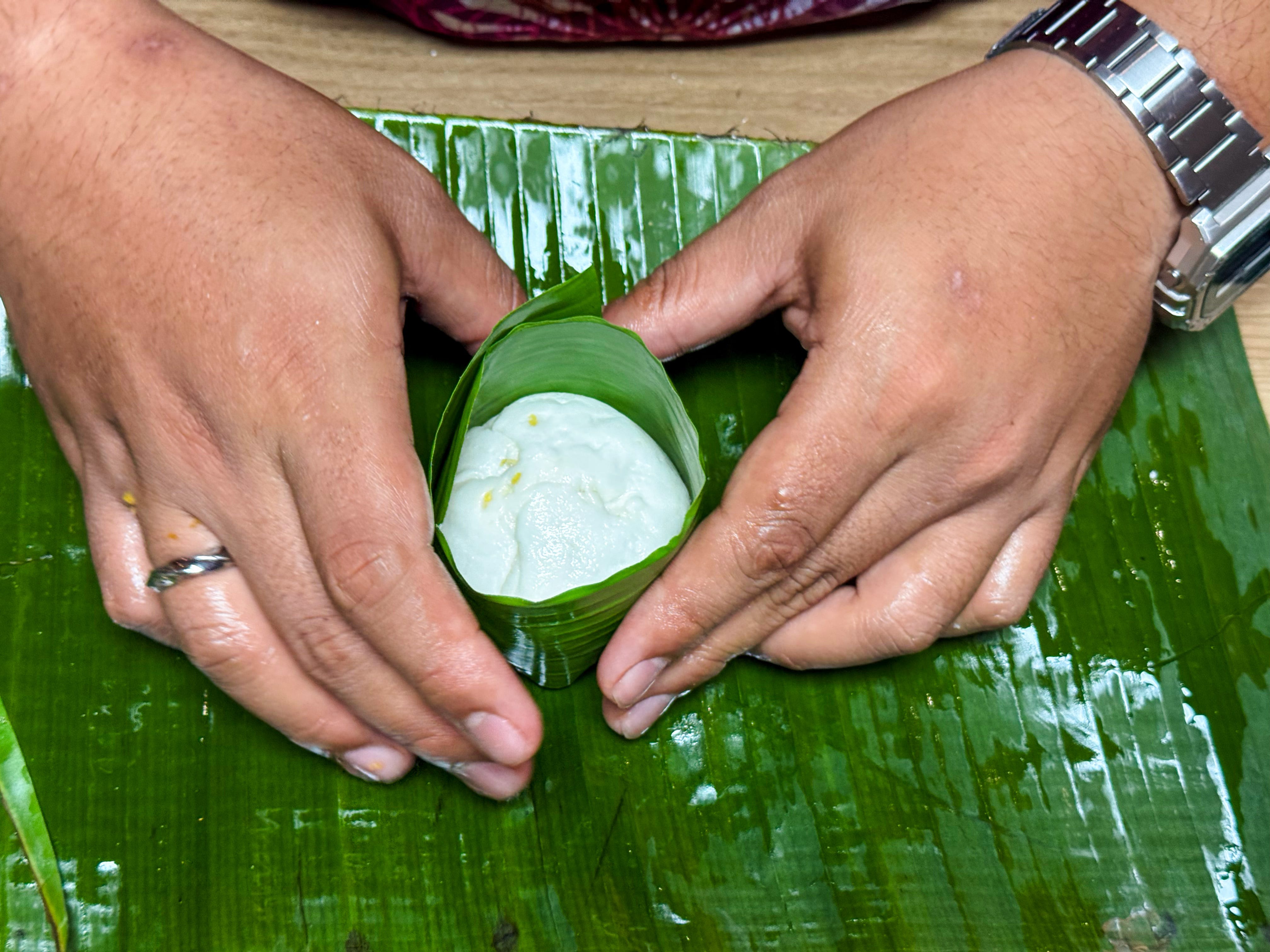
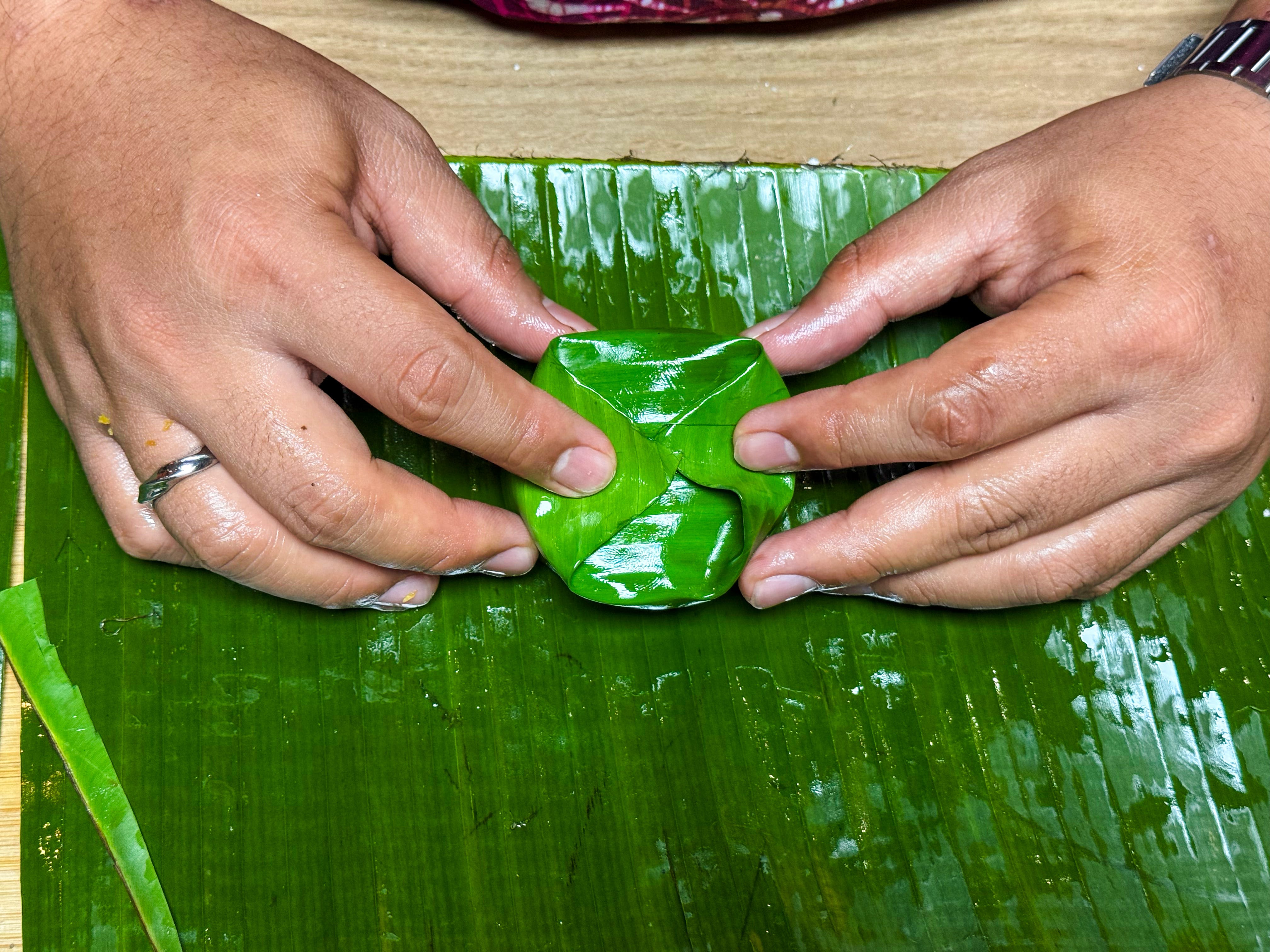
The craft lies in shaping and wrapping each piece in banana leaf before steaming. I must admit that, as someone who has never been particularly gifted with nimble fingers (Malay kueh wrapping has humbled me on more than one occasion), I was pleasantly surprised by how manageable the process was. With a little practice, the banana leaf comes together rather neatly, giving each piece its characteristic parcel-like appearance while imparting a gentle fragrance during steaming.
What I appreciate most about yi bua is that, despite its relative obscurity, it is neither particularly complicated nor intimidating to make at home. The ingredients are accessible, the preparation is straightforward, and the wrapping technique is far less daunting than it looks. More importantly, it offers a glimpse into a part of Singapore’s culinary heritage that deserves a little more attention.
So, if you’ve never had yi bua, consider this your invitation to give it a try. And if you’ve always wanted to make traditional kueh but found the prospect a little intimidating, this might just be a good place to start. After all, some heritage recipes are worth preserving not just by eating them, but by learning to make them ourselves.

Yi Bua (Hainanese Coconut-Peanut Mochi)
- 330g gula melaka
- 80ml water
- 1 pandan leaf, knotted
- 1/2 tsp salt
- 65g grated ginger (preferably Bentong ginger)
- 400g shredded coconut
- 60g coarsely ground peanut
- 50g White sesame seeds
- 900g glutinous rice flour
- 100ml peanut oil + more for wrapping
- 500ml boiling water
- banana leaf, softened and cut into 10-in x 3-in strips
- water for steaming
- a fee drops red food colouring, optional
- Step 1In a saucepan on low heat, combine gula melaka, water, pandan and salt and cook on low heat until the sugar dissolves completely to create a syrup.
- Step 2Mix in the grated ginger and coconut and cook for 5 minutes or until the mixture resembles a thick moldable paste. Set the mixture aside to cool to room temperature.
- Step 3Once cooled, fold in the peanuts and sesame seeds until well combined. Roll the coconut filling into 50g balls and set aside.
- Step 4In a mixing bowl, combine glutinous rice flour with oil mix with hand to disperse oil throughout. Drizzle the hot boiling water onto the flour mixture and wait for a few minutes until the dough becomes cooled enough to handle, although still warm.
- Step 5Using an oiled hand, knead the mixture into a cohesive dough, adding more warm water if needed.
- Step 6Separate the glutinous rice dough to 55g balls, covering them with a clean wet cloth to prevent drying.
- Step 7Using both hands, take a ball of rice dough, shape a well in the middle, and place the sweet coconut filling into the well. Cover the filling up by stretching the dough over and shape the entire kueh into a ball.
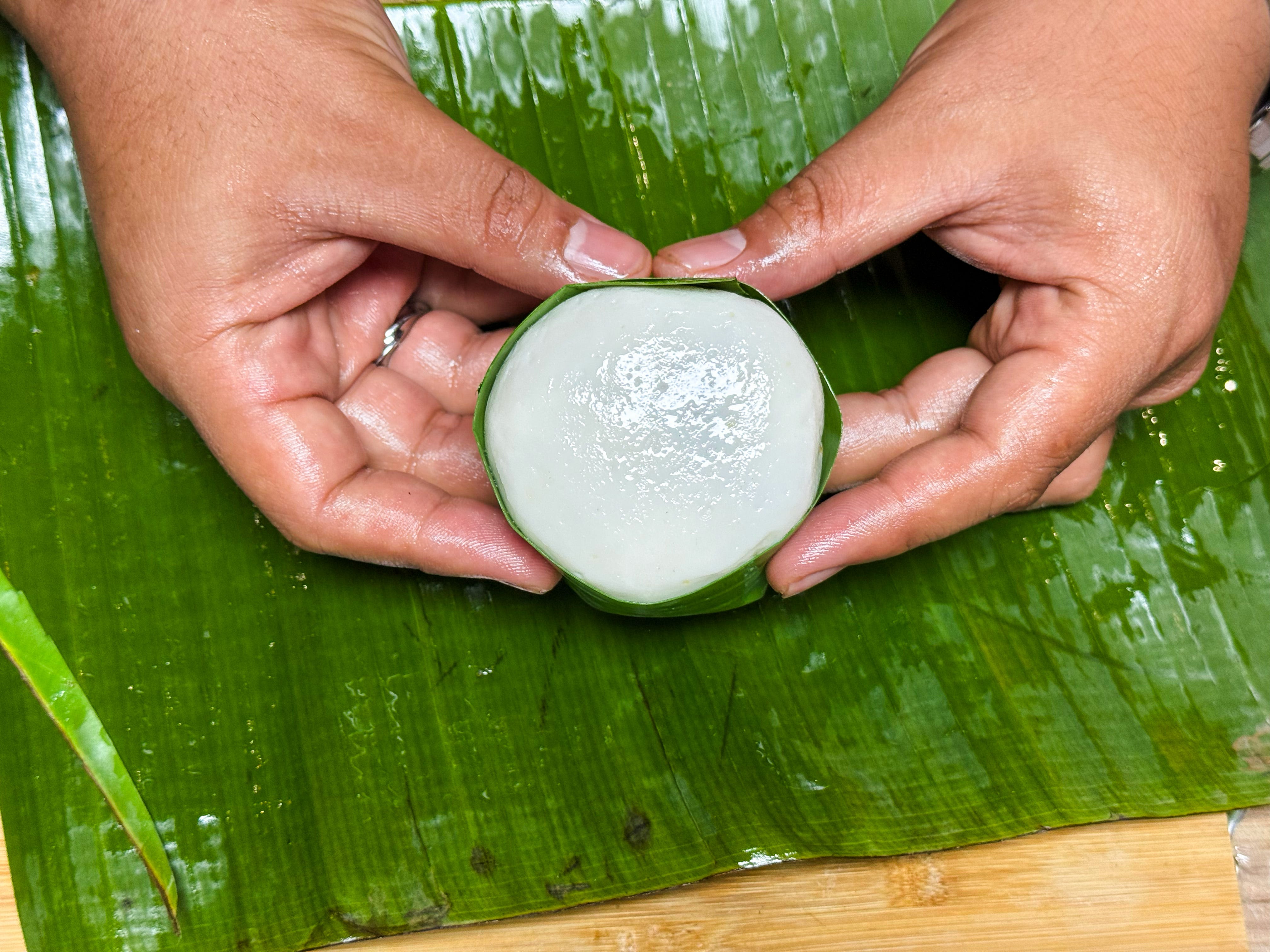
- Step 8Put a square of oiled banana leaf onto the counter to prevent the dough from sticking. Place a ball of the kueh on top and wrap the strip of banana leaf around its circumference. Press down the top excess of the banana leaf 4 times to create the bottom base.
- Step 9Turn over the kueh and arrange onto a steamer rack/basket. Repeat the wrappaing process until all the dough and filling are used up.
- Step 10In a steaming pot, bring some water to a boil.
- Step 11Steam the Yi Bua on top of the water on medium heat for 20 minutes
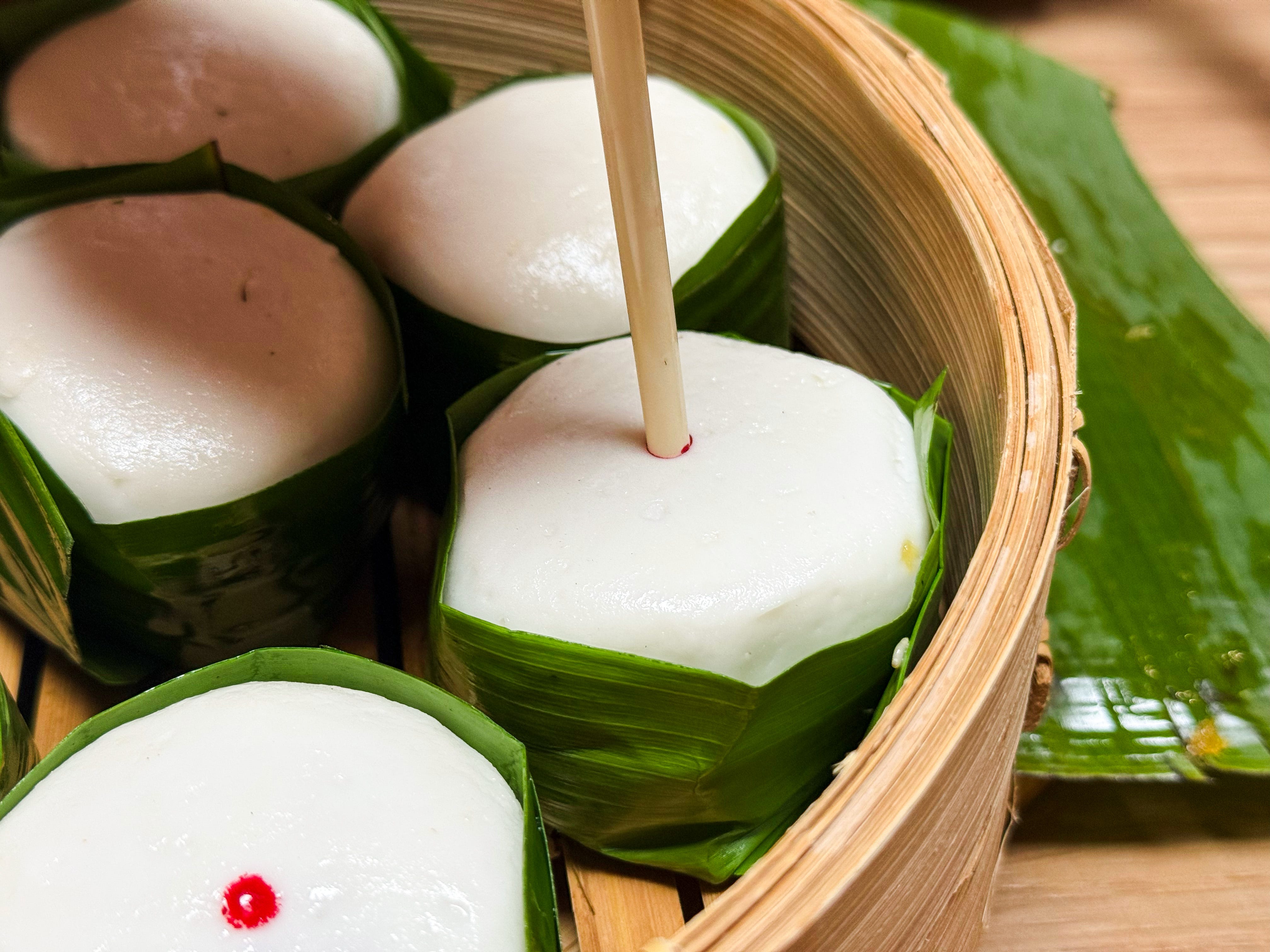
- Step 12Once fully cooked, remove the rack from the pot and let the yi bua cool down. Alternatively, you may dot the surface of the kueh with red food colouring by dipping the end of a chopstick in red colouring and imprinting a dot on top of the kueh.
- Step 13Yi Bua is best eaten warm to room temperature.
For more Singaporean dessert recipes, check these out!:
Kueh Lapis Legit - worth every buttery layer!

we’re pretty sure most of you have tried this traditional kueh at least once! Kueh Lapis Legit (pronounced LUR-GITT, and not legit like in ‘legitimate’) or more popularly know in SG as Kek (cake) Lapis (to distinguish it from the steamed layer cake) is commonly served to guests during Hari Raya, alongside a variety of classic cookies.
