


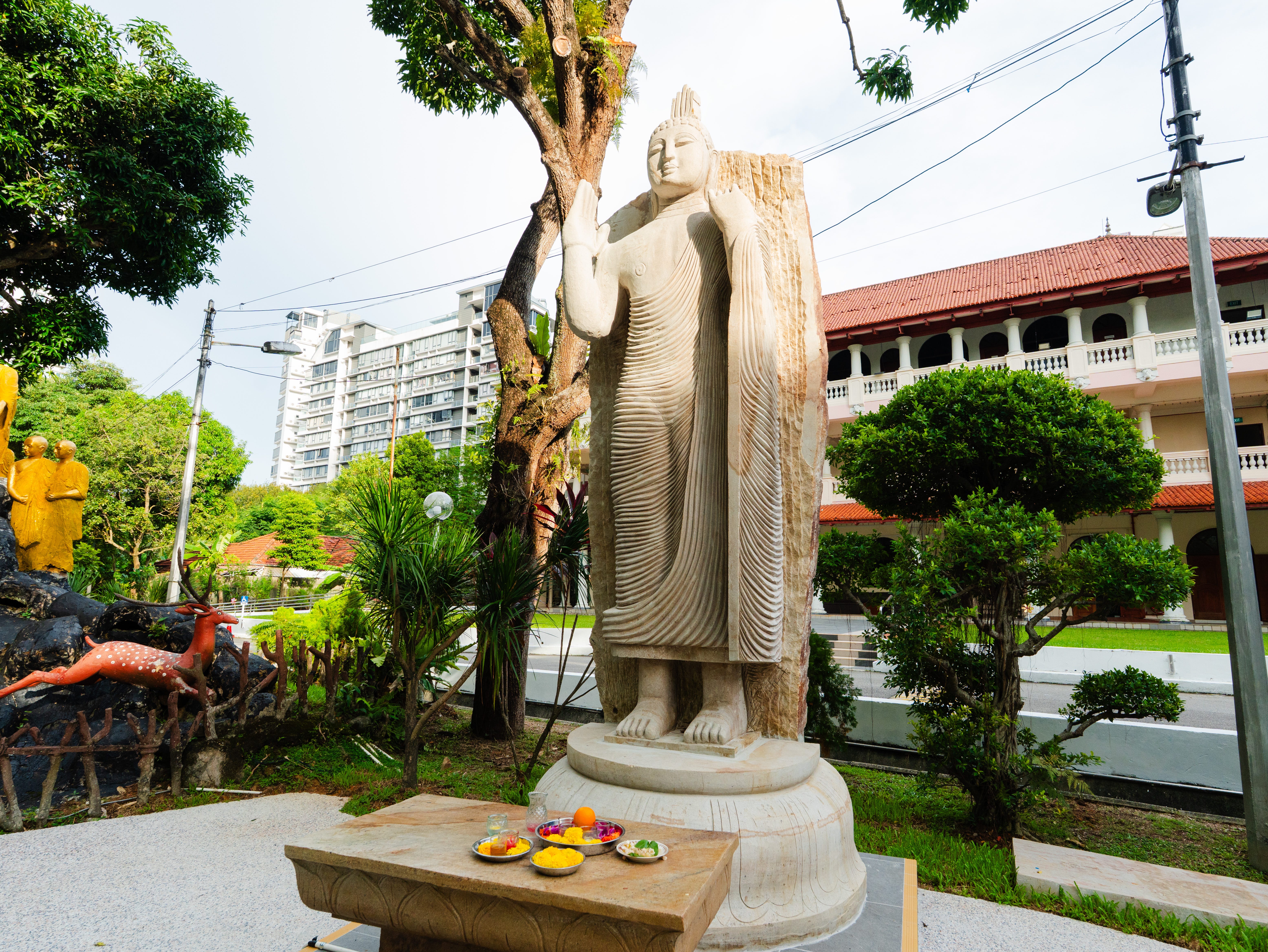
tucked away in a quiet corner of Boon Keng, at the end of St. Michael’s Road, you’ll find a beautiful, serene sanctuary that—for a moment—makes you feel like you’re not in Singapore at all. Sri Lankaramaya Buddhist Temple is a Sri Lankan Buddhist temple where people from all walks of life come every Wednesday to dedicate their time to helping Venerable K. Guna in the kitchen. many Sri Lankan volunteers have been coming for years, drawn by the warmth of the kitchen, which reminds them of a little slice of home. other volunteers hail from Indonesia, Singapore, and beyond—all united by one common language: the language of food.
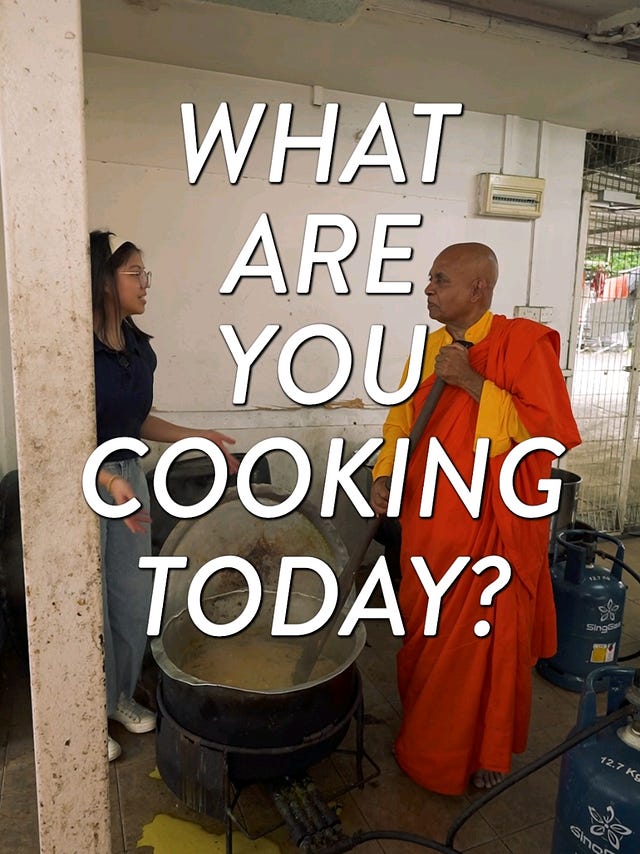
we were invited just the day before to try Venerable Guna’s famous Sri Lankan pumpkin curry. he casually mentioned that he would be cooking it for about 100 people, mostly students and migrant workers.
normally, when you imagine feeding 100 people, you picture a scrambling kitchen—a nonstop operation focused on speed and efficiency. at least, that’s what my experience in Singapore had taught me. however, the moment we stepped into this kitchen, a calm air seemed to take over. we were not treated as strangers; instead, we were welcomed like family. on the tables, crates of onions were being patiently peeled by a handful of volunteers, chatting and catching up as they worked.
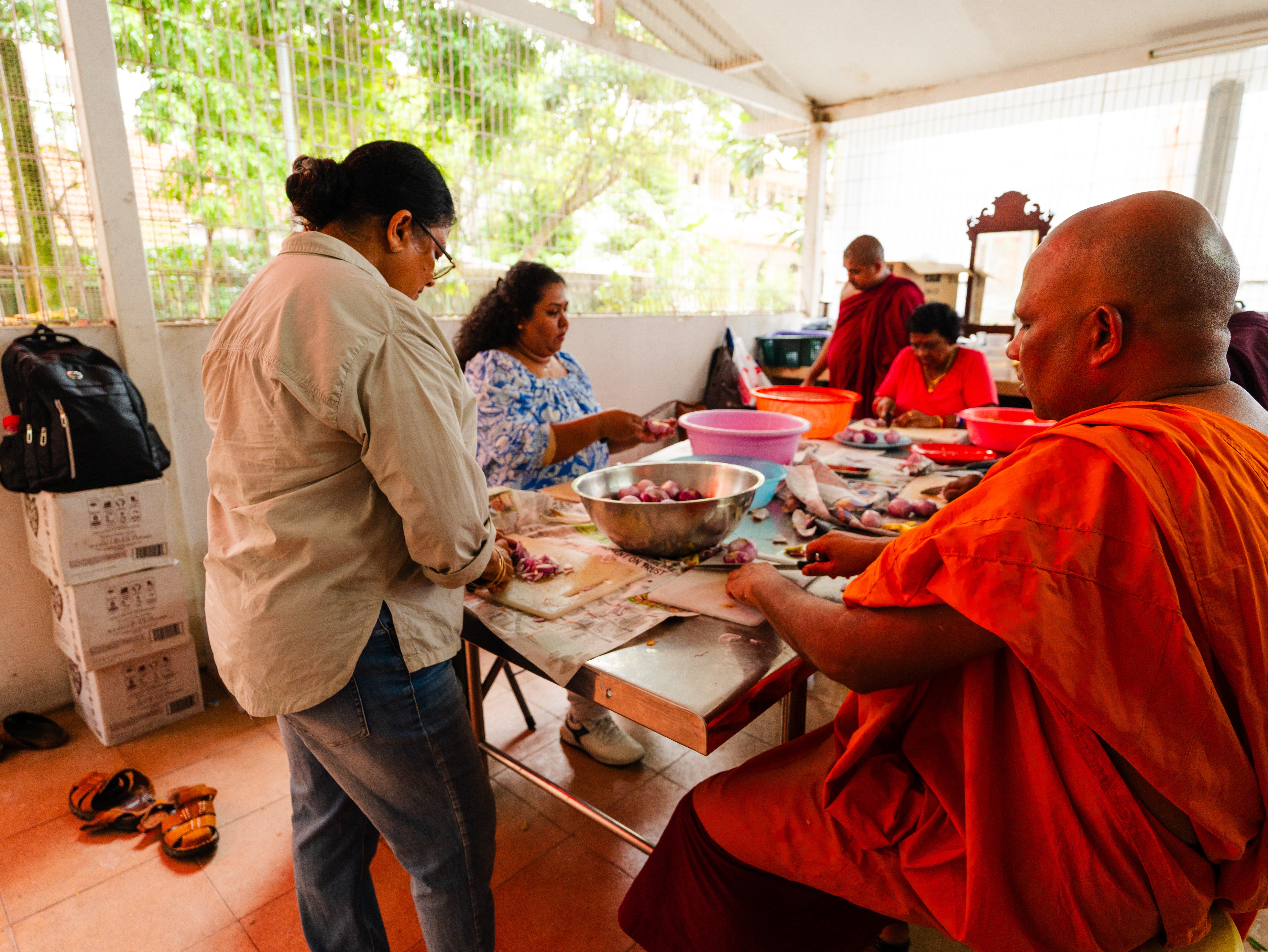
one auntie, whose swift and confident movements in the kitchen revealed her as the veteran and unspoken chief, wore the biggest and brightest smile, as if kindness came effortlessly to her. her warmth shone not just through her smile, but through her cooking as well. although language barriers existed, our communication was almost seamless—we spoke through food, a language that requires no formalities. this is a lesson Venerable Guna learned when he began cooking, and one he continues to uphold every time he steps into the kitchen.
Venerable reflected that cooking helped him understand compassion more deeply. while most Sri Lankan monks following the Theravada Buddhist tradition don’t practice vegetarianism, he was introduced to vegetarianism only after migrating to Singapore and learning more about Chinese Mahayana Buddhism, where the practice is more common. his ultimate aim is simple yet profound: to harm no living being and to feed those in need.


“you won’t find this taste anywhere else,” Venerable said as he showed us the foundation of most Sri Lankan dishes: a simple mixture of garlic, coconut, pepper, and mustard seeds.
Sri Lankan cuisine is known for its bold spices and layered flavours, shaped by local ingredients. coconut features prominently—whether as milk, grated flesh, or oil—adding richness and depth. aromatics such as curry leaves, mustard seeds, chilli, cinnamon, and cardamom create flavours ranging from subtle to intensely spicy.
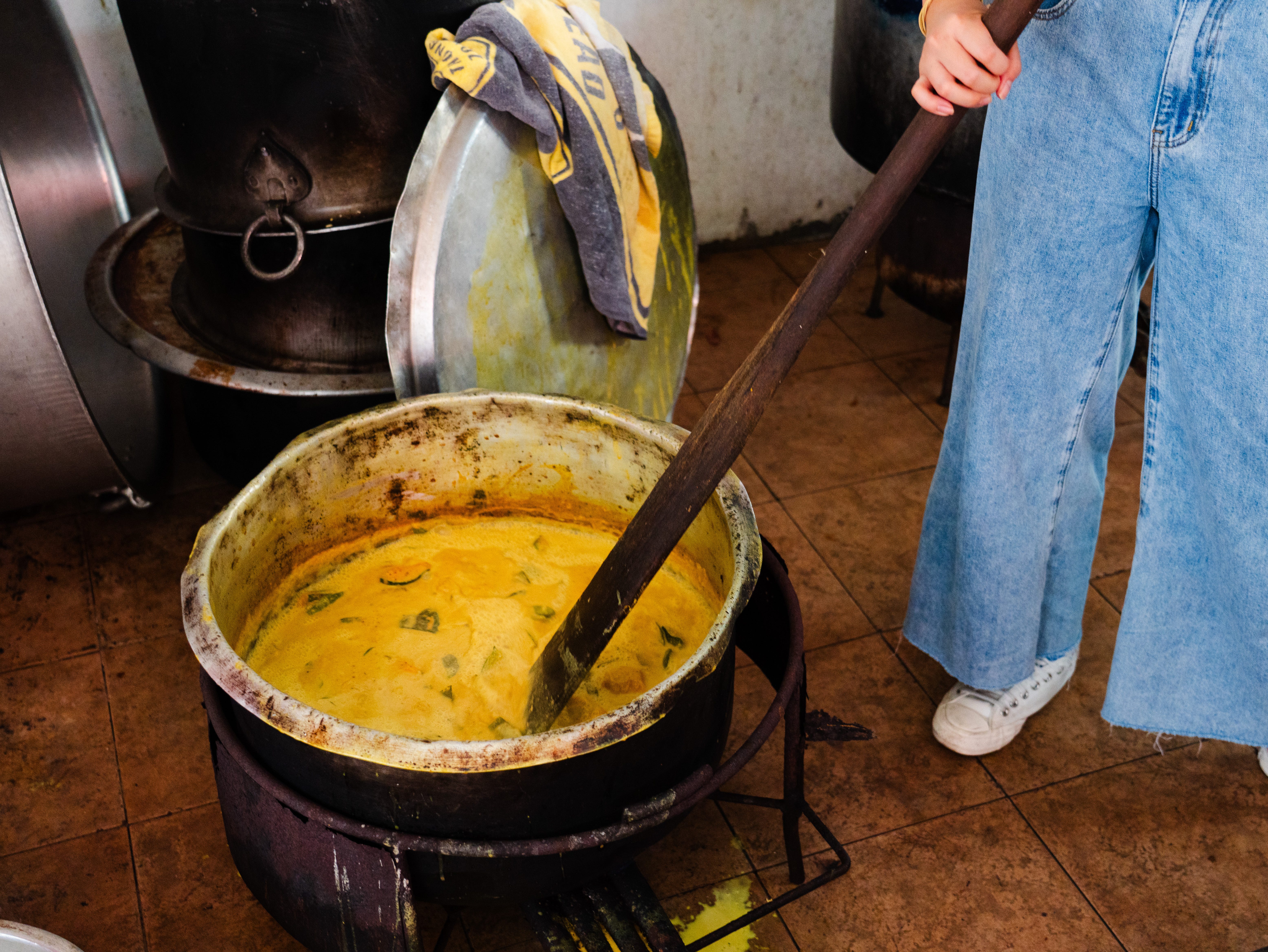
we were preparing a large batch for about 100 people when I asked Venerable about the measurements. he simply looked at me and smiled: “Agak-agak lah.” so when you try today’s recipe, remember his advice—don’t take the measurements too seriously.
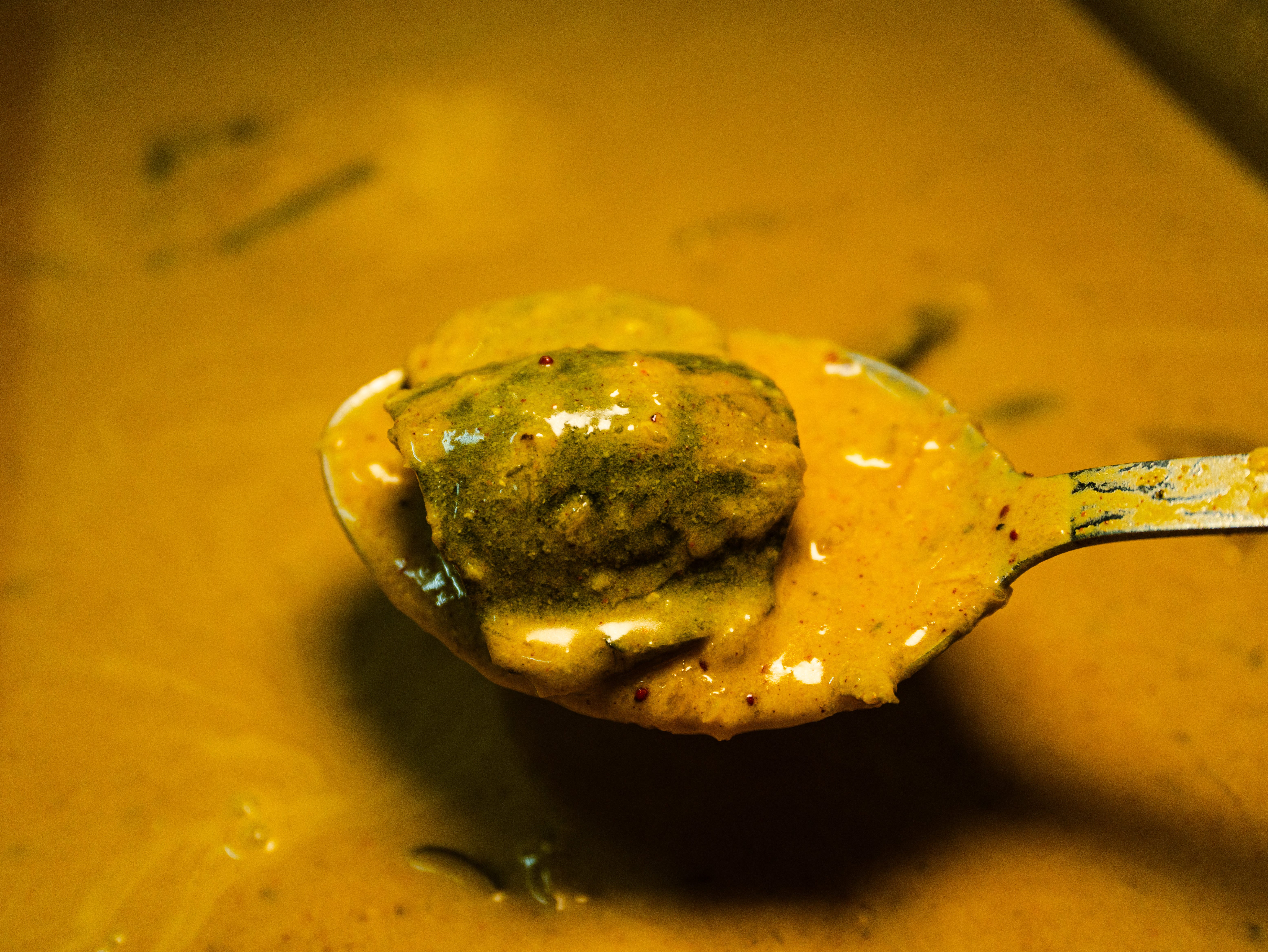
the ingredients for today’s curry were simple—pumpkin, aromatics, and coconut milk. Venerable mentioned that this was a staple when he was growing up in Sri Lanka. coming from a less privileged background, these ingredients were readily available within the compound of his house; the only thing that had to be bought was salt. despite its simplicity and humble origins, the curry carried a familiar taste of home for him.
perhaps after all, the secret ingredient really is love.
 Tiktok failed to load.
Enable 3rd party cookies or use another browser
get your ingredients here!: mustard seeds, turmeric powder, cinnamon powder,