


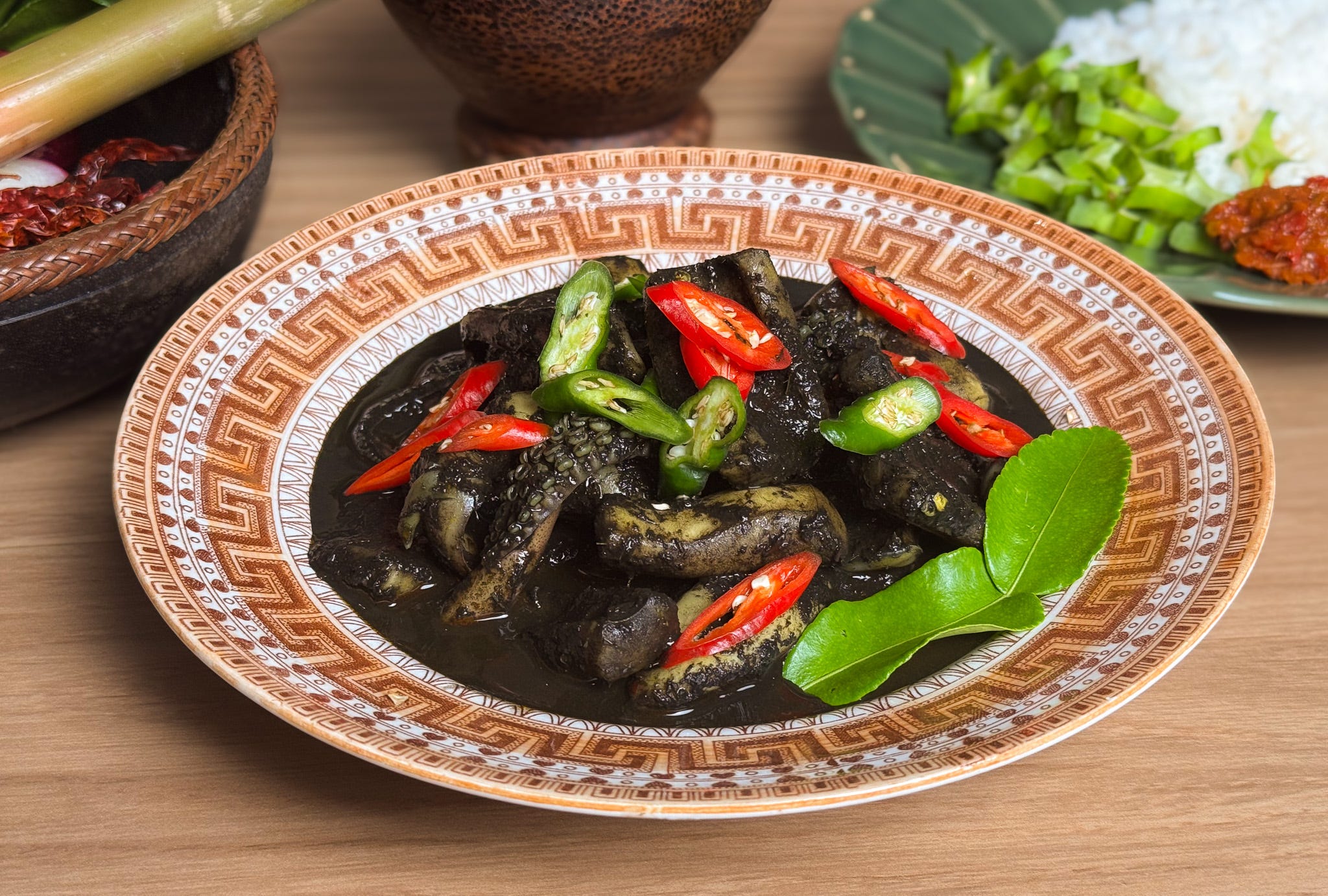
Sotong Masak Hitam occupies a familiar place in many Malay kitchens across Singapore and the wider Malay world. The defining ingredient is, of course, the squid’s own ink, which lends the dish both its distinctive black colour and a subtle marine richness that cannot be replicated by any other ingredient. Like many domestic dishes, there is no singular or canonical recipe. Each household prepares it differently, reflecting inherited preferences, regional influences and the ingredients available to them.
In my own Singaporean Malay family, Sotong Masak Hitam has been part of our regular cooking for as long as I can remember. On mornings when there was time to visit the wet market, my mother would return with fresh sotong and prepare her version of the dish. It was never considered elaborate cooking, but rather an everyday meal, served simply with steamed white rice and sambal belacan. Such dishes often leave the deepest impressions, not because they are reserved for special occasions, but because they quietly become part of one’s culinary vocabulary
Recently, I had the privilege of learning another interpretation from Mdm Nooraini, whose family traces its culinary traditions to Singapore’s Southern Islands. Her version differs noticeably from the one I grew up eating, most evidently in the consistency of the gravy. Rather than remaining loose, it is reduced until it reaches a nappé texture, coating each piece of squid in a glossy black sauce.
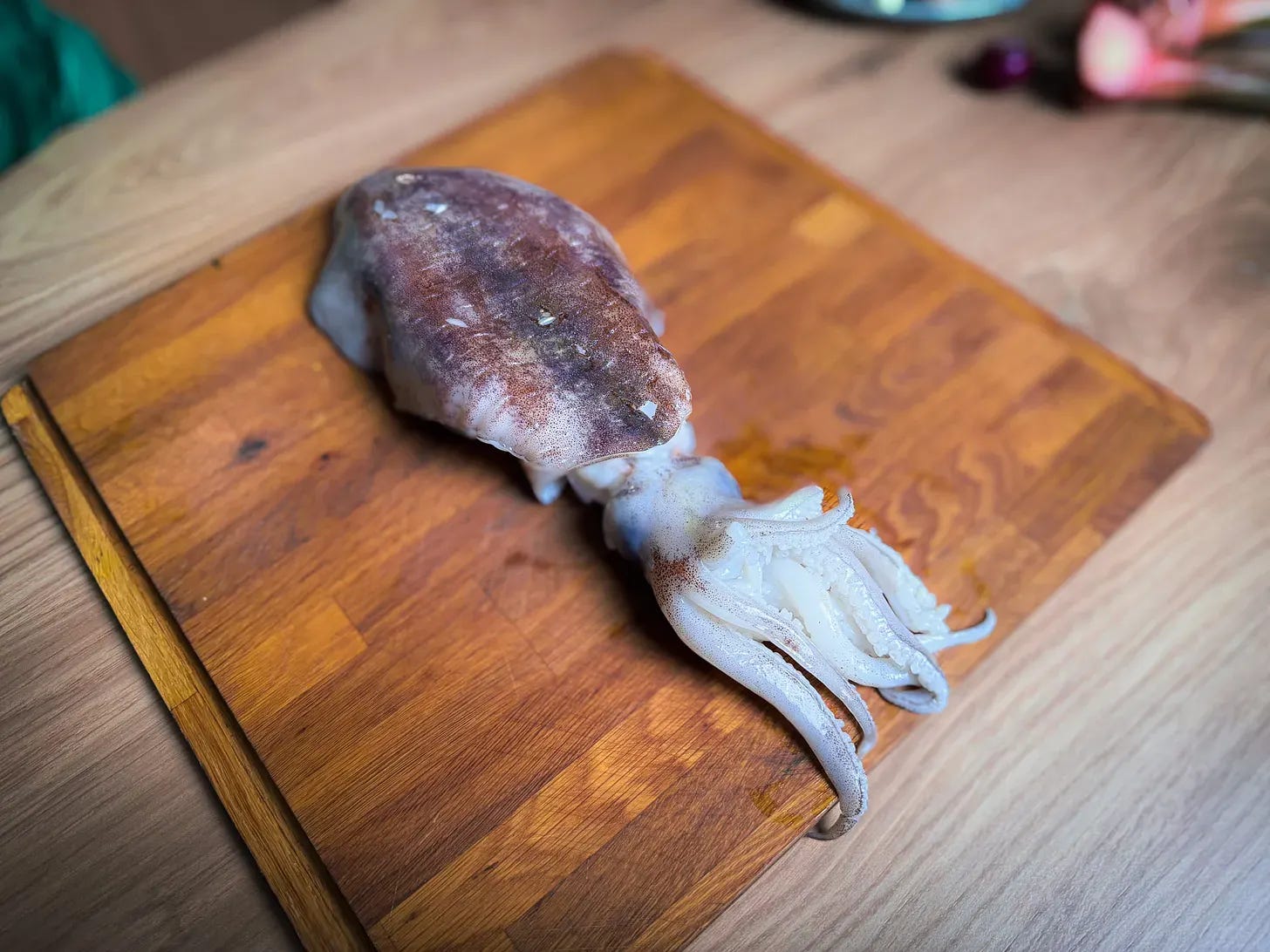
Equally instructive was her choice of squid. While Sotong Torak (Swordtip Squid) is the variety most commonly found in Singapore’s markets, she prefers Sotong Nos Karang (Bigfin Reef Squid). The distinction is not merely academic. Sotong Nos Karang yields a darker and more abundant ink, giving the finished dish a deeper black hue, while its flesh remains firmer and more substantial after cooking. It is, however, considerably less common in Singapore today and is available only through a handful of specialised seafood suppliers.


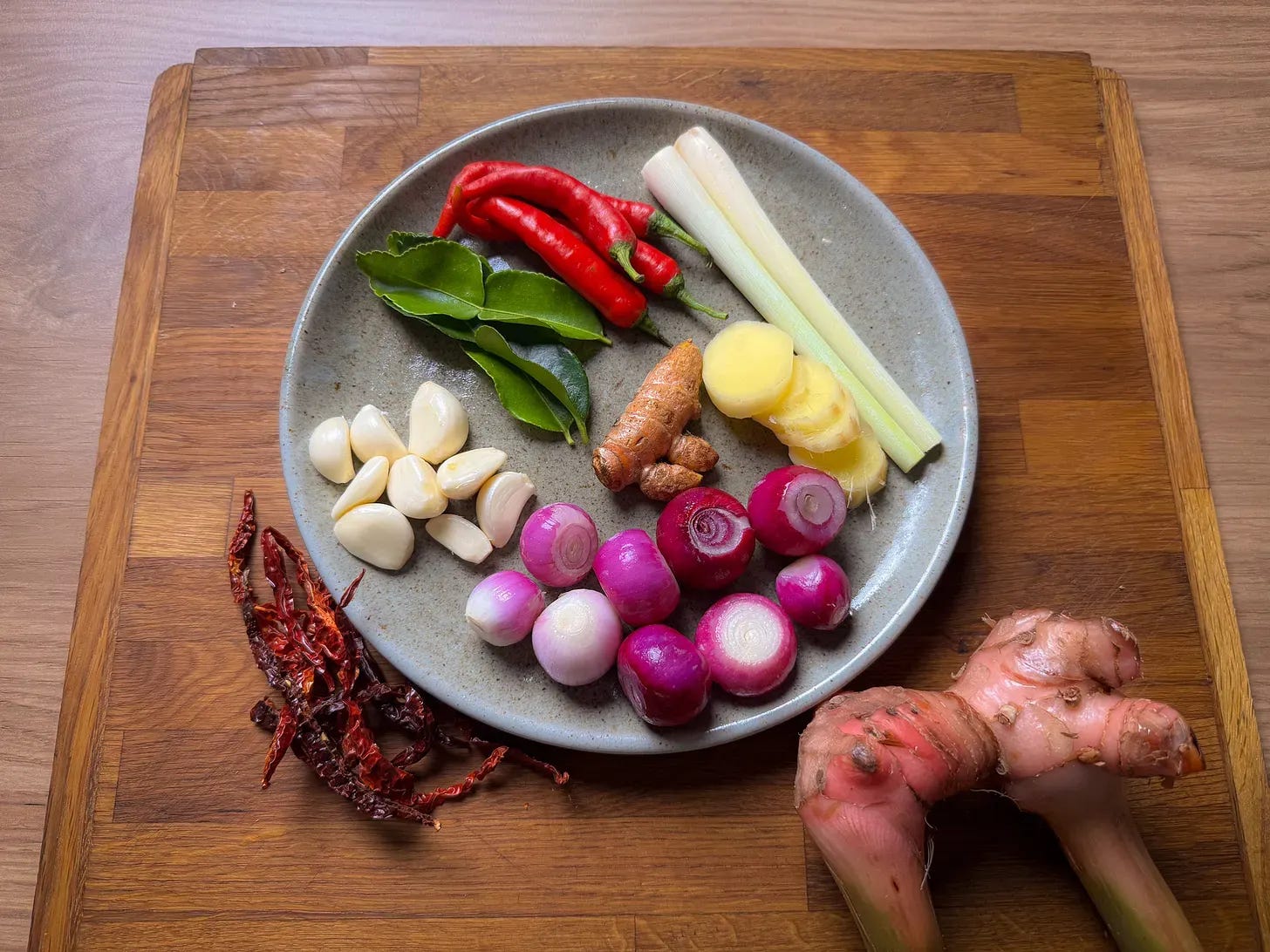
This recipe, to me, is an attempt to reconcile these two traditions: the one I inherited from my family and the one generously shared by Mdm Nooraini. Its flavours are familiar yet layered—the gentle smokiness of dried chillies, the rounded acidity of asam jawa (tamarind), and the citrusy fragrance of makrut lime leaves, which lifts the richness of the squid ink without overwhelming it.
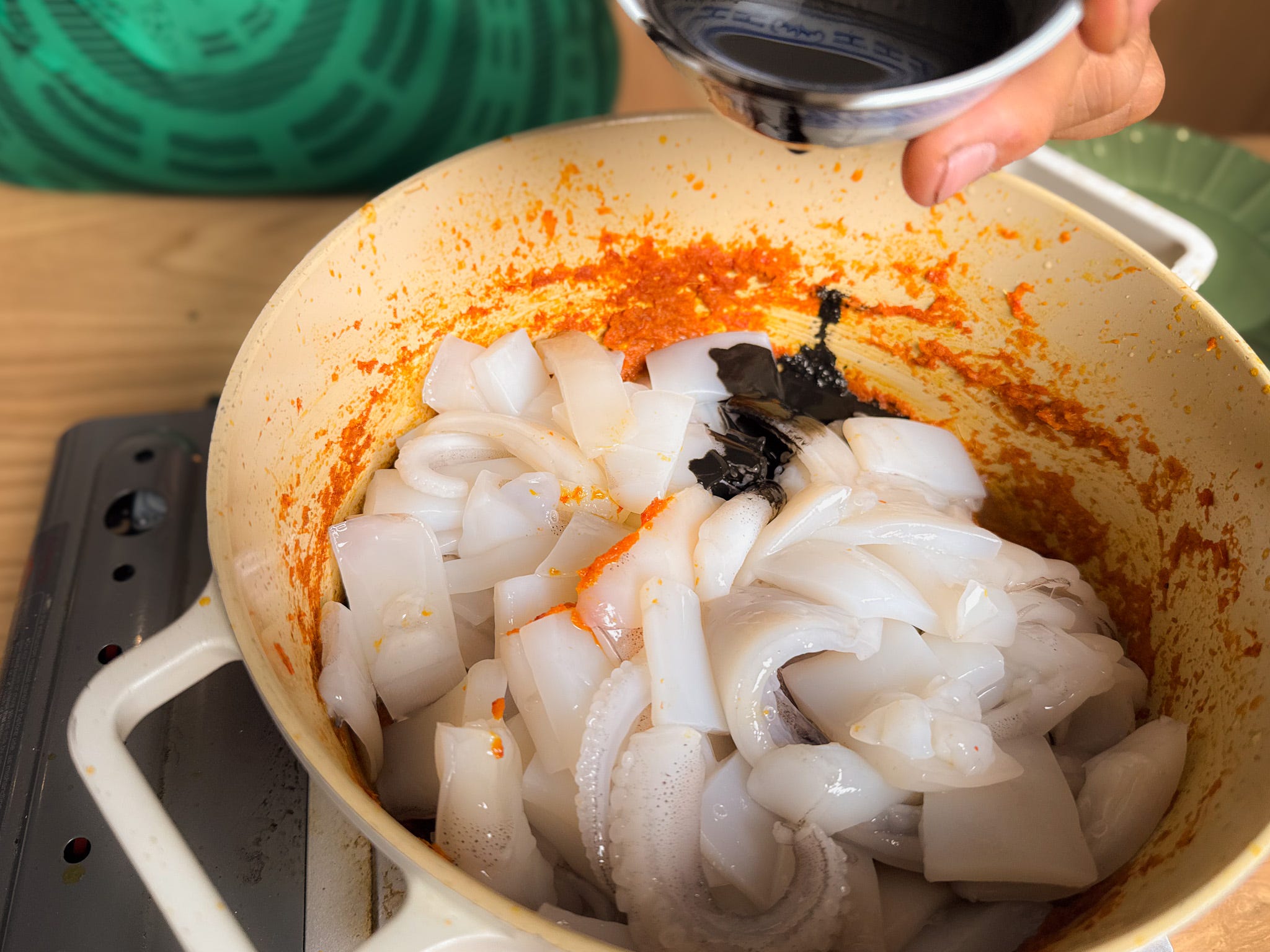
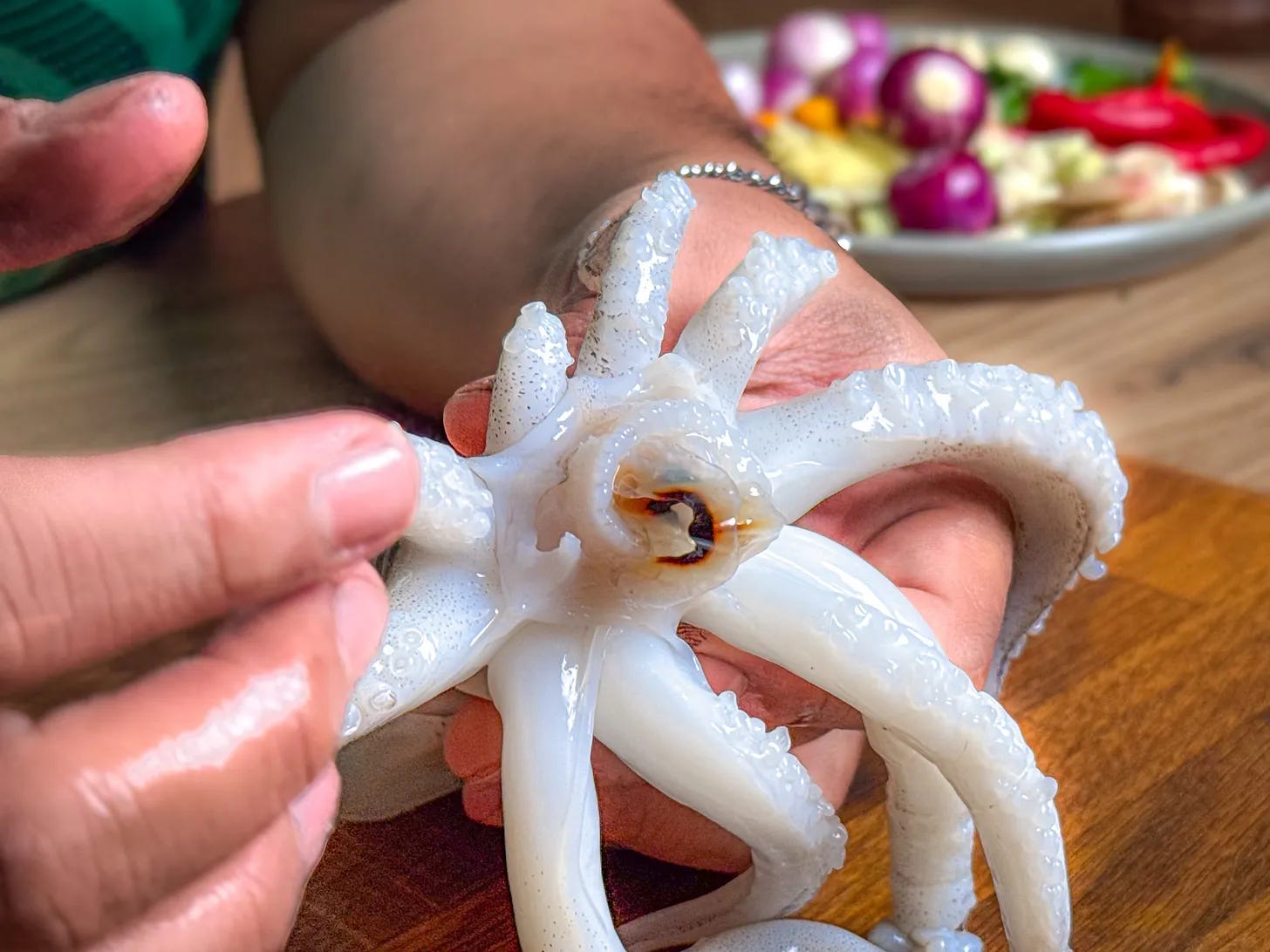
The squid should first be cleaned thoroughly and rubbed with salt to remove any residual slime, before rinsing it with water. More importantly, care must be taken not to rupture the ink sac during cleaning. Preserving it intact allows the ink to be introduced deliberately into the pot, where it disperses evenly through the gravy and gives the dish the appearance and flavour for which it is known. Such small acts of care are characteristic of Malay domestic cookery, where technical knowledge is often transmitted through observation rather than written instruction.
Recipes such as this are seldom fixed. They evolve from one generation to the next, shaped by memory, circumstance and the cook’s own judgement. This version reflects that continuing conversation, bringing together the flavours of my childhood with the knowledge so generously shared by another family whose culinary heritage forms part of Singapore’s rich Malay food traditions.

 Tiktok failed to load.
Enable 3rd party cookies or use another browser
