Sambal Goreng Tahu Tempeh
with BONUS recipe of homemade TEMPEH, made from RAW SOYBEANS!

Enable 3rd party cookies or use another browser
Homemade Tempeh (from scratch)
500g soybeans
4 litres water (or enough to cover beans)
1 tbsp vinegar (apple cider or white vinegar is fine)
1 tsp tempeh starter culture (ragi tempeh)
a few ziplock bags OR ample banana leaves
directions
preparing the beans
soak soybeans for at least 3 hours or up to overnight in plenty of water.
after soaking and while the beans are still in water, rub the beans to get separate out the hull, until the majority of the beans are skinless. discard the skins. however, you could also skip this dehulling step entirely.
drain out the water and the floating and rinse then beans twice.
combine the drained soybeans into a large pot with 4 litres water. bring the water to a boil and turn down to a simmer. skim off any foam which comes up the surface with a ladle.
cover cook the soybeans for 45 minutes to 1 hour until they become tender but still firm & not mushy.
then, thoroughly drain the cooked beans using a colander and transfer to a large tray, spreading out all the beans.
let the beans dry fully and cool to room temperature. if needed, dab with a paper towel to remove all the moisture in the surface of the beans.
inoculating the beans
place the beans in a clean bowl and add vinegar. toss well. this step prevents other microbes from spoiling the beans.
then, sprinkle in the tempeh starter culture and mix evenly to coat every single bean.
wrapping the beans
if you’re using banana leaves, wipe dry and cut off the banana leaf ribs. wilt the leaves on top of the stove fire first.
add a few spoonfuls of inoculated beans onto the middle of the leaf sheet and fold in the ends to form a parcel.
if using a ziplock bag, load all the beans into the bag until full. close the seal. using a toothpick, poke holes all around the bag to allow the culture to breathe. shape the bag of beans into a nice rectangular shape.
keep the wrapped tempeh on to a tray, cover with a clean cloth and keep in a dark place for at least 48 hours (we recommend keeping it in a kitchen oven with the electric off)
after 48 hours, there should be a white mycelium covering the beans and pulling everything together into a ‘cake’. tempeh is ready to use.
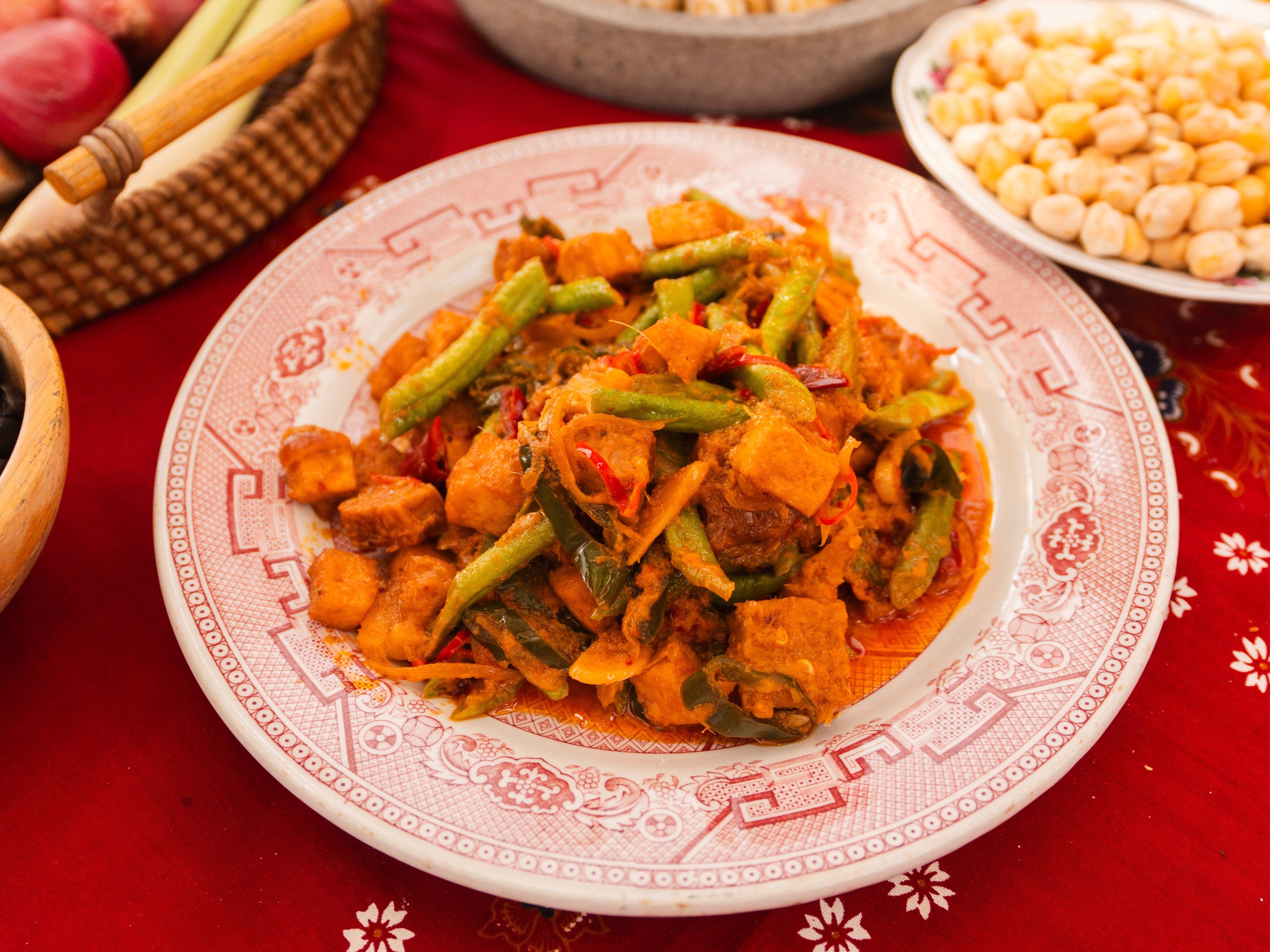
Sambal Goreng Tahu Tempeh
200g tempeh (homemade or store-bought)
1 block firm tofu (tau kwa)
oil, for pan frying
1 cup coconut cream
1 cup water
1 tbsp tamarind pulp (asam jawa)
1 turmeric leaf
3 kaffir lime leaves
2 green chillies, sliced diagonally
5 long beans, cut into 3cm pieces
2 tsp gula Melaka (or brown sugar)
salt, to taste
spice paste:
5 shallots
2 cloves garlic
15g ginger
10g galangal
8g fresh turmeric
3 candlenuts, soaked in hot water
1 lemongrass, sliced
6 dried chillies, soaked in hot water
directions
heat oil in a pan and pan fry tofu and tempeh separately until nice and golden. drain on paper towels and set aside.
blend all the spices paste ingredients until smooth, adding water if needed.
heat a wok or pan on medium heat with about 3 tbsp of the used oil. saute the spice paste for 8-10 minutes or until the oil starts to split.
add in coconut cream, water tamarind, turmeric leaf and lime leaves. mix well and simmer for another 6 minutes until it becomes a thick sauce.
toss in fried tofu, tempeh, green chillies and long beans and cook until the beans are softened and the sauce coats the tofu and tempeh well.
season with salt and palm sugar.
looking for other recipes to us your tempeh in? check out these other Nusantara dishes!:
Lontong with Sayur Lodeh - a hearty breakfast vegetable stew
in Singapore, we do breakfast like no one else! other than our beloved kaya toast, there’s a plethora of breakfast options that one can get from hawkers/coffeshops in the early hours of the morning, from a simple but delectable wanton mee to the doughy and delicious prata with curry!
Crunchy Potato and Anchovy Sambal - a forgotten old-school favourite!
when the ladies from MakcikAlertSG requested for me to make this for them, it instantly brought me back to my childhood memories of eating homecooked food prepared by the ladies of the household. while it can still be easily found being sold as a side dish at local Nasi Campur / Nasi Padang stalls, it is a food that I often overlook and it is something …


