


When I think of nasi lemak, I think of the times my mom would go out of her way to cook the most delicious nasi lemak I’ve ever had. She would whip it up almost every month back when we were still living in France. Cooking there came with its challenges, as the ingredients were not something we could easily pick from our backyard garden, and staple ingredients like pandan came packaged and frozen, found in a far corner of Tang Frères (an Asian supermarket in Chinatown, Paris).
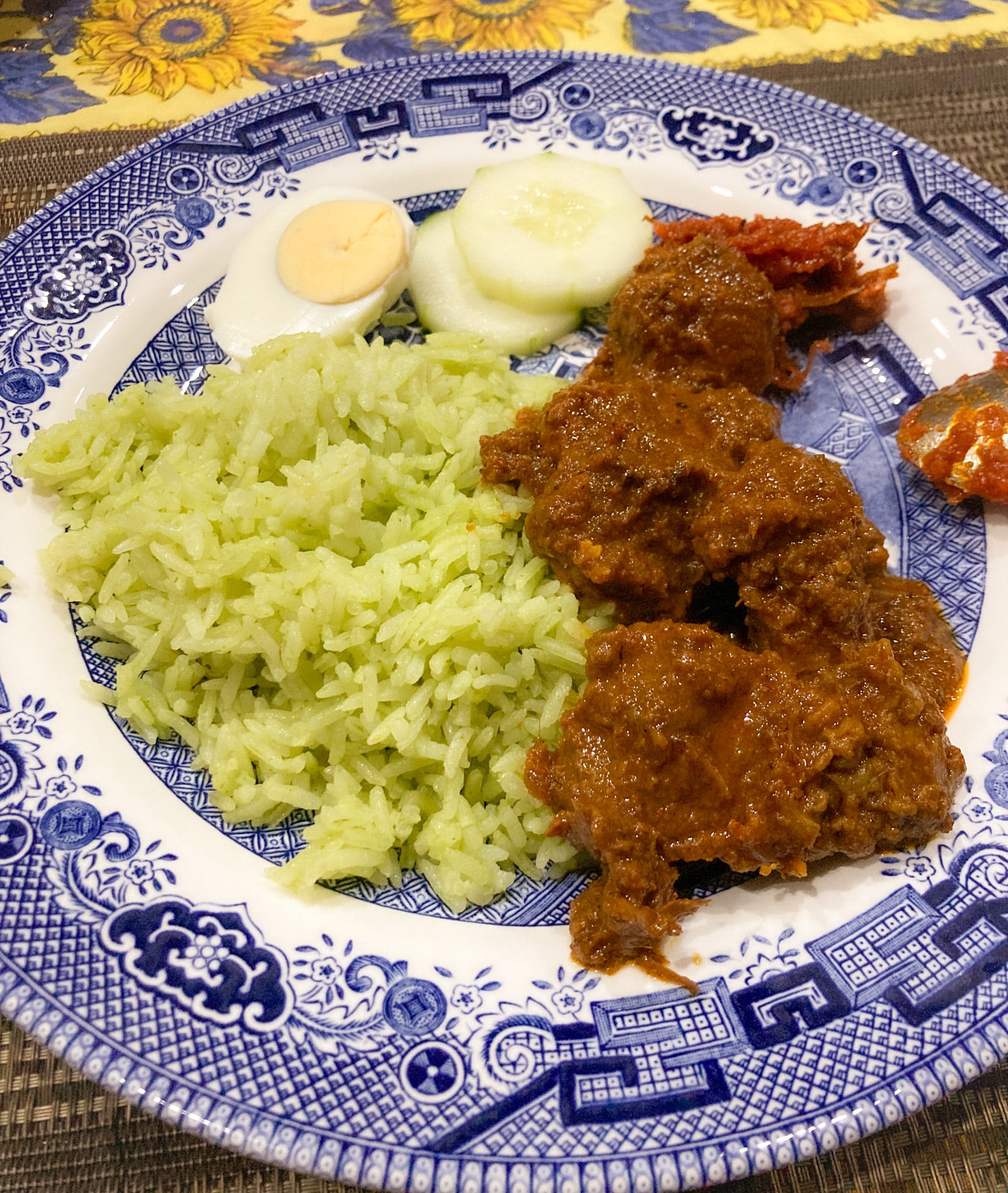
Her nasi lemak was the definition of fragrant–with bits of ginger, lemongrass, and pandan embedded in the coconut-rich rice. It was also uniquely tinted green because she would blend the pandan and mix it into the coconut milk before cooking the rice in it. She would also go the extra mile to make her own sambal too! It is thick, spicy, and sweet–similar to the ones that you find in Malaysia. She always served it with cucumbers, anchovies, peanuts, and boiled eggs–as it should be. To accompany the nasi lemak, she would serve her rendang or ayam goreng on the side. Honestly, it was always a side character to me because I could just eat the nasi lemak with boiled eggs and be content. There’s just something so special about my mom’s nasi lemak. I love how the creamy egg and the not-so-spicy sweet sambal mixes with the fragrant rice, the crunch of the salty peanuts and anchovies, the aromats from the rendang, all come together in perfect harmony. It’s a taste of nostalgia that brings me back to my childhood in Paris, as weird as that sounds. To me, it’s the true taste of a mother’s love and dedication to keeping flavors from home familiar in a foreign land.

I’m sure it wasn’t just for us too. Looking back, I don’t think my mom was just cooking dinner. She was building a small piece of Brunei in a Paris kitchen. Now that I’m the one living far from home, I find myself doing the same in my own way: hunting down nasi lemak across Singapore, on my own.
Sue’s Kitchen
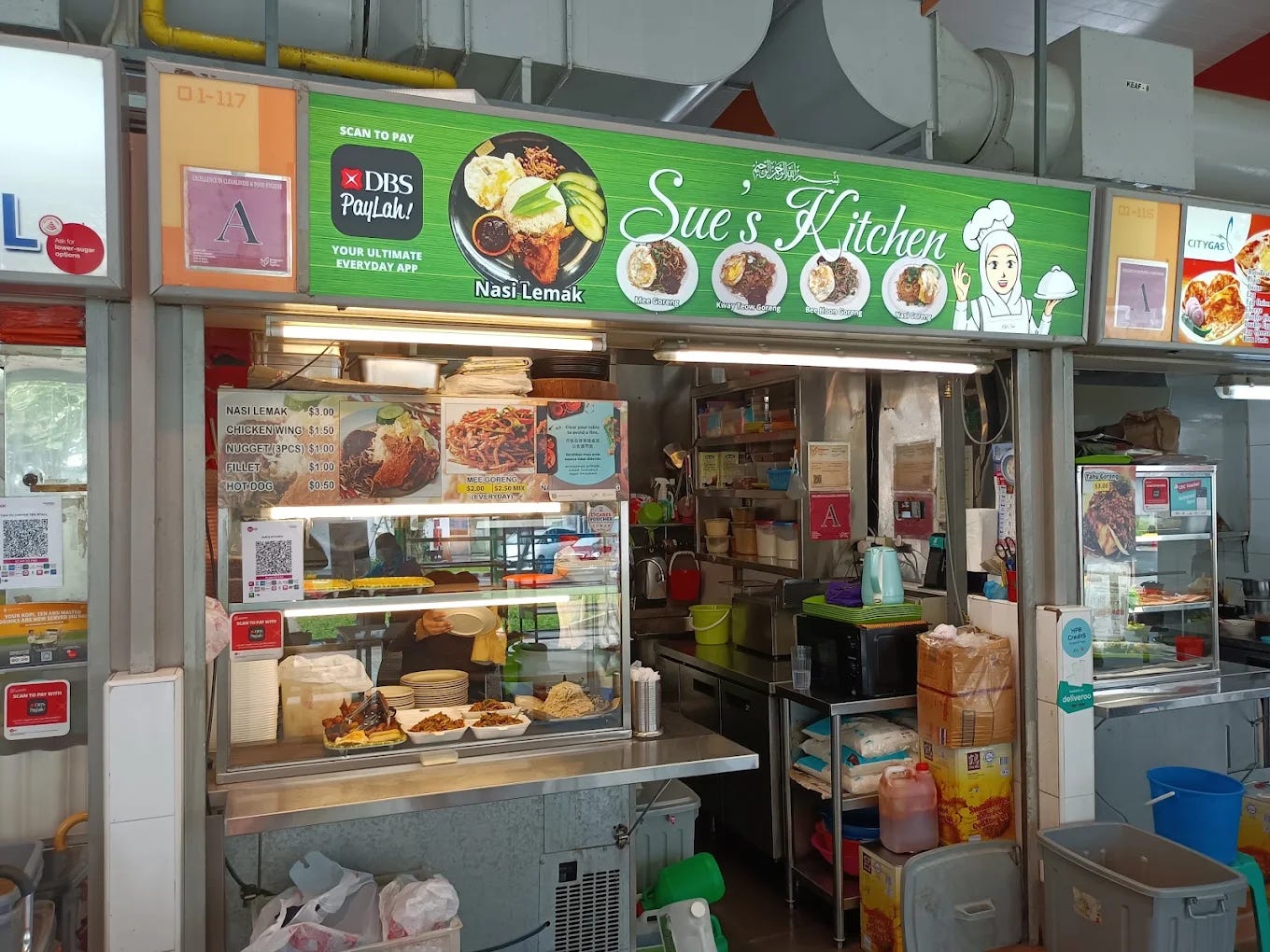
Sue’s Kitchen is a place that I discovered during a shoot, where we featured a few different places at Bedok 538 hawker centre. They are usually open from 7am to 1.30pm and see a crowd from 8am to 11am. One plate of nasi lemak ranges from $3 (plain) to $5.
There was something about the nasi lemak at this stall that reminded me of my mom’s version. I’m not sure what it was, but the lemak-ness in the rice was definitely more fragrant than other SG institutions. Though the crispy chicken wing was simple, it was freshly fried and well-seasoned. The sambal was sweet and not too spicy. For me, the fact that this place sells it at $3 in this economy is crazy.
I like coming here for breakfast and sending a picture to my mom so she doesn’t have to worry about whether I’m eating well or not. But she usually replies with something like ‘I can make it better at home’ or ‘Wow, in Brunei nasi lemak is only $1’. (she’s totally missing the point…)
This hawker centre also has a special place in my heart. Sue’s family knows me as ‘the girl who can’t speak Malay’, the kopi aunty always remembers my order and delivers my kopi to me, and the kopi bean seller is now a friend (he is a profile turned friend). Most importantly, I enjoy coming here, alone, early in the mornings to watch how the place slowly comes alive.
La Pona Nasi Lemak
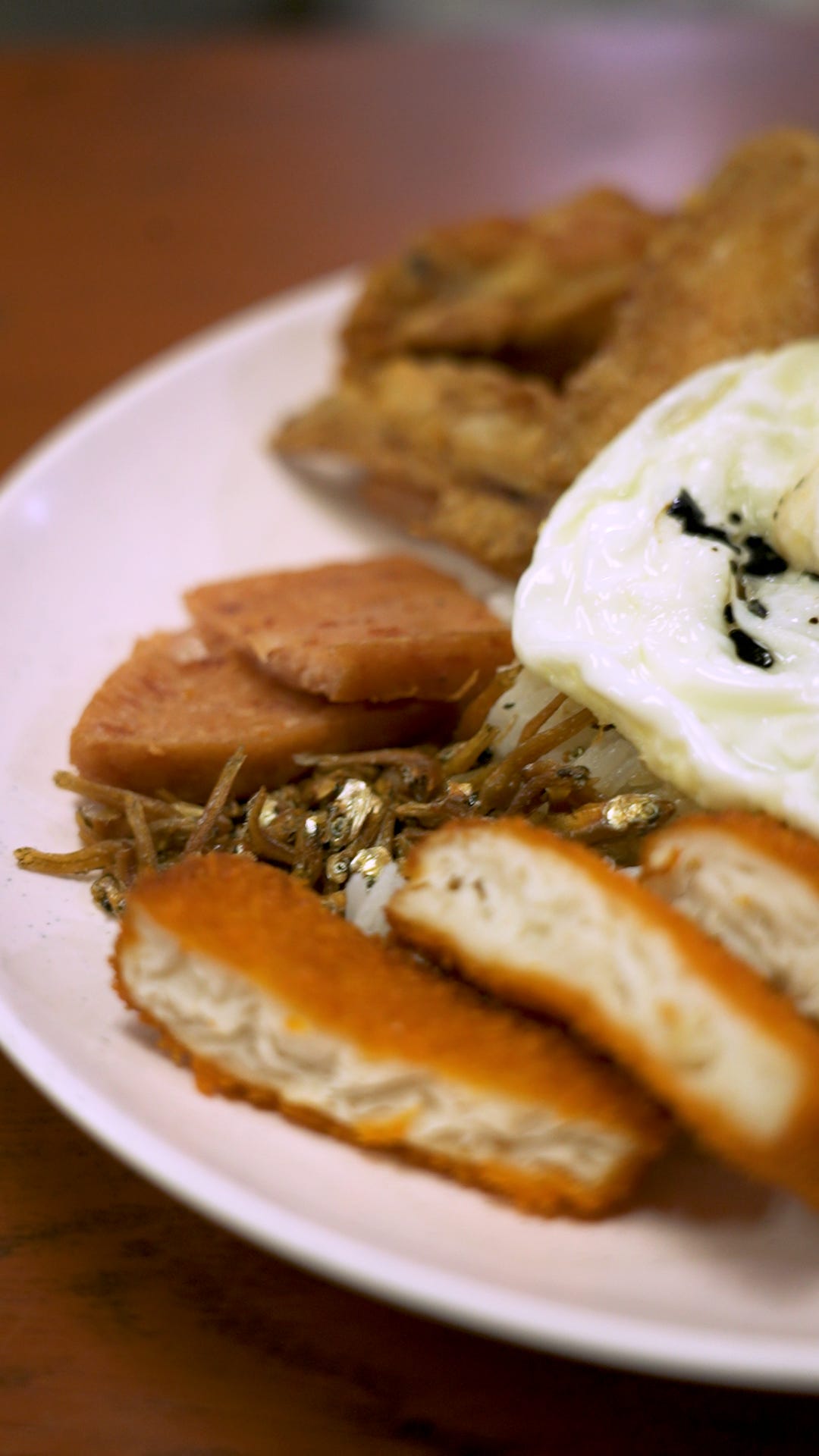
La Pona’s nasi lemak is another plate that I’ll always remember, because it was my first proper Chinese-style nasi lemak: one with kicap drizzled over the top and assorted fried bits. Situated at Orchard Plaza, this hole-in-the-wall izakaya-style stall opens from 10:30pm to 4am, presumably to cater to the surrounding late-night club crowd. If you can get a seat, I highly recommend dining there; it is an experience that you won’t want to miss out on (a little dramatic, if I may add).
Chinese-style nasi lemak is characterised by its wide array of ingredients; it’s almost like cai png (economy mixed rice) but with nasi lemak. There’s a lot more fried ingredients like fish fillet, ngoh hiang, and sometimes pork. The sambal differs from place to place, but I usually find Chinese nasi lemak sambals relying more on hei bee (dried shrimp) than belacan for depth. Another defining characteristic is the ‘controversial’ kicap manis (sweet sauce) on top. I’m not sure where this comes from, but it adds a nice little hint of sweetness. A few other stalls in this style are Fong Seng Nasi Lemak (a popular supper spot for university students) and Punggol Nasi Lemak.
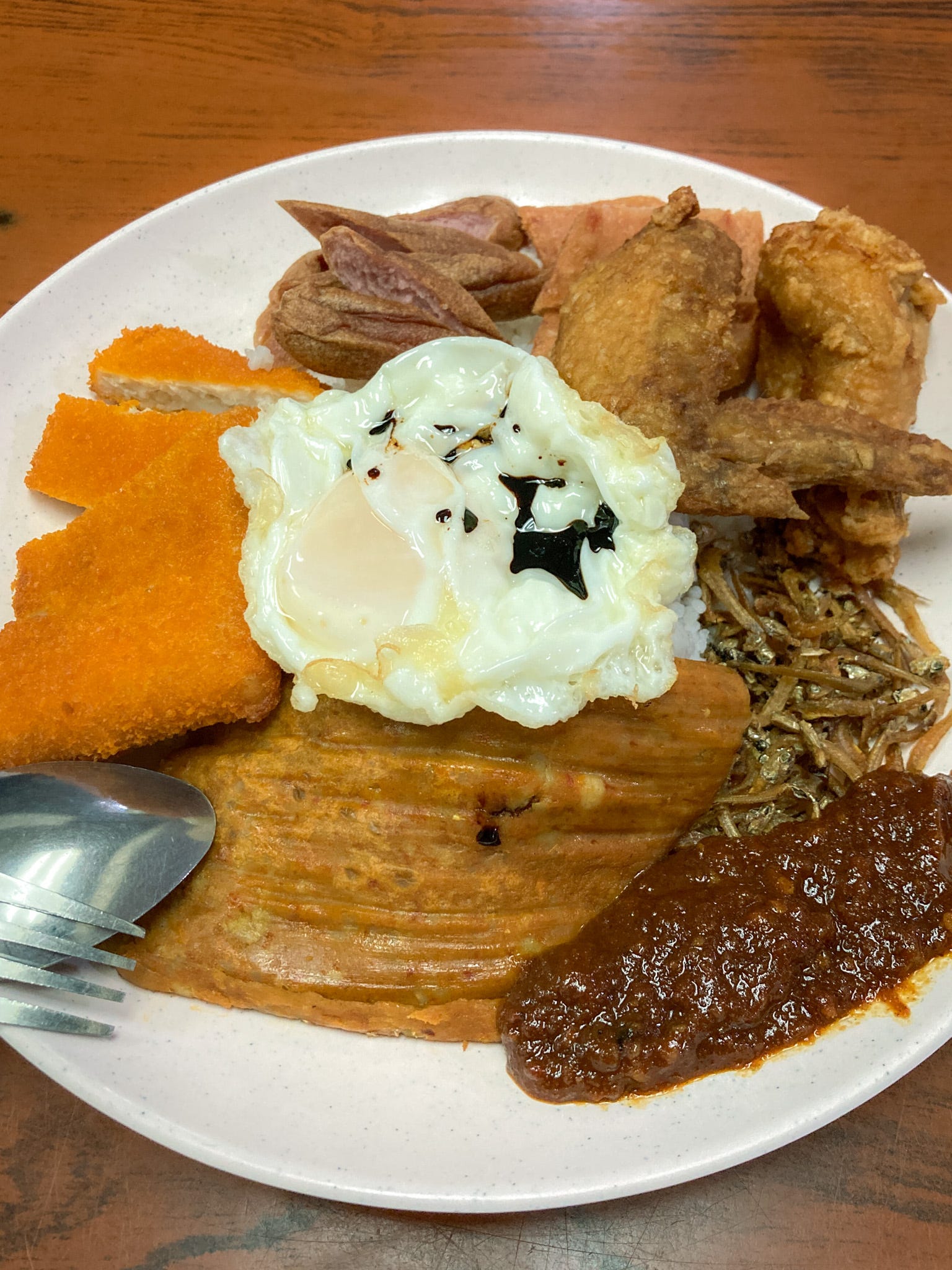
At La Pona, I went with the nasi lemak platter, which has a little bit of everything: chicken wing, Spam, hot dog, otah, fish fillet. It all adds up to a fairly steep price of $11.80. It’s not the cheapest nasi lemak, but if you’re looking for a late night craving Orchard area, it will definitely hit the spot.
I’ll never forget their LEMAK rice. I’m not kidding when I say it tasted so rich. It felt like they planted a whole coconut tree in the rice. It was perfectly executed, full of flavor and irresistible. It was also my first time trying kicap manis with my nasi lemak and as controversial as it is, it’s really not that bad as it sounds. The sauce complements quite well with the perfectly fried and creamy egg. As for their sambal, it was on the milder side, which was PERFECT for me.
Overall, La Pona is the perfect late-night filler, the kind of nasi lemak you don’t eat for breakfast but rather crave after a long night. It’s not meant to be Michelin-grade, and it’s definitely not trying to be one; it’s there to give the people what they want and fill their bellies with a meal that won’t break their bank.
Kedai Makan Muhajirin
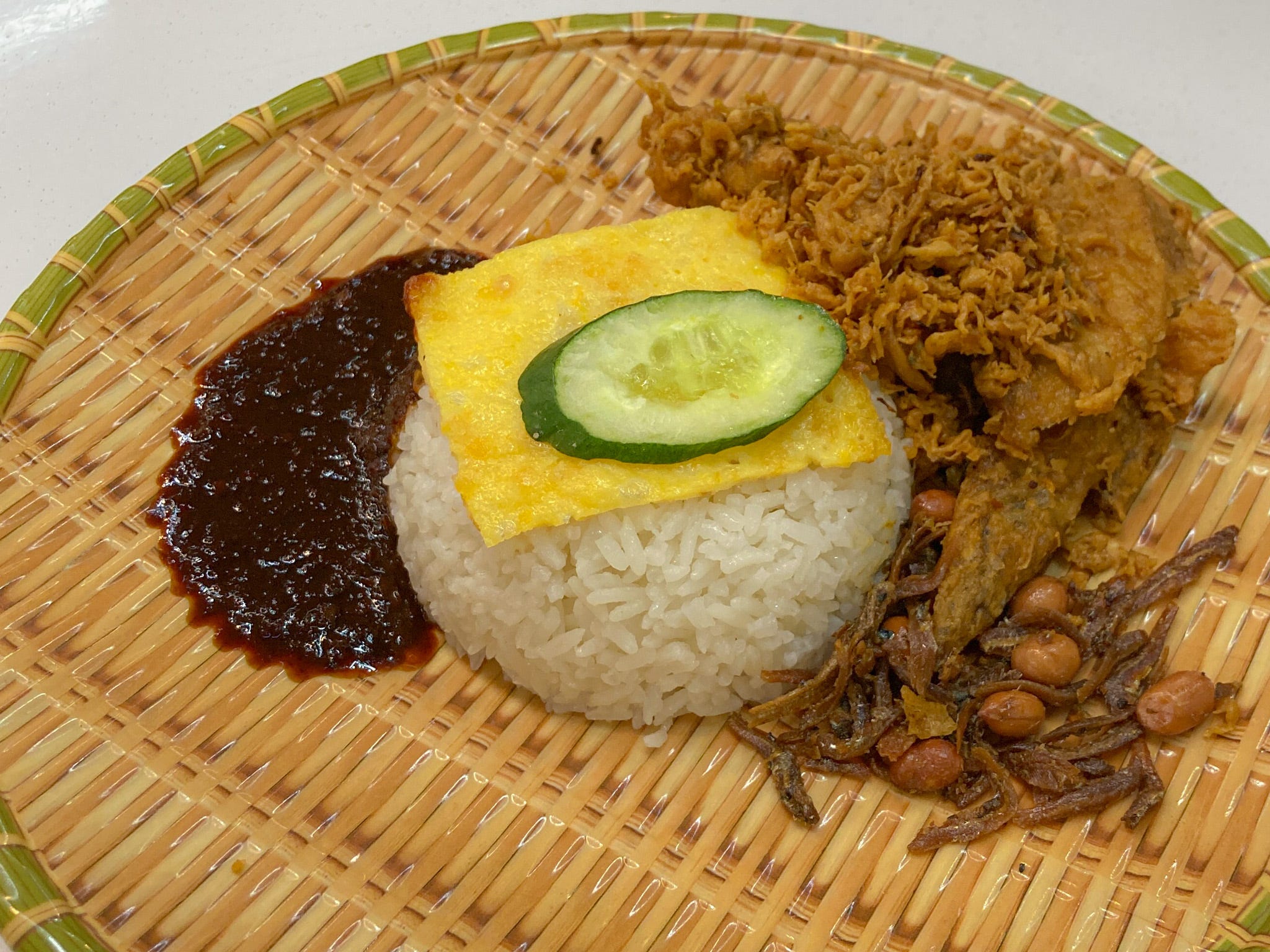
An honorable mention goes to the nasi lemak that showed me a $1 nasi lemak can still exist in Singapore. In a city that constantly thrives through outputs, numbers and returns, it was a breath of fresh air to see people willing to dedicate their heart and soul into a business that doesn’t focus on numbers, but rather on those who need it most.
This place was memorable because I also had the opportunity to join their morning shift and learn how their famous $1 nasi lemak was made. And let me tell you, it was no easy feat. What I saw was the family’s dedication, passion, and selflessness. They didn’t cut corners; they didn’t compromise, and that is exactly what I tasted in their nasi lemak.
I opted for the wing set, which comes with a well-marinated fried chicken wing, cooked to perfection. It was rather fragrant due to its coriander seed marinade, and beautifully golden brown due to its turmeric seasoning. Accompanying the wing is a healthy portion of warm coconutty rice, a spoonful of dark aromatic sambal, a thin slice of omelette, peanuts, ikan bilis and even some cucumber. I must say, I’ve been to quite a few establishments in Singapore that don’t even serve a plate this complete. Some offer only peanuts or only ikan bilis, and still charge double. This set comes in at just $2.50.
The love I felt from a plate of Nasi Lemak
Kedai and Sue’s Kitchen reminds me of a mom waking you up and making sure you have enough to eat before a long day ahead. La Pona is the mom who overfeeds you and makes sure you don’t go to bed hungry. Two different ways of showing love and care, through the same dish.
Though I miss my mother’s nasi lemak, I can safely say that these establishments remind me a bit of home: the love they put into every plate of nasi lemak, and the dedication with which they serve the community selflessly.
With love,
AK