


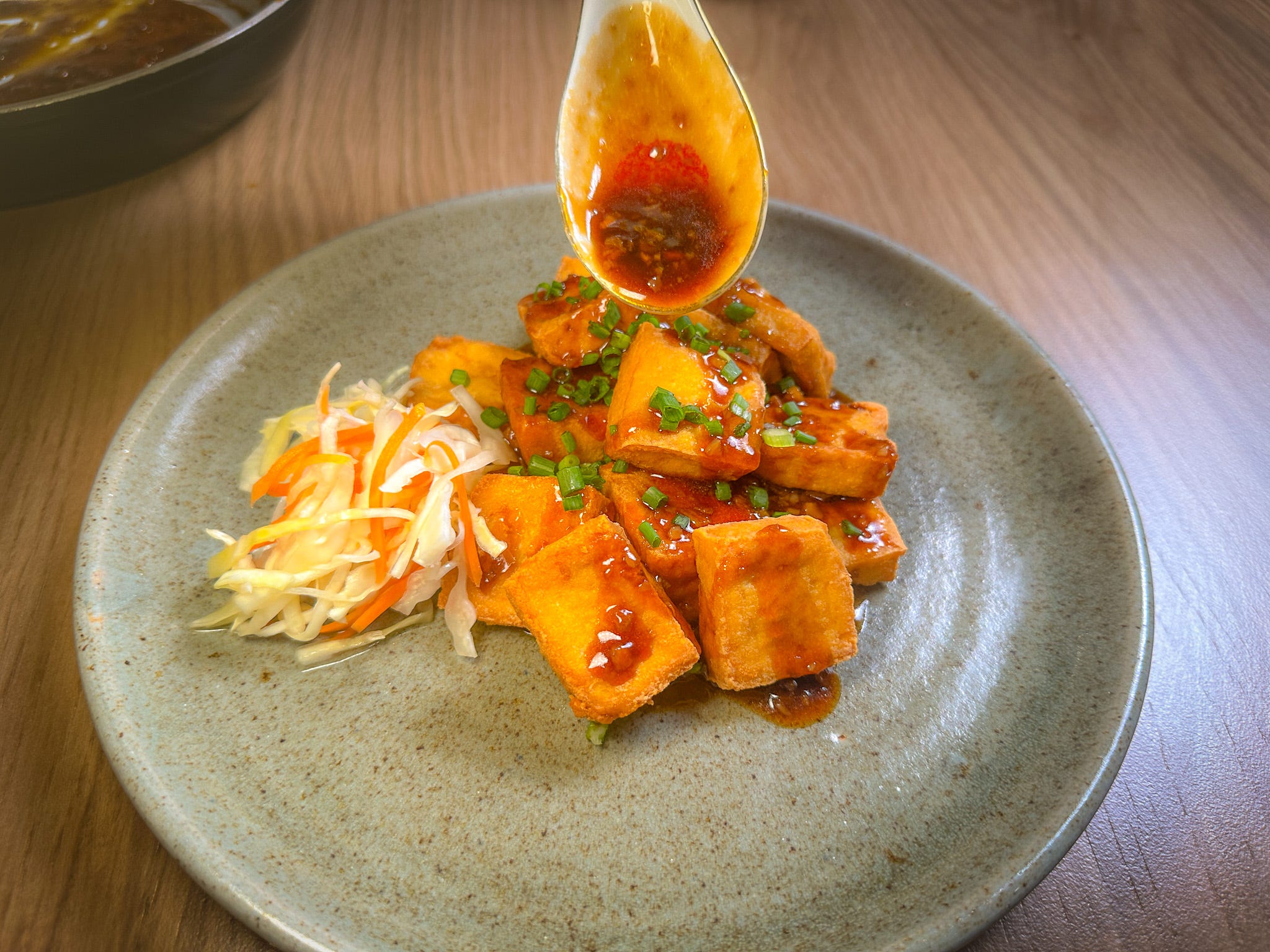
I visited Taiwan years ago, and one of the street snacks I kept going back to whenever I found myself at the night markets of Shilin and Raohe in Taipei was stinky tofu. If you’ve never had it before, the smell is probably the first thing you’ll notice. It has the distinct ability to make an entire street smell like someone has left something very questionable in a rubbish chute. But somehow, once you actually eat it, all of that disappears. The tofu is crispy on the outside, soft in the middle, deeply savoury, funky and full of umami. Your nose says “absolutely not!”, while your mouth is like “please give me another one!”.
So when I recently came across a video by Muslim food creator Sharmin (@mintydollz on TikTok) making a halal version, I immediately wanted to try making my own. The recipe I found was a much easier home-cooked version that uses firm tofu, fermented white bean curd, garlic, vinegar, salt and water. The white fermented bean curd is particularly important because, apart from being fermented, it already has this slightly sulphuric, funky smell with hints of miso-like umami. I mashed it up with garlic, some of its own brine, vinegar and water, submerged the tofu in the mixture and left the whole thing in an airtight jar in the fridge for a week, flipping it every couple of days so the brine could reach all sides.
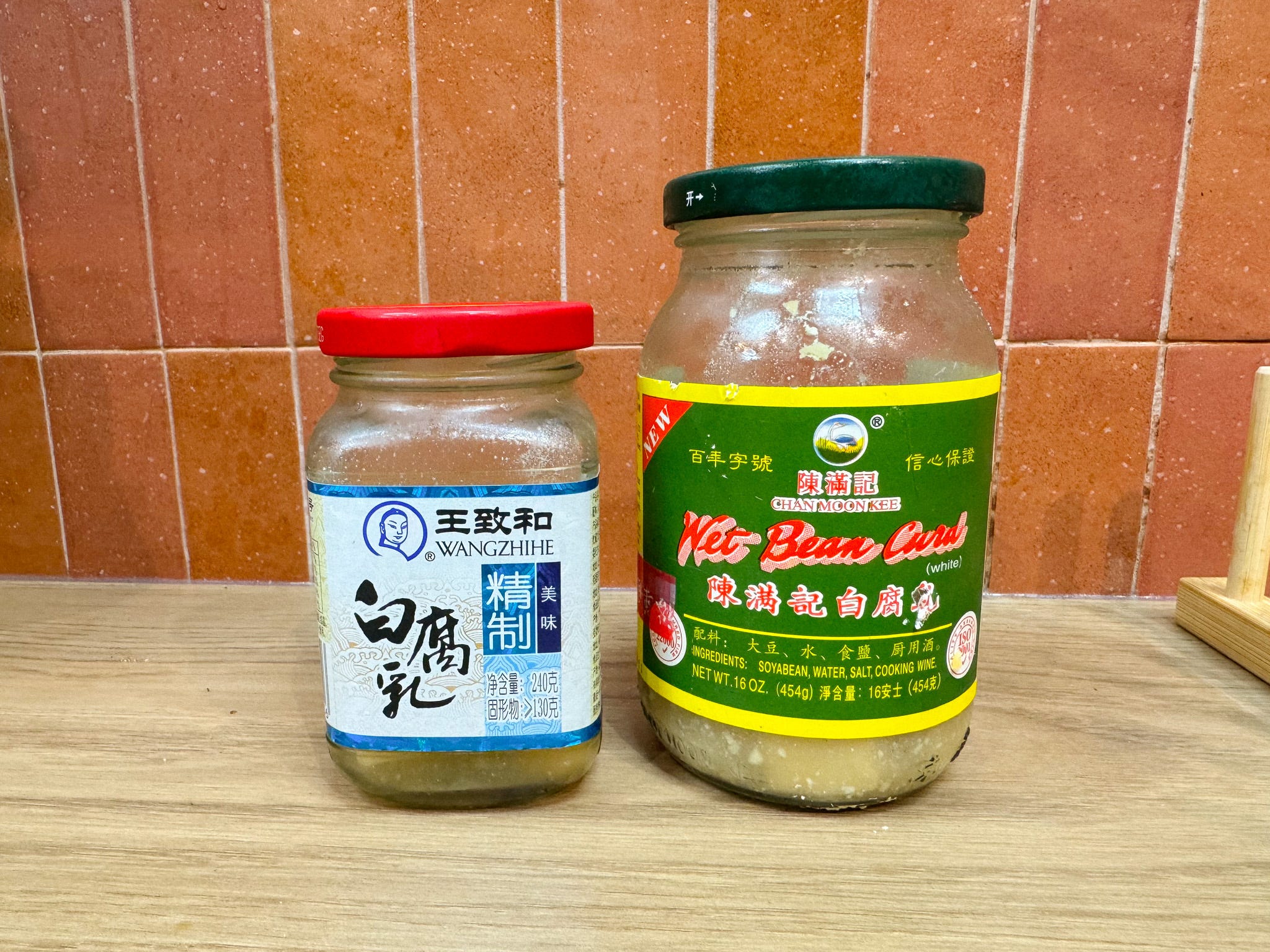
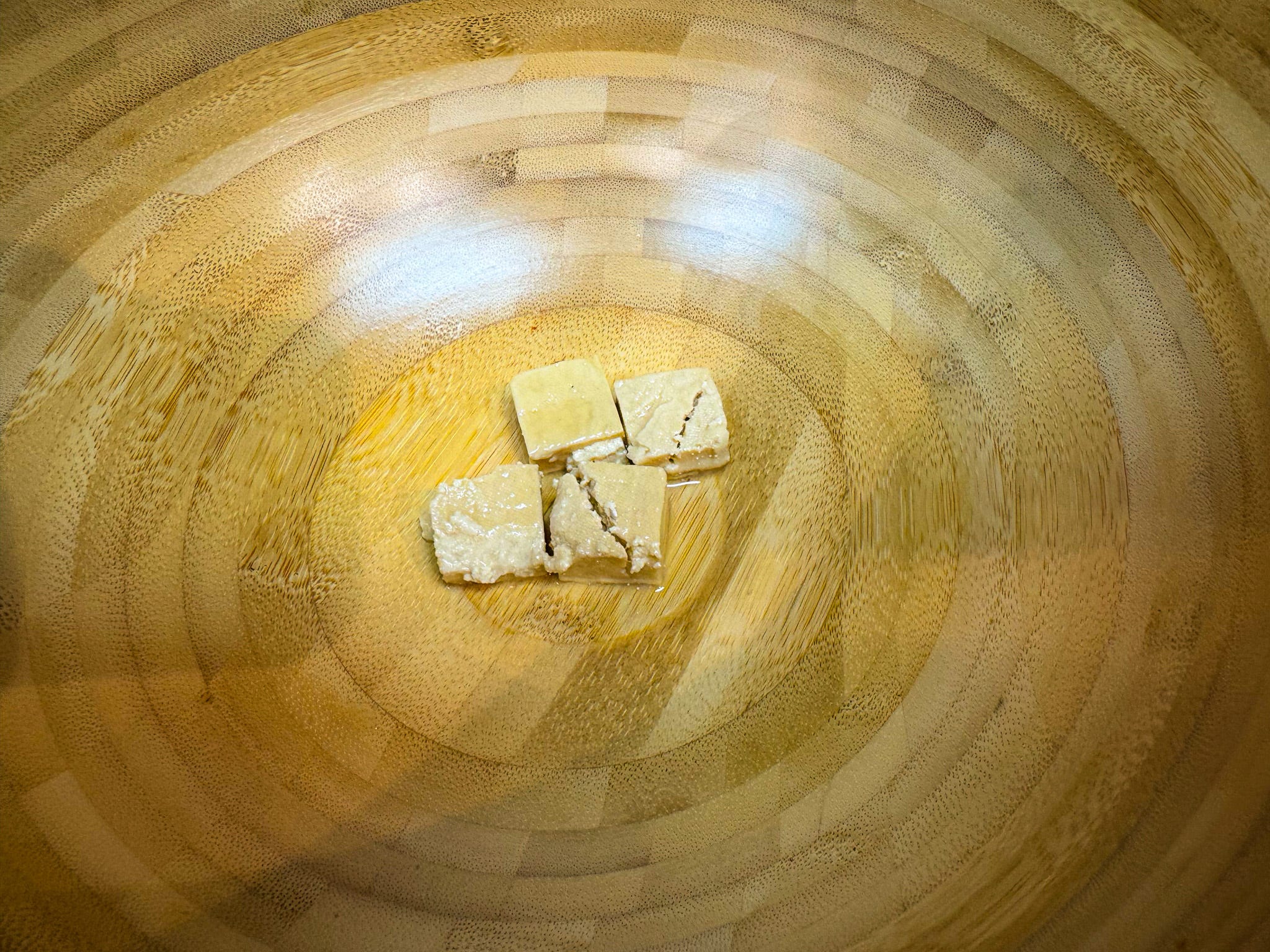
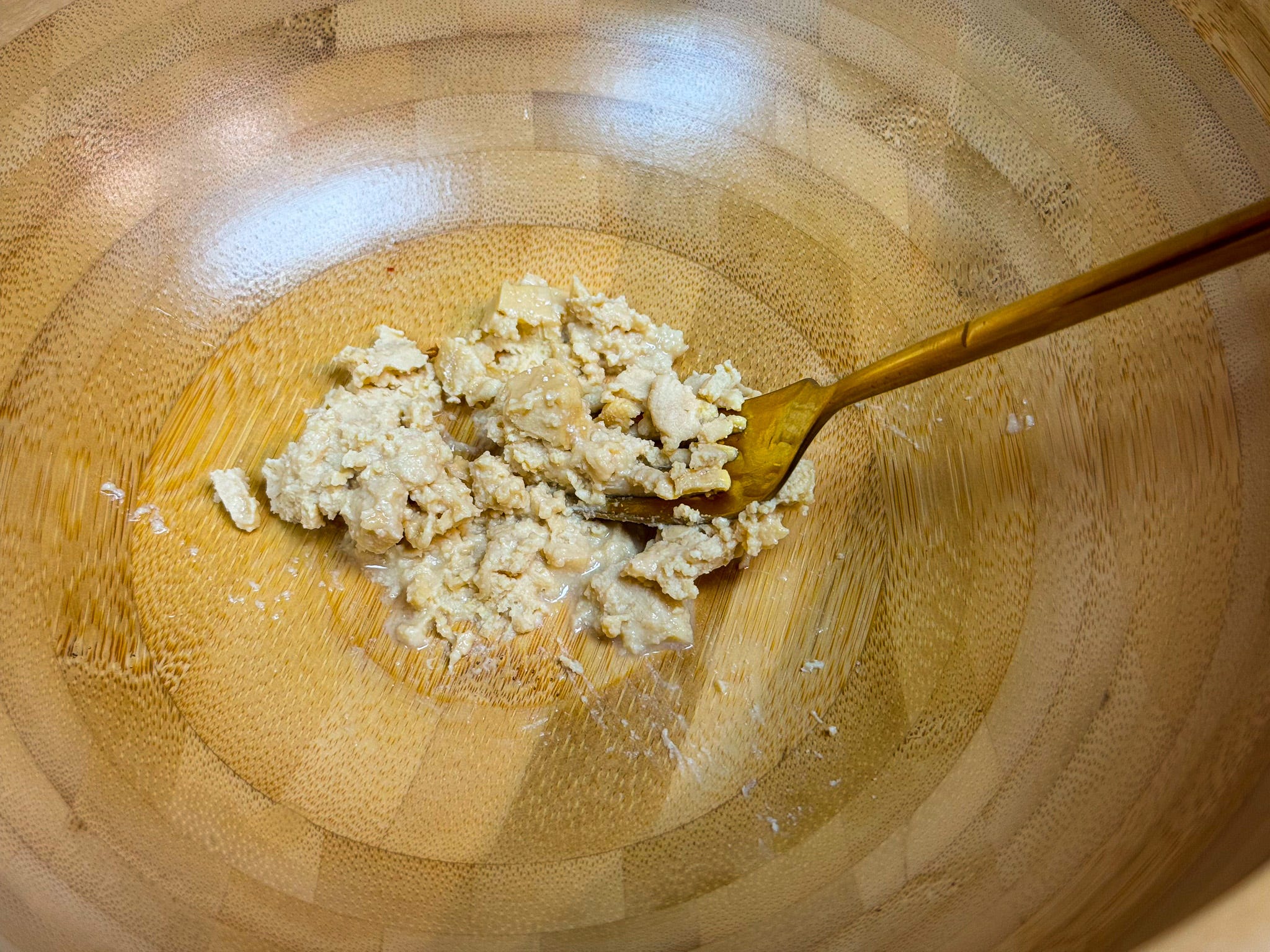
One week later, it was time to find out if I had successfully made stinky tofu or just made tofu that had spent a week having a garlic bath.
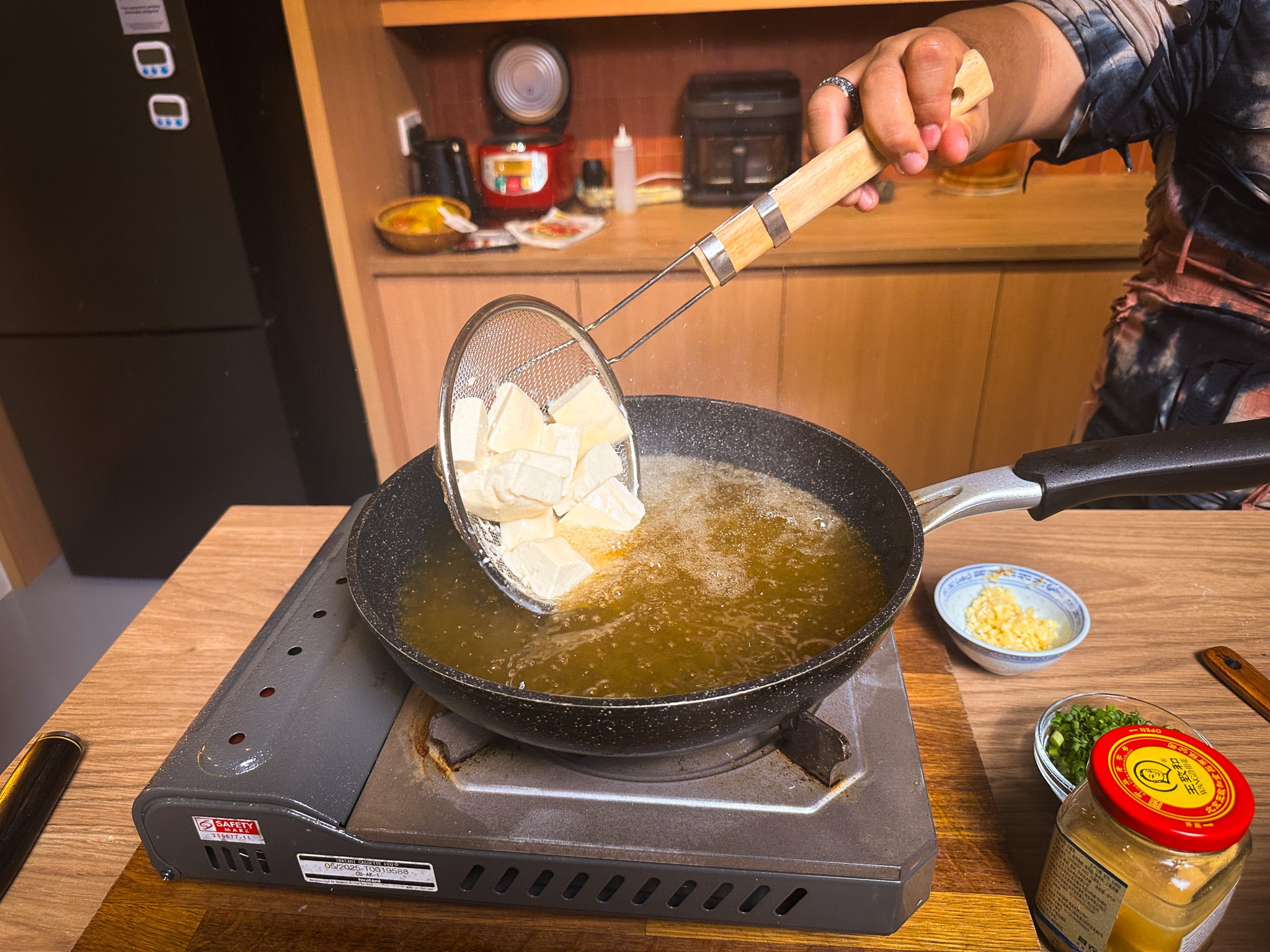
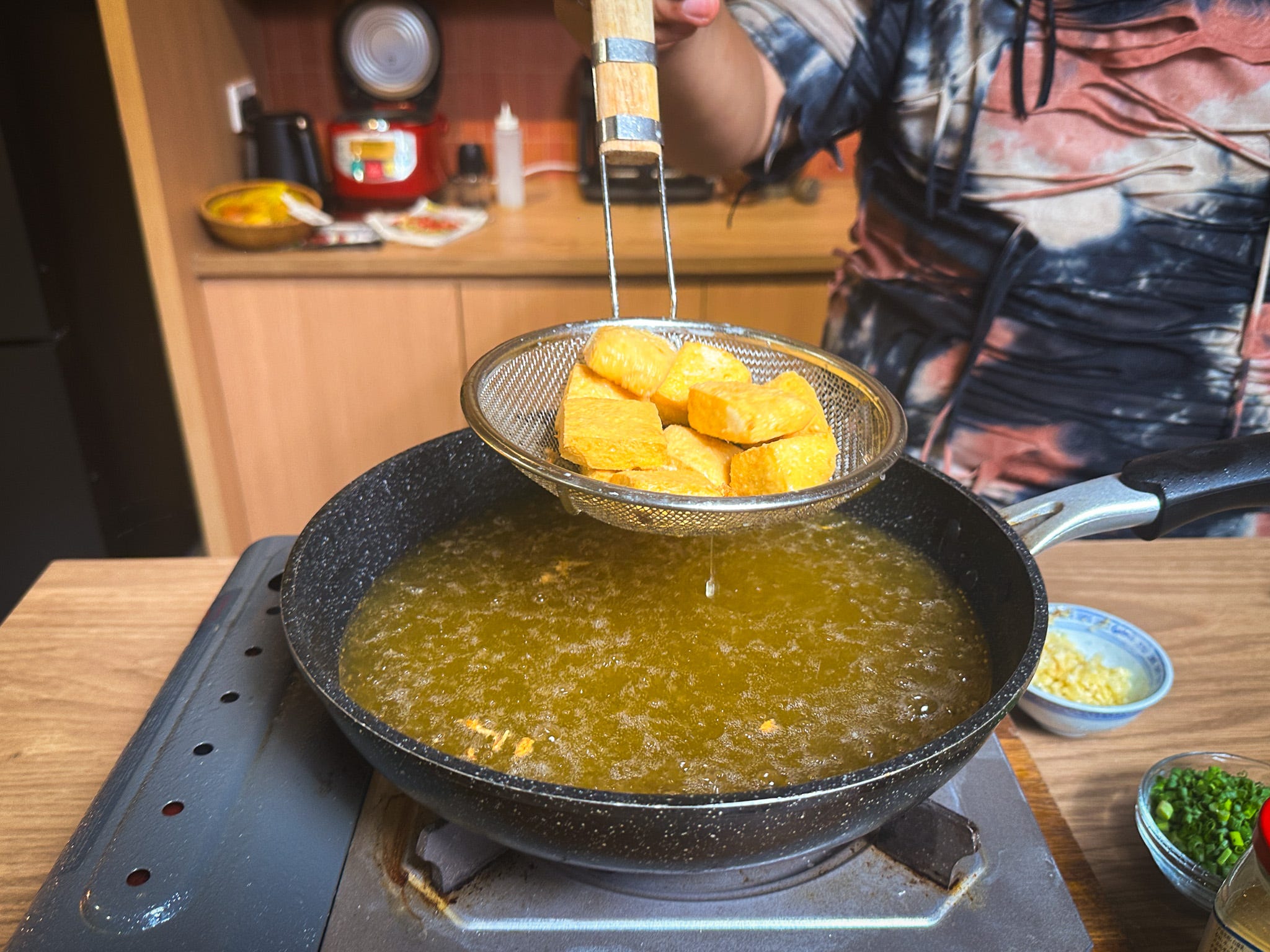
The smell, surprisingly, wasn’t that bad. It was much more garlicky than stinky, which should probably have been my first clue. I drained the tofu, tossed it with a little baking powder to help make the texture lighter and airier, then fried it until the outside was crispy. And honestly, it looked pretty damn good.
But before eating it, I started wondering what actually makes proper stinky tofu so damn stinky in the first place.
Turns out, the real thing is considerably more involved. Traditional stinky tofu isn’t simply tofu soaked in some funky liquid for a few days. The magic happens in the stinky brine, which is itself fermented. Depending on the producer and region, the brine can be made from things like fermented vegetables, cabbage, bamboo shoots, amaranth and other ingredients, with some traditional versions also incorporating shrimp or other protein-rich ingredients. The mixture is left to ferment for weeks or even months, allowing a complicated community of microorganisms to break down proteins and produce all those wonderfully offensive aromas.
In fact, studies of traditional Taiwanese stinky tofu brines have found a surprisingly diverse mix of bacteria and fungi living in them, while researchers have also tried isolating specific microorganisms to make the fermentation more controlled and consistent. So behind that seemingly simple night-market snack is actually a pretty sophisticated fermentation process.
Which also explains why my little one-week experiment wasn’t quite the same thing.
After frying, my tofu was crispy, airy and had a nice fermented savouriness. It was genuinely good, and for a shortcut version made in the fridge in a week, I can’t complain. But then I took a bite and realised...
This isn’t the stinky tofu I remember ;(
I wanted that aggressive funk. That smell that hits you before you even see the stall. That slightly rotten, almost ammonia-like aroma that makes you question whether you should be eating it, followed by that ridiculously satisfying umami flavour once you actually do. Mine was more like stinky tofu’s well-behaved younger sibling. It had the idea of stinky tofu, but none of the social menace.
Still, I think that’s also what makes this version fun. If you’ve always wanted to try making stinky tofu at home but aren’t quite ready to spend months cultivating a vat of fermented vegetables and microbes in the name of dinner, this is a much more approachable introduction. Just don’t expect it to taste exactly like the stuff you get in Taiwan.
As for me, I think I’ll have to try making the proper version one day.
Although I should probably let the neighbours know first.

Homemade Stinky Tofu (beginner level)
- 450 grams firm tofu (tau kwa), cubed
- 6 pcs white fermented beancurd (fǔrǔ, 腐乳)
- 3 tbsp fermented beancurd brine (I used WangZhiHe brand)
- 5 cloves garlic, smashed
- 1/4 tsp salt
- 1 tbsp rice vinegar
- 2 cups water
- oil, for deep frying and for the sauce
- 2 cloves garlic, minced
- 2 sprigs spring onion, sliced
- 1 tbsp oyster sauce
- 2 tsp light soy sauce
- 1/4 cup water
- 1 tsp sugar
- 1 tsp cornstarch
- 3 tbsp water
- 450g beijing cabbage, thinly sliced
- 1 medium-sized carrot, peeled and julienned
- 1 cup water
- 1 cup rice or apple cider vinegar
- 2 tbsp white sugar
- 1/2 tsp salt
- 2 tsp whole black peppercorns, optional
- Step 1in a bowl mash the fermented beancurd until it becomes a smooth paste. Pour in the beancurd brine, smashed garlic, salt, vinegar and water and whisk to combine.
- Step 2arrange the firm tofu cubes in a jar an pour over the prepared brine, making sure it covers the tofu cubes. Leave the jar in the chiller for 1 week, to let the brine infuse into the tofu.
- Step 3after a week, transfer the tofu into a bowl, along with the brine. Stir in 1 tsp baking powder and let the tofu and brine sit for 30 minutes for it to come to room temperature.
- Step 4fish out the tofu cubes form the jar and drain the cubes on a paper towel to rid it of excess liquid. heat a work or pan with enough oil for deep frying. once the oil is hot, fry the tofu cubes until golden brown and drain it on paper towels to remove excess oil.
- Step 5to make the sauce, heat 1 tbsp oil in a pan on medium heat. sauté the minced garlic until fragrant and then add the white part of the spring onion and cook for a another 30 seconds.
- Step 6Pour in oyster sauce, light soya sauce, water and sugar and stir well. Dissolve cornstarch in 3 tbsp water and pour into the sauce to thicken the sauce, turn off heat and immediately drizzle onto the fried stinky tofu. Garnish with the sliced green parts of the spring onion.
- Step 7To make the cabbage pickles, boil together water, vinegar, sugar, salt and peppercorns into a saucepan over high heat. Arrange the cabbage and carrot slices in a jar. Once the pickle brine is at a rolling boil, pour it over the cabbage and carrot immediately and mix everything well.
- Step 8Let the pickle cool to room temperature, cover the jar and let the vegetables pickle for at least 2 hours at room temperature before putting it into the fridge. The pickles are ready to eat after those 2 hours, however, the more time pickling it gets, the better the taste.se
- Step 9serve pickles alongside the stinky tofu.
if you wanna try to make other fun kitchen projects which involve fermenting and/or pickling, try these recipes!:
Nem Chua - Vietnamese Fermented Meat

The algorithm gods have brought me to some pretty interesting corners of the internet, including how to make dishes I’ve never even heard of before. One of them was Nem Chua, a Vietnamese fermented meat snack that immediately caught my attention.
Ginger Beer

it’s been weeks since I last talked about my Ginger Bug, so here’s a quick TL;DR: I failed twice and only succeeded on the third try. I guess that’s why they say, third time’s the charm!