


I work in Singapore, but home is Brunei. I usually go back once a year for Hari Raya, but this time I came down to surprise my dad for his 75th birthday. It just so happened to be the second-best time of the year, right after Hari Raya, for a special kind of harvest (more on that later).
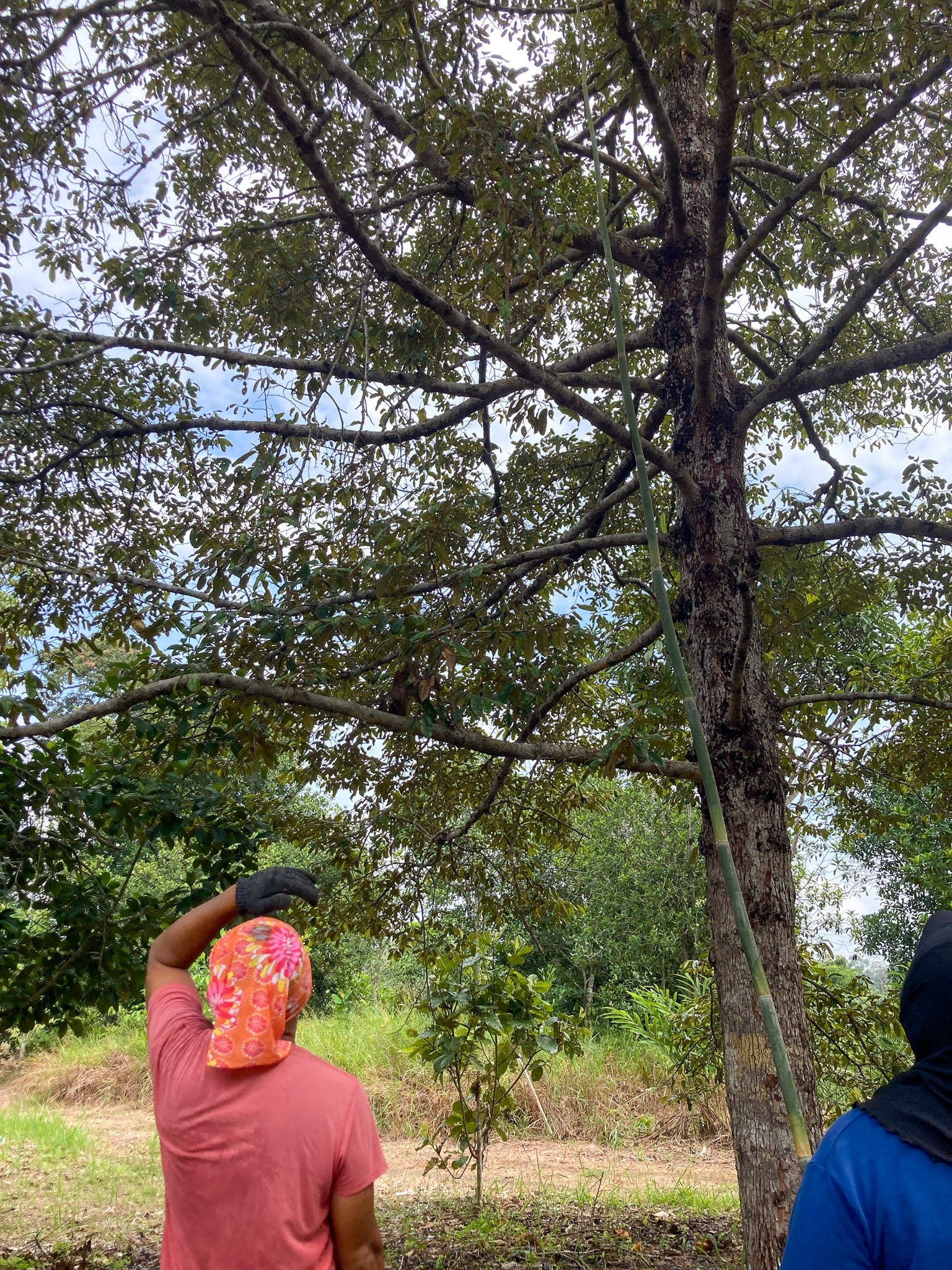
My mom took me to my uncle’s farm, about an hour’s drive away from home in Tanjong Maya, an area in Tutong district. He’s been tending that land for years, not to sell the fruit but rather as a way of life, having taken it over from his father. It was my first time visiting, and my mom was super excited to bring me along since this year’s harvest was BLOSSOMING! She wished that one day I’ll have a farm like his, on her plot of land.


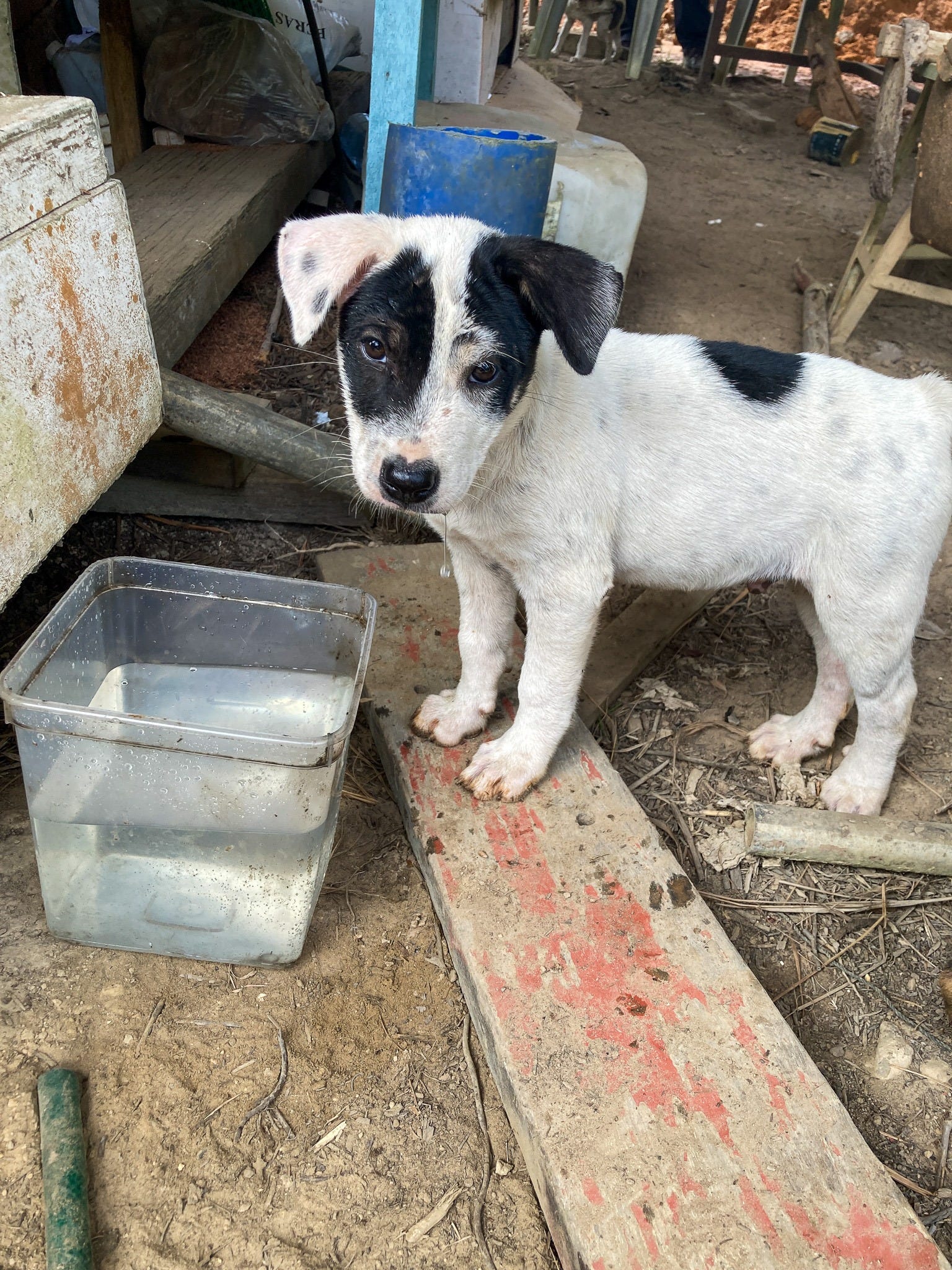
On the winding drive up, I was greeted by 4 puppies, excited and curious about the new visitors. My uncle arrived just after us in his giant 4x4 truck. He’s an ex commando, and honestly, his presence is intimidating but you can tell he has a soft heart. I asked him the puppies names, and he said “Barun, Maya, Lamunin…” they are named after the nearby villages!
The area was very hilly and packed with cempedak trees. The deeper we went, the more the terrain tested my driving skills because I ALMOST rolled over… I don’t know how my uncle gets his car through… “You haven’t even seen me drive offroad, this is nothing” he said. This was not the end of the adventure. We had to cross a stream over a bridge of simple wooden planks, made by whatever he could find. I could really tell the city was still in me, and so could my mom and uncle could: it took me what felt like 5 years to cross, while it took them two seconds. I guess Singapore’s comfort and accessibility have really pampered me over the years.
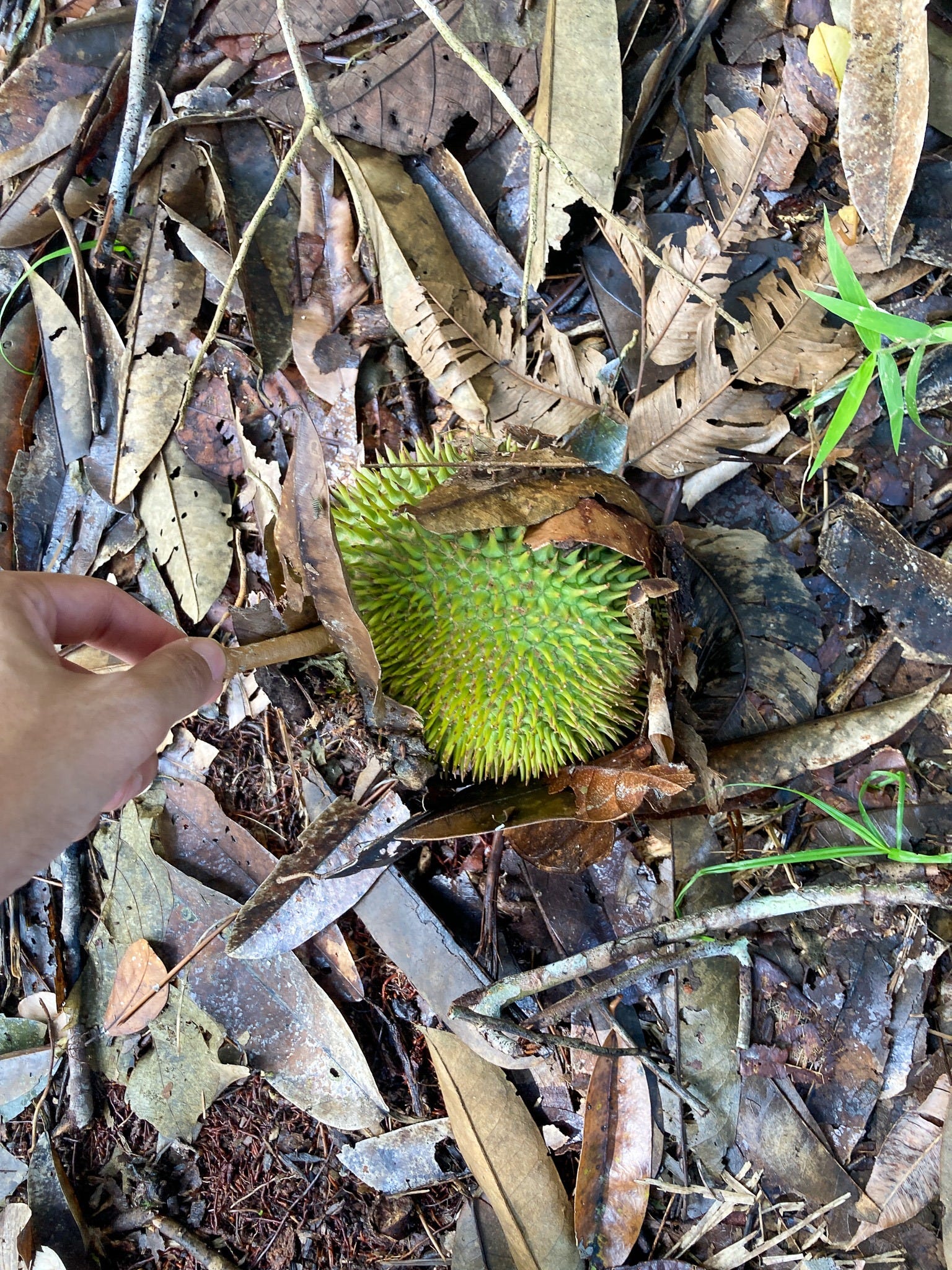
As we walked through his farm, my uncle pointed out and introduced all the varieties of durians in harvest. Unlike the usual fare in Singapore (Musang Kings, Black Thorns, D24–we refer to them as “white durians”), we Borneans have something else… If you ask me, I think it’s worth more than gold. Our durian comes in different colors, textures, scents and flavors.
In parts of Kalimantan, these fruits aren’t even classified as ‘durians’, they are called buah lai. This might be confusing to some, because in Singapore, buah lai is also referred to a specific type of pear.


If you’ve never had an orange or red durian before, you’re missing out. I can confidently tell you that once you try one, the typical white durian will start to feel inferior. You can expect a flesh that is thinner and waxier than your usual custardy, stringy white variety. If I had to compare something, I’d say it’s like biting into a chocolate truffle. There’s no stringiness, no clumping like custard–just smooth and buttery. Oh, and the smell is also inherently different. Yes, it’s pungent, but it’s less “mature cheese” and more fruity, closer to your cempedak or tibadak. The taste? It’s something I can’t explain and it varies from variation too.


Durian Polo is the most interesting one I’ve tried. It’s my first time in fact, since we were harvesting whatever durians had fallen on my uncle’s farm, so every fruit is a surprise when I open it. Its flesh was firm, reminiscent of Thai-style durians, and almost compacted together like coins. I took a bite and was hit instantly by its pepperiness. It wasn’t like a warming black pepper but rather a fruity pepper like a red peppercorn. The spice sat right at the tip of my tongue, almost numbing, like a Sichuan peppercorn.
My auntie says these varieties of durian also come with health benefits–they’re a lot less heaty than white durian. She says she can eat and eat without feeling the same effects she gets from the white kind. If you don’t believe me, I ate a mountain of this stuff and still felt fine the next day! (actually I’ve never experienced heatiness, so I can’t vouch for this)


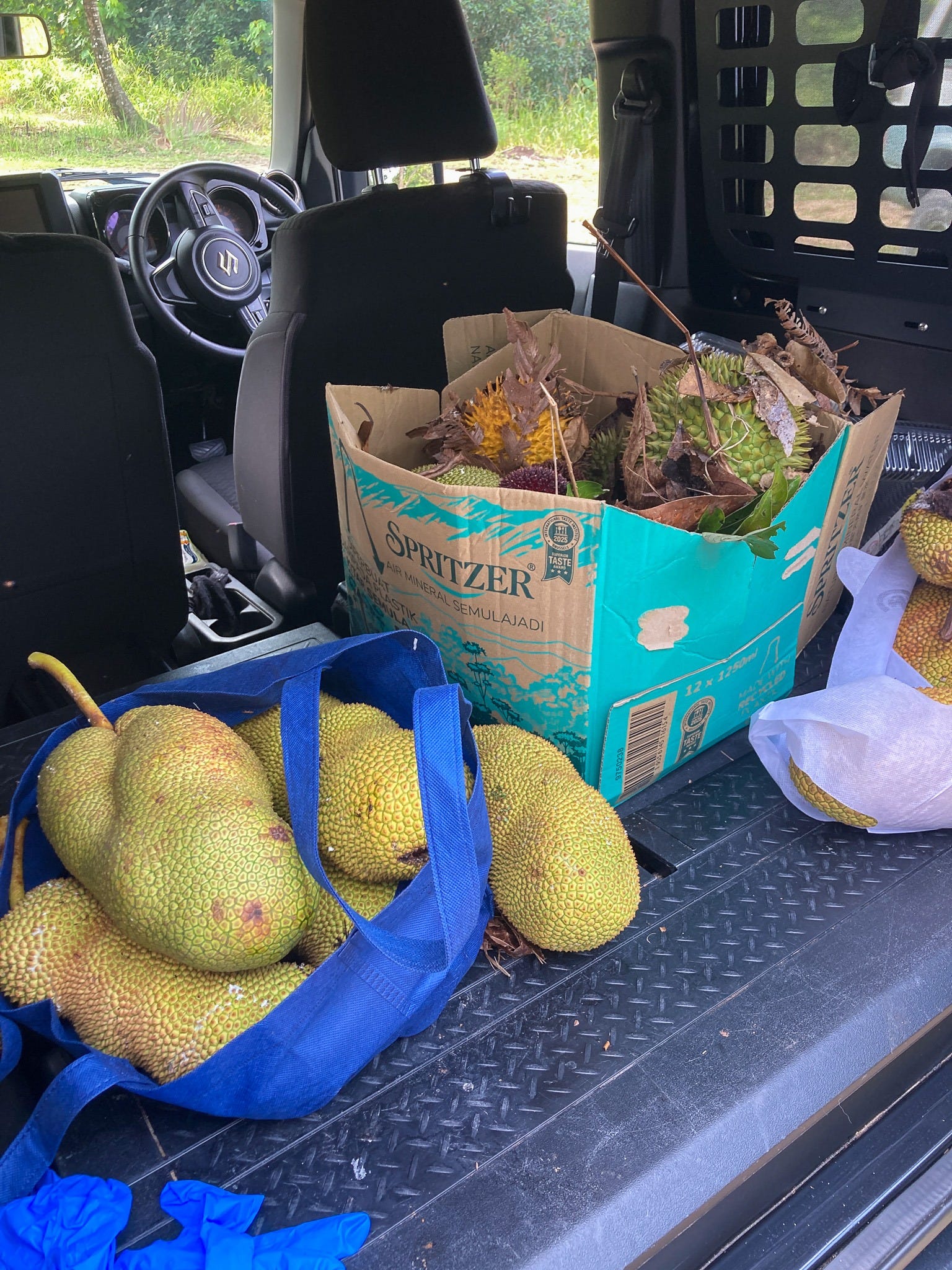
Another fruit we found was cempedak, and they were growing EVERYWHERE. My mom said for some reason, cempedak grows on hills and rarely on flat ground. (I think it has to do with the soil drainage or something.) I also picked up some Pulasan, one of my favorite fruits. I used to call it “black rambutan”. It’s always such a treat to have these back in Brunei, since in Singapore, you can find pulasan and durian all-year round (which is crazy btw).
That’s part of why it holds a place in my heart. I rarely get to go home. Growing up in France, the 16-hour trip back to Brunei was always tricky. I’d often miss the season by just a few weeks in either direction, which is why I never take it for granted when I do catch the durian and pulasan season here.
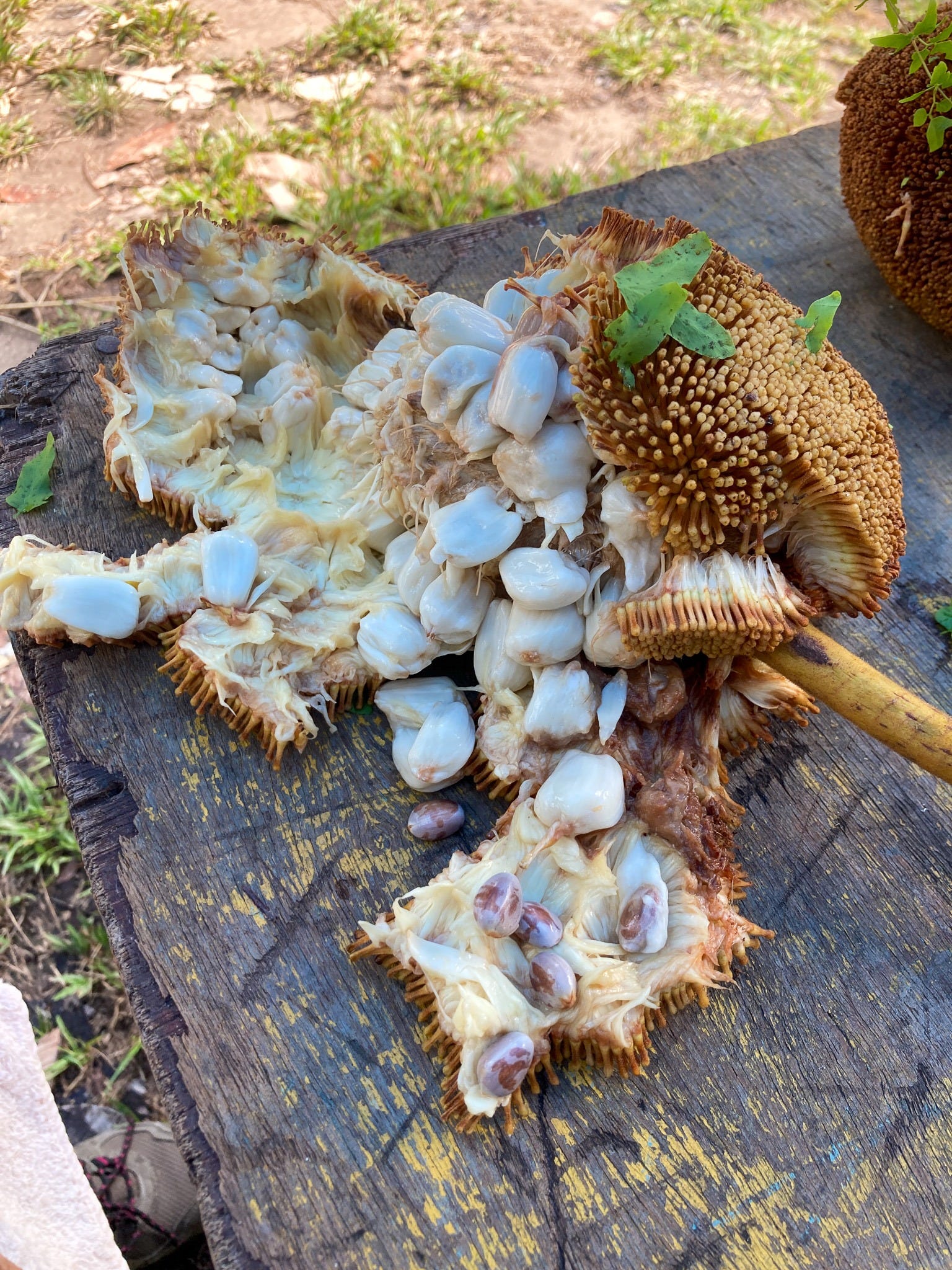
Another seasonal fruit which I never realised was uncommon: Tarap. It’s similar to cempedak, but with smaller seeds and a bumpier outer skin. It’s a fruit that needs to be eaten as soon as it opens, my mom says, otherwise its pearly white flesh quickly oxidizes and turns brown. Holding one feels a bit like touching a Velcro; the skin is covered in these little hooks, almost like the bristles of a thistle. Tarap used to be the kind of fruit that you simply had in your backyard or received from a neighbour who grew it. It was never really a fruit that you bought until very recently, and it’s been getting more recognition, especially amongst the younger generation.
We also noticed a lot of cempedak that had fallen and overripened. They had been lying there for weeks, fermenting, some even decomposing already, but I could see my mom’s unwillingness to let anything go to waste. It’s a reflection of how she grew up in a time where food wasn’t about what you could afford but about whatever it was you could forage around you. She insisted on taking the seeds because they were her favorite. I grew up eating cempedak or durian seeds in curries, and they became my favorite too.
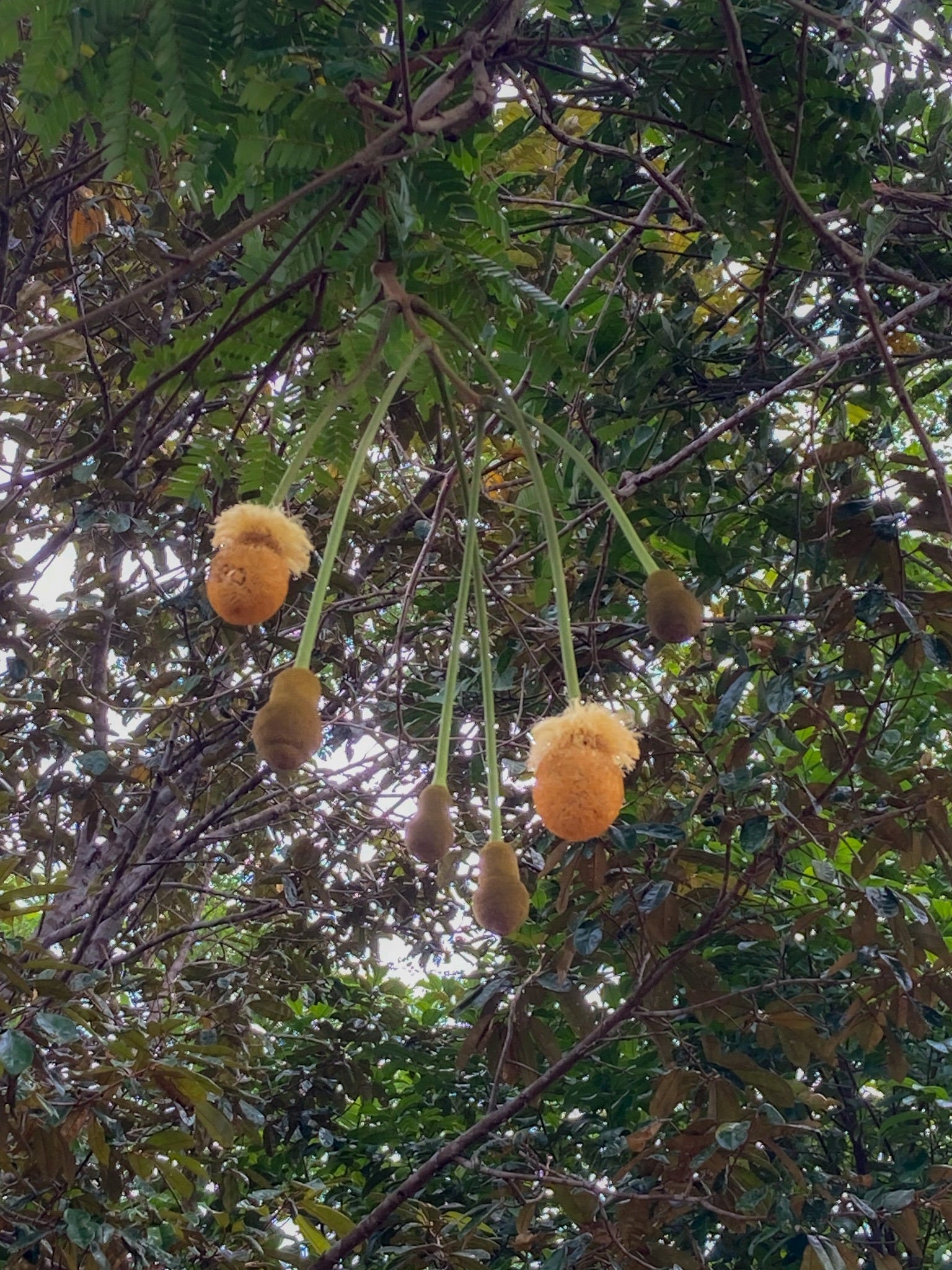
My favourite discovery would probably be this peculiar plant we found drooping from a tree. It resembled a little like a naked dandelion but twice as big and green... I asked my uncle what it was, and he told me it was the flower of the petai tree. So eventually, one pod will bloom into a cluster of petai flowers and pods.
After our bountiful visit, my mom and I stopped at a local roadside stall in Lamunin (the same Lamunin one of the puppies is named after). Usually when we’re in the area, we would stop by because this is where locals sell the fruits of their labour at reasonable prices. You can find all kinds of durian at different price points. Even as someone from here, seeing a stall like this is truly amazing. It shows how special durian season is to us.


Back at home, at family gatherings, it’s all anyone really talks about. One relative claimed that he found durians as cheap as a dollar per ikat (tied bundle). Another insists the best durians come from xyz locations or stalls. And of course there’ll always be an uncle who goes ‘I bought durian from a stall [wherever] and when I opened it, IT WAS A WHITE DURIAN! THEY CHEATED ME!’
This short trip made me reflect. Seeing my mom in her 60’s, still able to navigate the rainforest like it was her playground, excited whenever my uncle showed us a fruit that was ready to harvest, gave me a glimpse of how life was like back in her day. Before Brunei was known for its oil, and everyone lived the only way they knew how: off the land.
That day I walked about with a car full of fruits. To this day, my car still smells like cempedak and durian.
signing off,
AK