


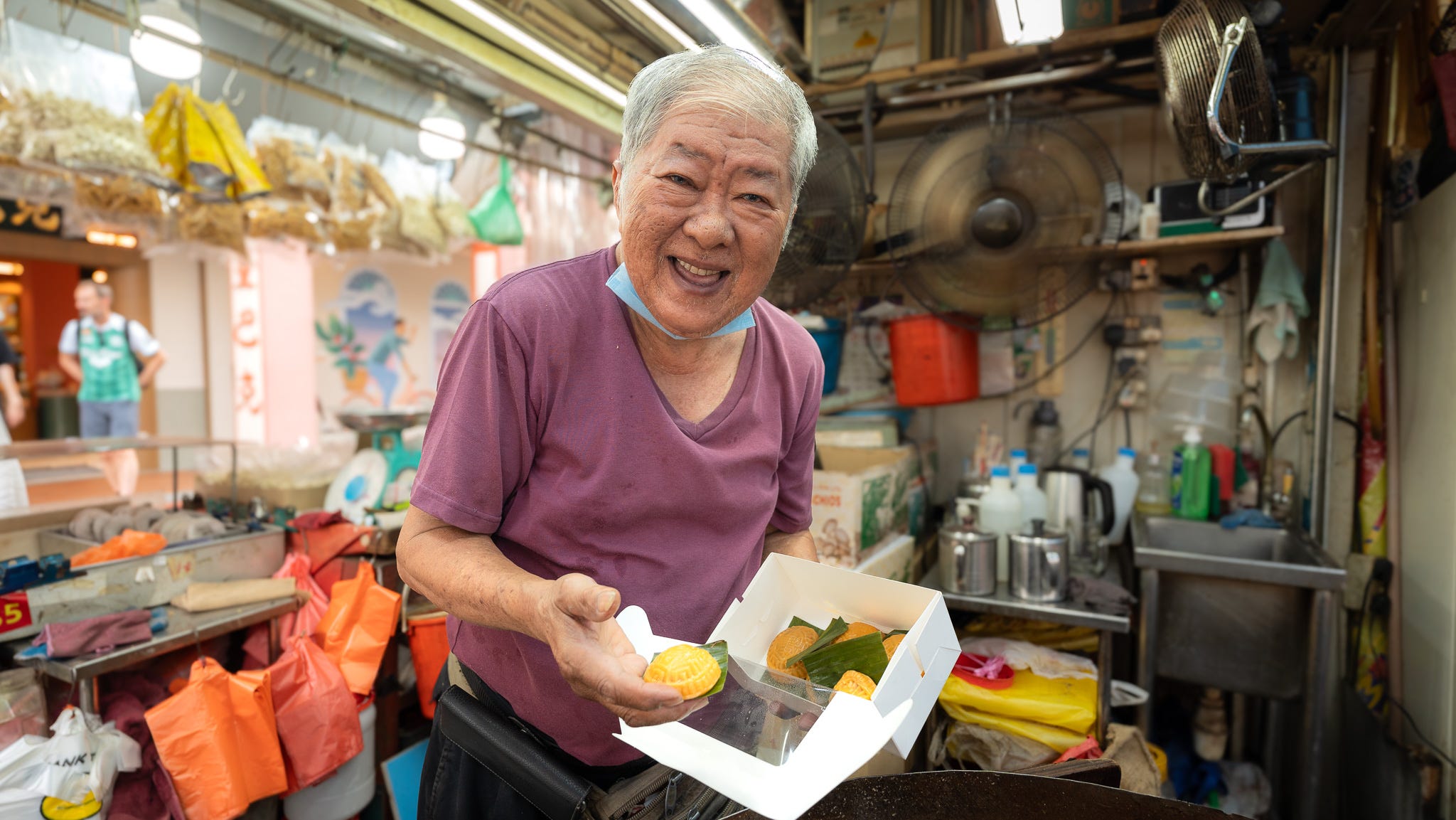
as a millennial Singaporean, my childhood memories of the city’s streets involved prancing by makeshift chestnut stalls, often run by middle aged uncles continuing the already dying trade. the toasty scent of caramelised chestnut and the smoke from the charcoal was always a sign that a chestnut peddler was close by and it was often impossible to resist getting a bag of chestnuts to bring home for an post dinner snack.
I used to see these stalls aplenty - in night markets, right by MRT stations, some even at void decks. however, roasted chestnut stalls have dwindled in the past years as no one wanted to continue the trade, especially with rising rental prices in Singapore’s food spaces.
recently we purchased chestnuts from Uncle Arh Orh (a.k.a Uncle Black) who has been running Bugis 103 Roasted Chestnut since the 1970s. starting in Bugis Street, he relocated to Chinatown, at the intersection of Trengganu Street and Smith Street. as a gesture of establishing friendship and celebrating 50 plus years of his business, we sat down with him for a chat and used his roasted chestnuts as a filling for our Ang Ku Kueh, which we brought back to him to try.
we’re glad that those Ang Ku Kuehs pass his taste test!
 Tiktok failed to load.
Enable 3rd party cookies or use another browser
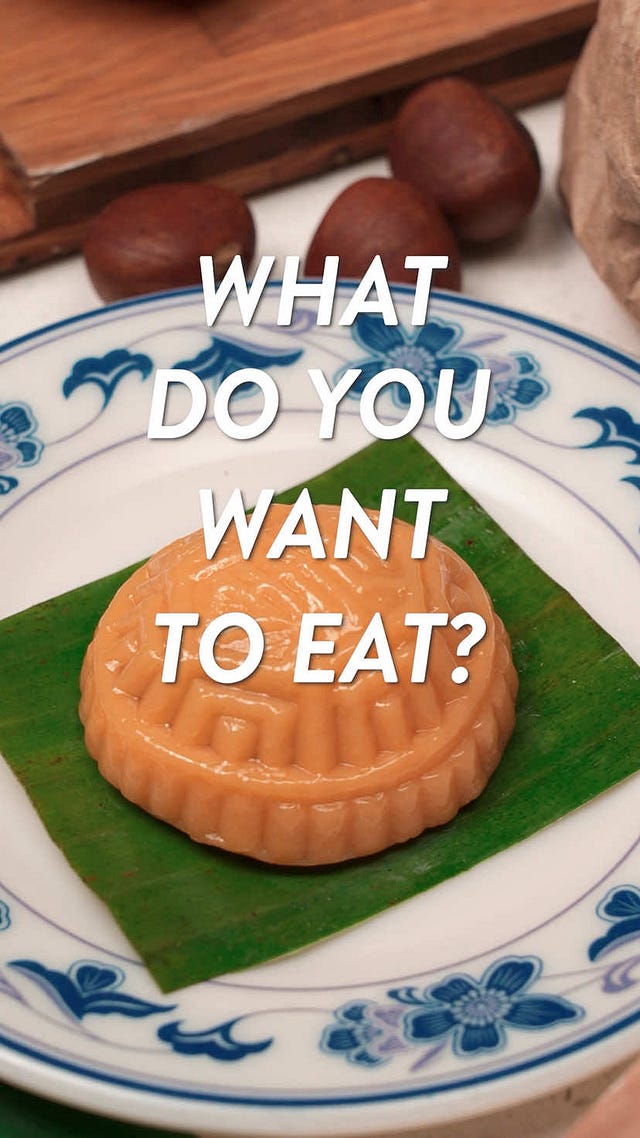
Chestnut Ang Ku Kueh (紅龜粿)
(inspired by Chef Yeo Min’s Ang Ku Kueh recipe from her book ‘Chinese Pastry School’)
(makes 30-35 pcs)
if you’d like to try making more delicious kuehs, we recommend utilising Chinese Pastry School as a reliable resource of tested recipes containing highly detailed, step-by-step instructions for home cooks of any level.
get ingredients for this recipe here! : glutinous rice flour, rice flour, sugar, peanut oil
if you’re looking to fulfil your sweet tooth, check out our other kueh recipes below!:

Our Asian spin on a Christmas Day: Pumpkin Spice Kueh Salat

Here’s a recipe for those who want to SPICE up their Asian dessert with a Christmas twist! Instead of a traditional pandan Kueh Salat, we added pumpkin spice into the mix and…VIOLA! This famous Nyonya Kueh can satisfy both your Southeast Asian tongue and whet your appetite for this Christmas holiday.