


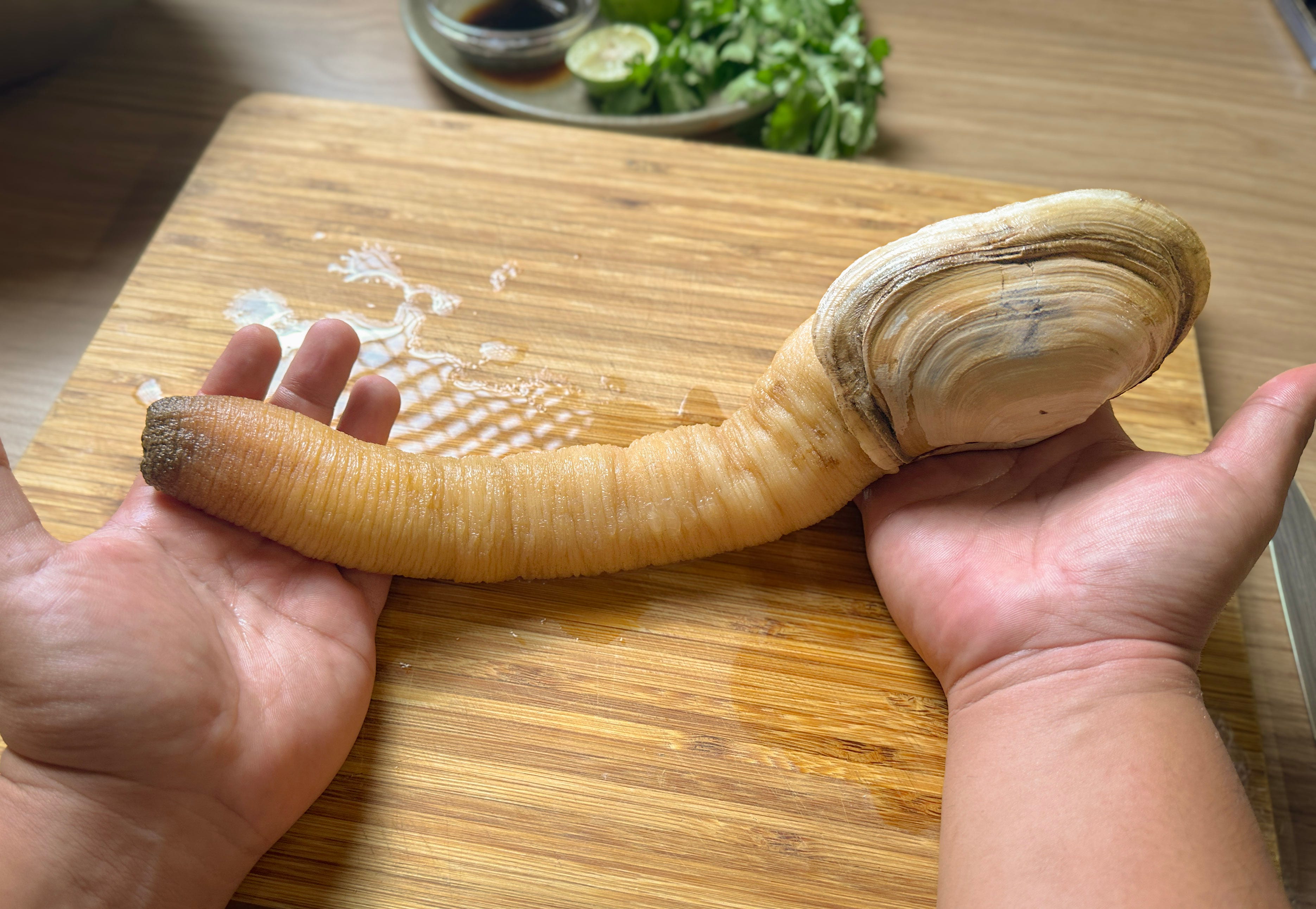
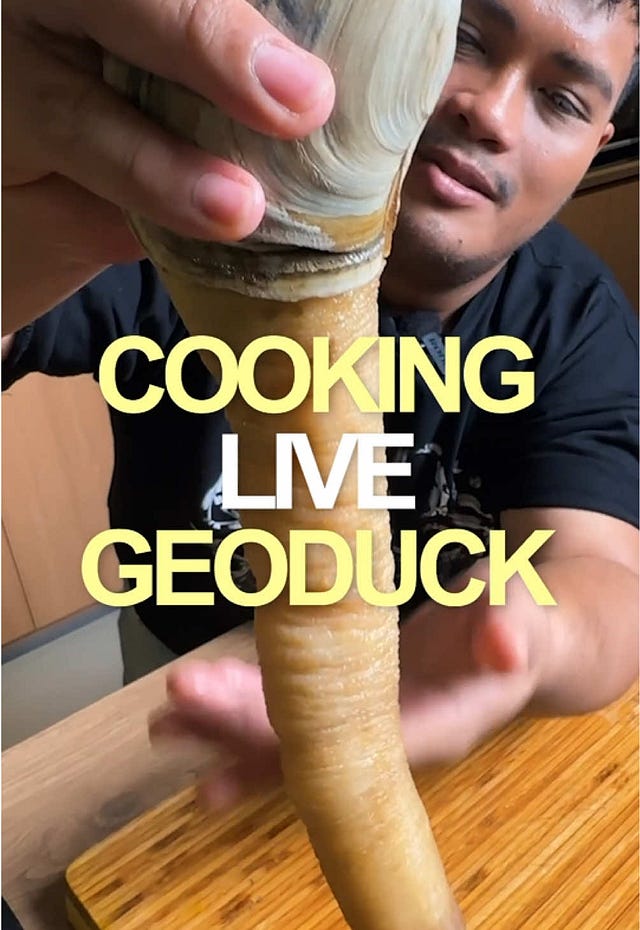
If you’ve spent enough time on the food side of TikTok, YouTube or Bilibili, you’ve probably seen a GEODUCK before. These giant clams have become something of a mukbang celebrity, appearing in videos from Mainland Chinese and Korean creators where people slice, dip and slurp their way through the enormous siphon. And honestly, it’s not difficult to understand why they get views. A geoduck looks less like a normal clam and more like someone took a perfectly innocent bivalve and gave it a very questionable appendage.
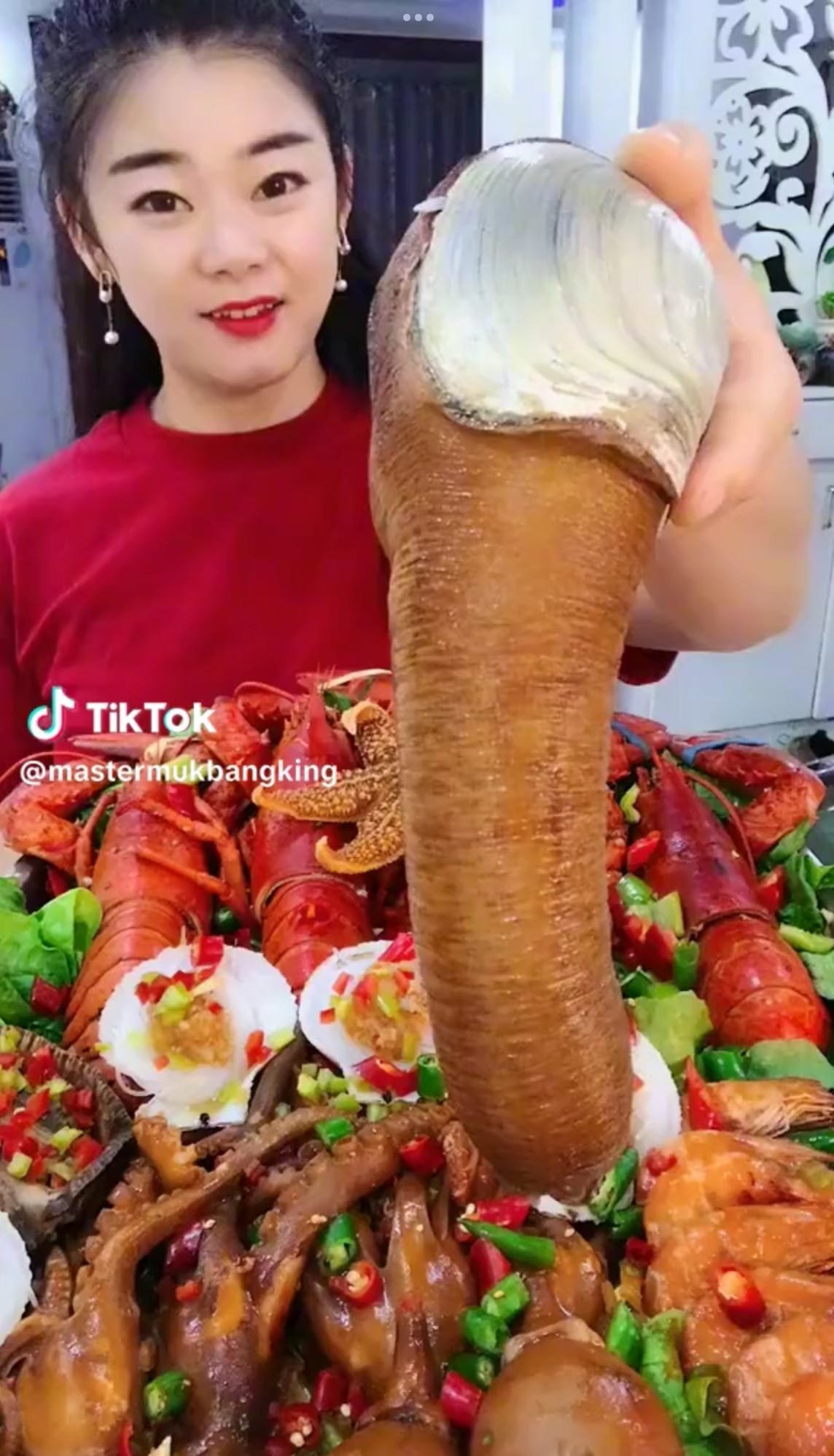
Yes, it is extremely… ummm.. phallic. Nature really did not need to go this hard.
But behind the internet jokes is a pretty interesting food history. Geoduck is native to the Pacific Northwest America, where indigenous peoples had been harvesting and eating them long before they became a luxury seafood item in Asia. The name comes from the Lushootseed word gʷidəq, generally understood to mean “dig deep”, referring to the way these clams burrow into the seabed. Somewhere along the way, that Indigenous word became “geoduck” in English — although, confusingly, it isn’t pronounced “Jee-yoh-duck”. It’s pronounced “gooey duck.”
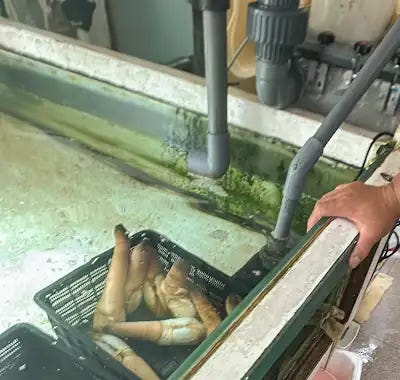
The animal eventually found its way into commercial seafood markets and became particularly popular in East Asia, especially China, Hong Kong and Japan. Its unusual appearance, crunchy texture and natural sweetness made it ideal for the culture of live seafood dining, where the animal is often brought to the table before being prepared. Geoduck is also expensive because it is a slow-growing, long-lived animal that has to be harvested, handled and transported alive, while demand for it as a premium seafood remains high.
In Chinese dining culture, expensive live seafood can also carry a certain status — and Singapore is no stranger to this. At restaurants such as Jumbo Seafood, Long Beach and Imperial Treasure, geoduck appears as sashimi, in superior stock, steamed with garlic and vermicelli, or stir-fried with XO sauce. By the time it reaches your restaurant table, you’re not exactly ordering a casual plate of shellfish.
Which brings me to the stupidest part of this story: I had never actually prepared one myself before.
I’ve eaten geoduck in restaurants before, but buying a live one and figuring out how to clean it is a completely different experience. So I did what any chef with too much curiosity and access to the internet would do — I bought one and started figuring it out.
The first thing I learnt was that the giant “tube” everyone is obsessed with is the siphon, which the geoduck uses to draw in and expel water. Inside the shell is the rest of the animal: mantle, gills, organs and the softer body meat. Cleaning it is fairly straightforward once you understand what you’re looking at, although the first time around it definitely feels like you’re performing surgery on something that costs far too much money to mess up.
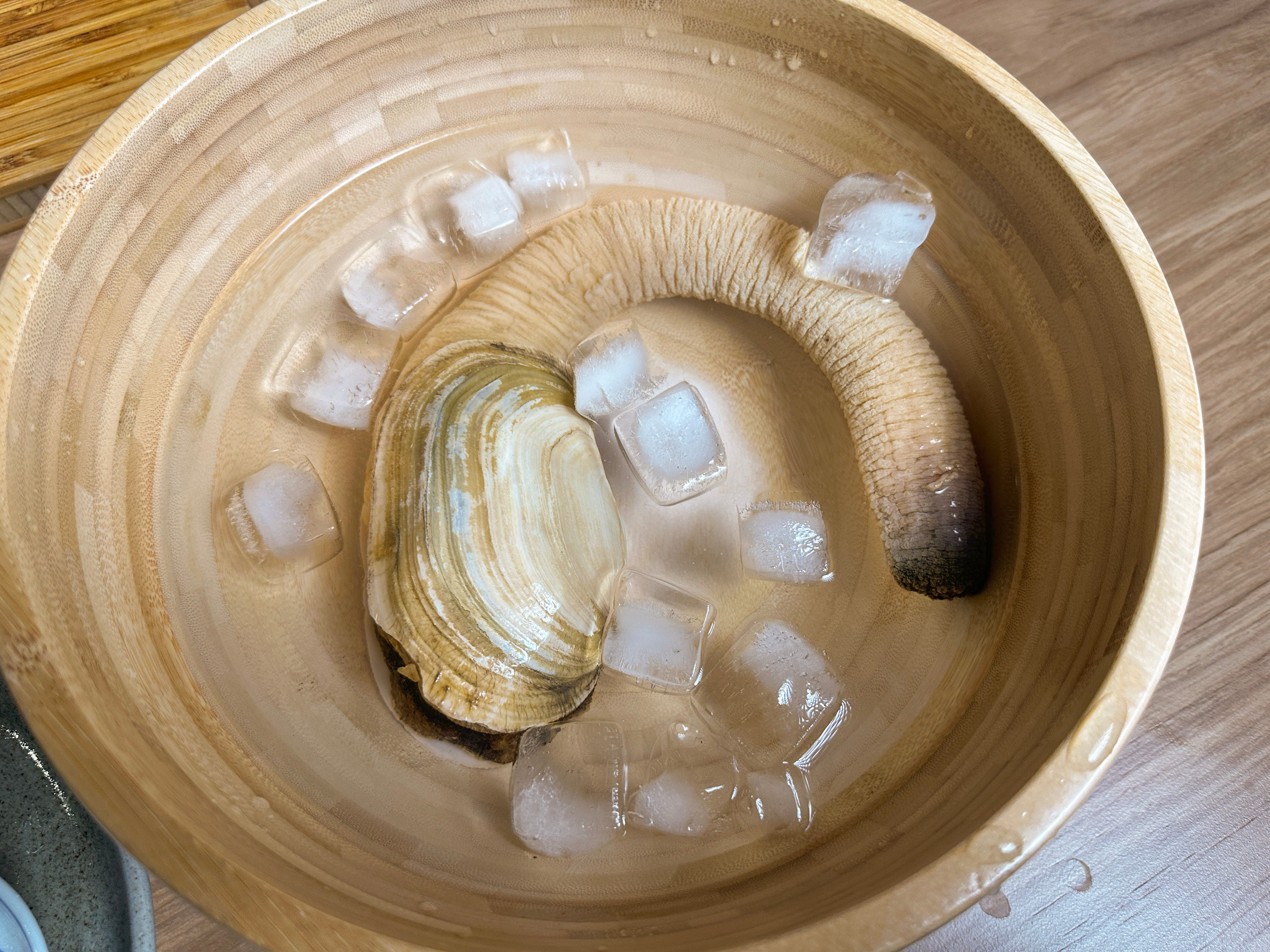
For the siphon, the trick is to blanch it very briefly in boiling water. The heat loosens the tough outer skin so it can be peeled away, but you don’t want to cook the meat underneath. I immediately transferred it into an ice bath to stop the cooking, then cleaned and trimmed away the darker internal bits and gills before slicing the usable meat thinly. The texture is the whole point: firm, crunchy and slightly sweet, which is why geoduck is so often served raw or cooked VERY quickly.
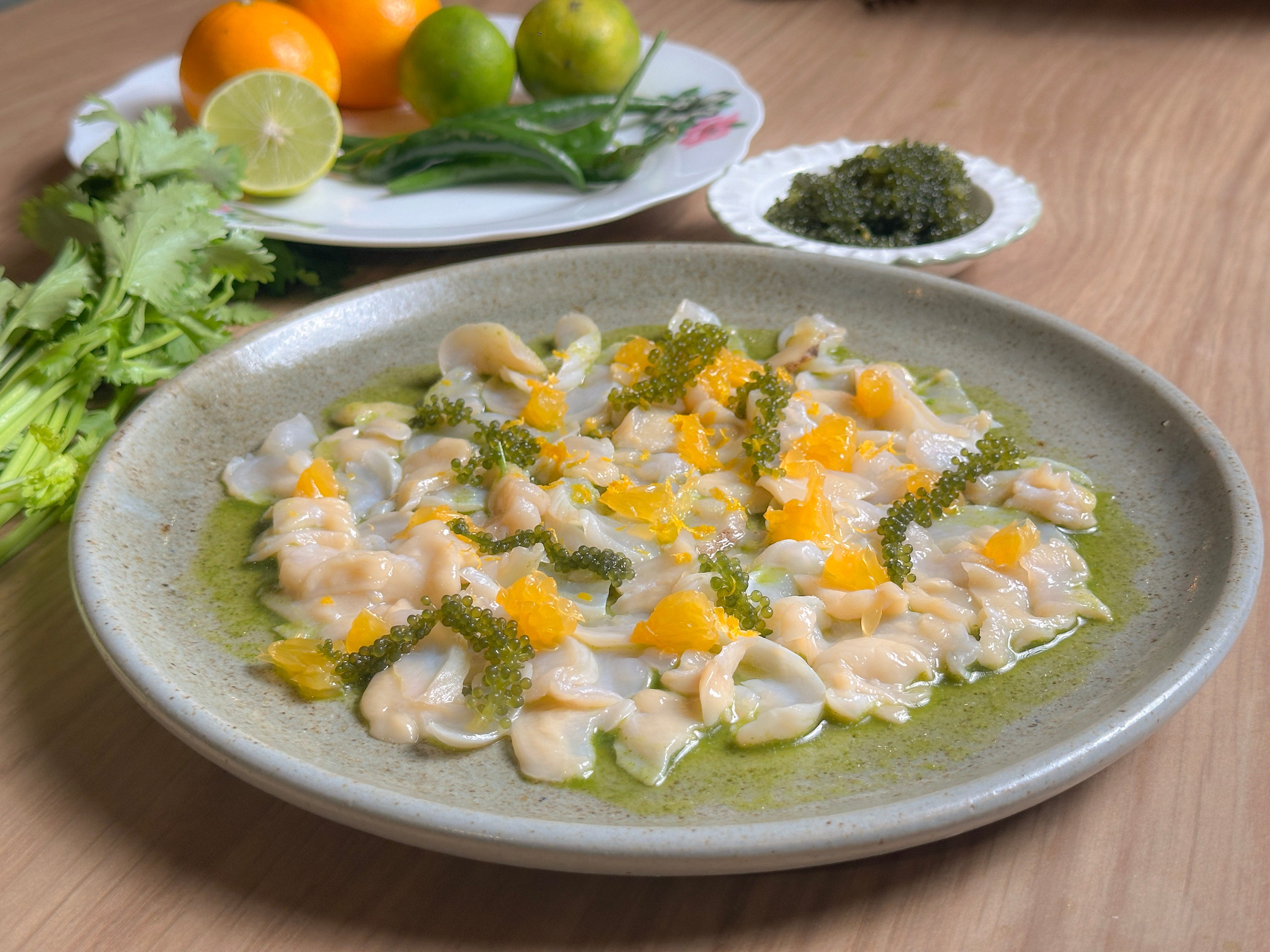
For my first attempt, I didn’t want to simply recreate the usual soy-and-wasabi sashimi presentation. I wanted to take the geoduck somewhere that felt more familiar to me, so I made a Thai-style Geoduck Crudo with a green chilli nam jim seafood sauce. It’s fresh, sour, spicy and salty, and already works beautifully with things like prawns, cockles and other raw or lightly cooked seafood.
I added fresh orange segments for sweetness and another layer of citrus, then some latok (Malay for sea grapes), for that little burst of briny flavour and texture and then a final grating of orange zest to bring everything together. The result was bright and punchy, but still allowed the geoduck to do what it does best — provide that amazingly crunchy, sweet bite.
And then I finally understood the appeal. To me, geoduck tasted almost like a really briny oyster, but with the texture of raw abalone — only sweeter. It has that unmistakable taste of the sea that you get from a good oyster, but instead of the soft, creamy texture, you’re getting this firm, almost snappy chew. The sweetness is what really surprised me, beneath all that brine and crunch.
And I think that’s what surprised me most about preparing it myself. Online, geoduck is usually reduced to its appearance: the weird clam, the expensive clam, the “why does it look like that?” clam. But once you actually get past the internet spectacle, you’re dealing with a fascinating shellfish with a much longer history — from Indigenous Pacific Northwest foodways to modern Chinese seafood restaurants and now, somehow, TikTok mukbangs.
Would I prepare one again? Absolutely. Although next time, I would love to try it prepared by a chef who specialises in geoduck dishes. Would probably need to sell a kidney for it though. ;(
 Tiktok failed to load.
Enable 3rd party cookies or use another browser