


It’s 9pm. The other stalls have closed, but the sound of running water and scrubbing continues at one. You might think Thomas, owner of Koh Brother’s Pig Organ Soup, is cleaning up after a long day. Nope. He’s just getting started. I watch him prepare batches and batches of innards, running them through water over and over again before layering them into a pot big enough to fit me (if I squatted inside). This was just the beginning of how they make their pig organ soup, daily.
Why I’m Thinking Twice
I was there as a curious-customer-turned-helper, and as someone who had always fantasised about opening my own hawker stall one day. Maybe selling cai fan, or something healthier for the elderly in the neighbourhood: simple food that can fill everyone’s bellies. But after having the opportunity to shadow Thomas at his family’s pig organ soup stall, I’m thinking twice.
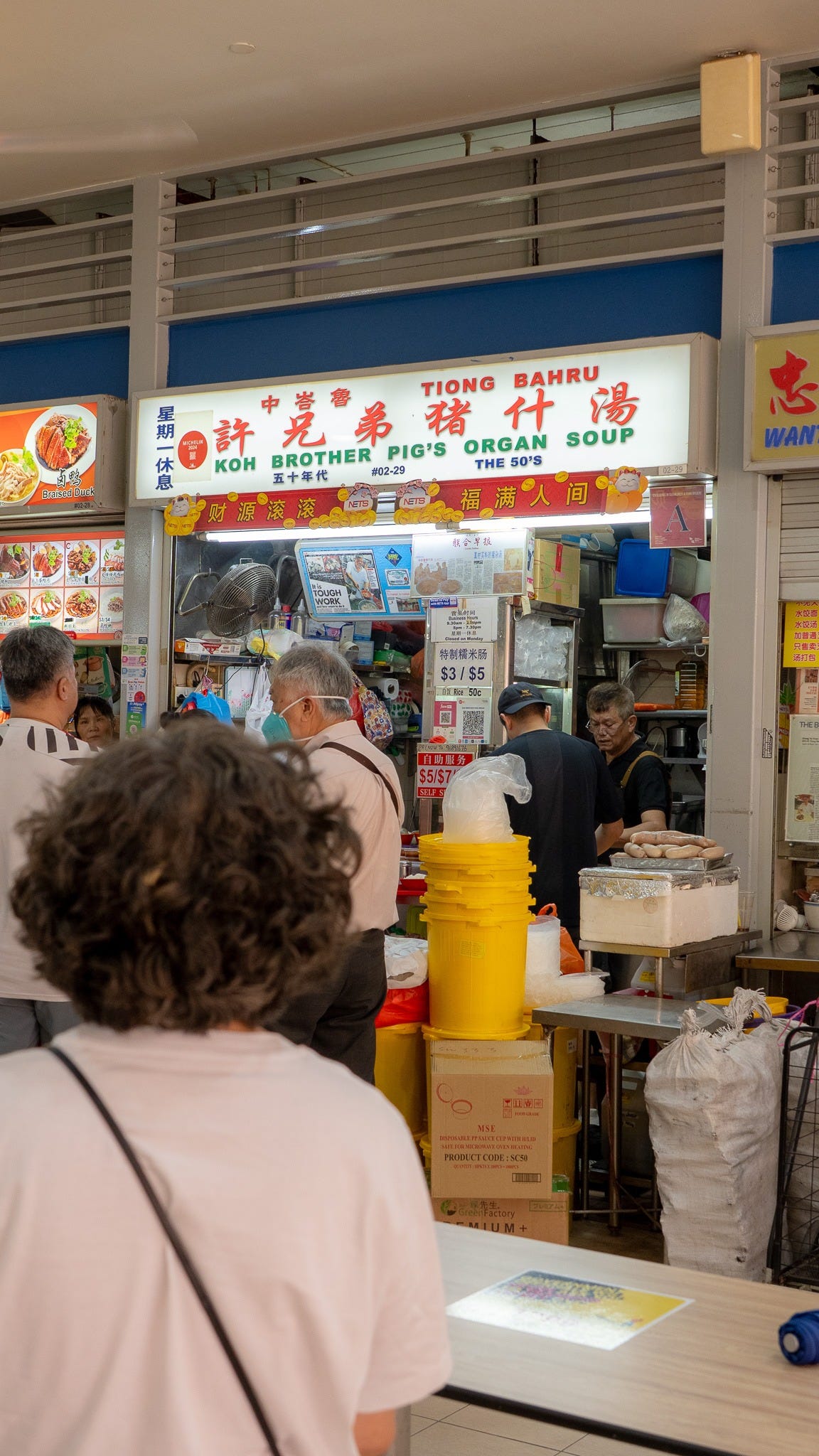
Situated in Tiong Bahru Market, Koh Brother’s Pig Organ Soup is one of the stalls that sees a long queue every day during peak hours. As the name suggests, they only do one thing and one thing only: pig organ soup, for over 50 years now. The stall was started by his grandfather, and Thomas initially had no intention of helping out. But as he saw the older generation growing older, and no one stepped in, he took the challenge and started helping out at the age of 24. “Aiya nevermind, let’s goooo!” Thomas said with enthusiasm as he recalled the first time helping out at the stall, not knowing what actually lay ahead of him. But over the years, his heart for this stall grew stronger, and so did his ambitions to perfect the soup. “And before you know it, I’ve been here for 10 years.” He was fully invested, and the stall has earned Michelin recognition ever since.
Before the Shutters Open

Enough about their background. Let me share what actually goes into a Michelin-recognised dish (spoiler: it’s A LOT of work).
Once the innards are washed clean, Thomas starts on three batches of soup: pig stomach, pig heart and large intestine, and their secret pot with Xian Cai (salty veggies). These boil for the next 3 hours, then are covered and left for the residue heat to simmer out the goodness overnight. The steps are simple, but the work is much heavier and hotter than you’d expect. Between the rolling heat from the fire and the depth of the pot, it was a real challenge for a short person like me.
Thomas returns at 6am the next day to open the store, prep the ingredients for the day and make a single pot of soup that combines the three in a golden ratio. Seeing how tedious it is to make the soup, I couldn’t help but ask why it is done this way. He joked that he actually didn’t need to make his life so difficult. In his grandfather’s day, the pushcart could only hold one pot, so everything was cooked together. But, now they have space and Thomas wants everything consistent: the texture of the meat, the taste of the soup, the overall quality of the dish. The older generation love to use the word “agak-agak” which means cooking by estimation and intuition, and that inevitably brings variation, even after years of experience! For this, I give him my applause. I think it really shows that he didn’t just come to help with the business. He wants to do it to the best of his ability and ultimately serve quality food rather than taking this on half-heartedly.
Just Three People, One Stall
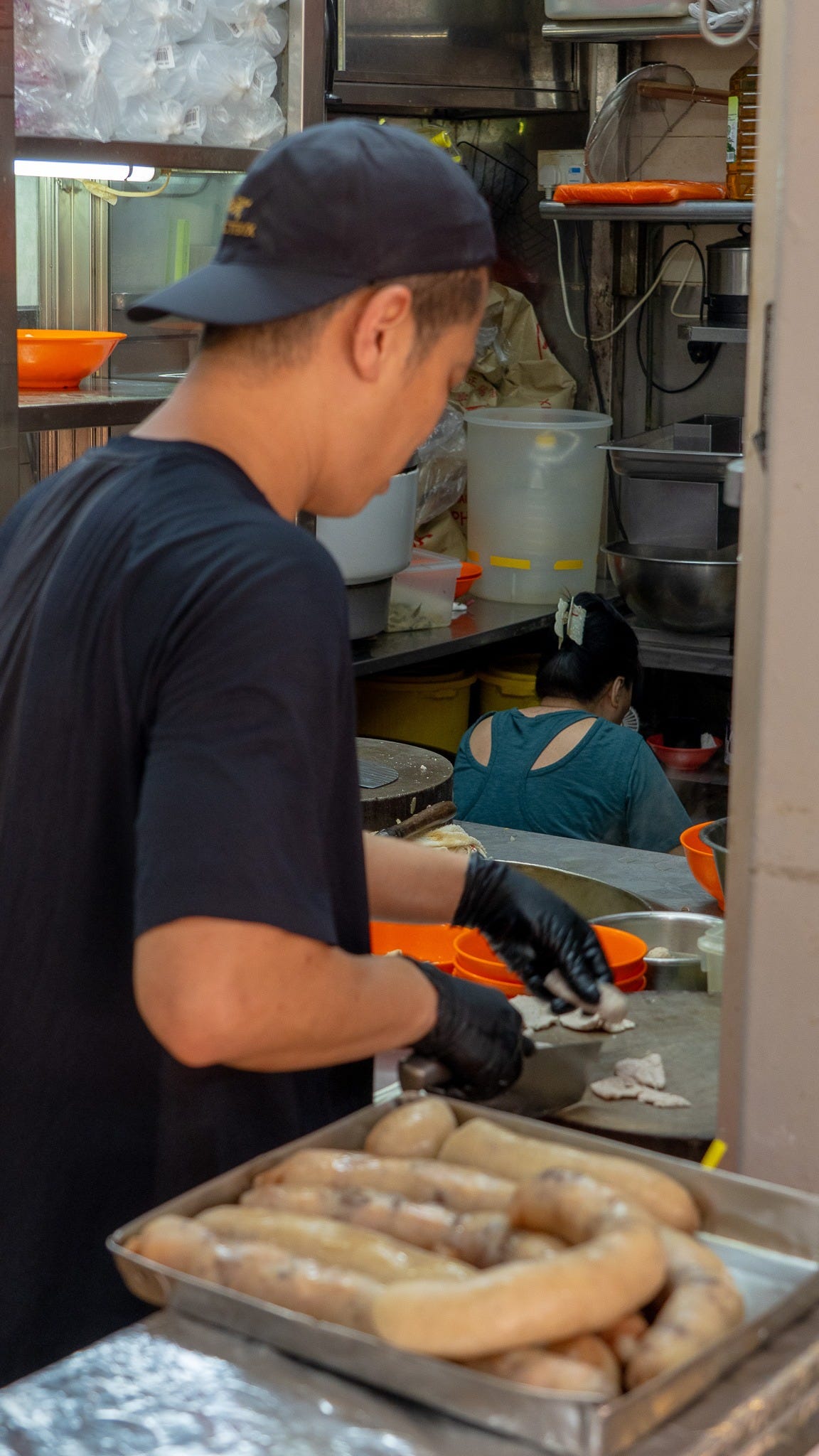
At around 9:30 am, the shutters open and a steady stream of customers arrives, of all ages. In the store, you have Thomas’s mom working tirelessly at the back, already preparing for the dinner service. At the same time, she works on her 招牌 (specialty): pig intestine glutinous rice (猪肠糯米饭) for the next day! Word has it that they might be one of the last stalls in Singapore still selling it. Essentially, it is uncooked glutinous rice with pork belly and chestnuts, stuffed into the large intestine. Sounds easy right? WRONG… You need to know exactly how much to fill. Too much, and the rice expands and bursts out of the casing. Too little, and the intestines look too flaccid. Neither is ideal for selling. So auntie seems to be the only one in the family qualified to do this task, and I have to say she nailed every single one of them!
Throughout my time there, she never stepped out once, and I have to tell you how HOT it is in that stall. With pots boiling around you in a confined space, plus Singapore’s humidity, it’s basically a sauna. It was unbearable for me, and I have no idea how auntie was able to endure it without complaint.
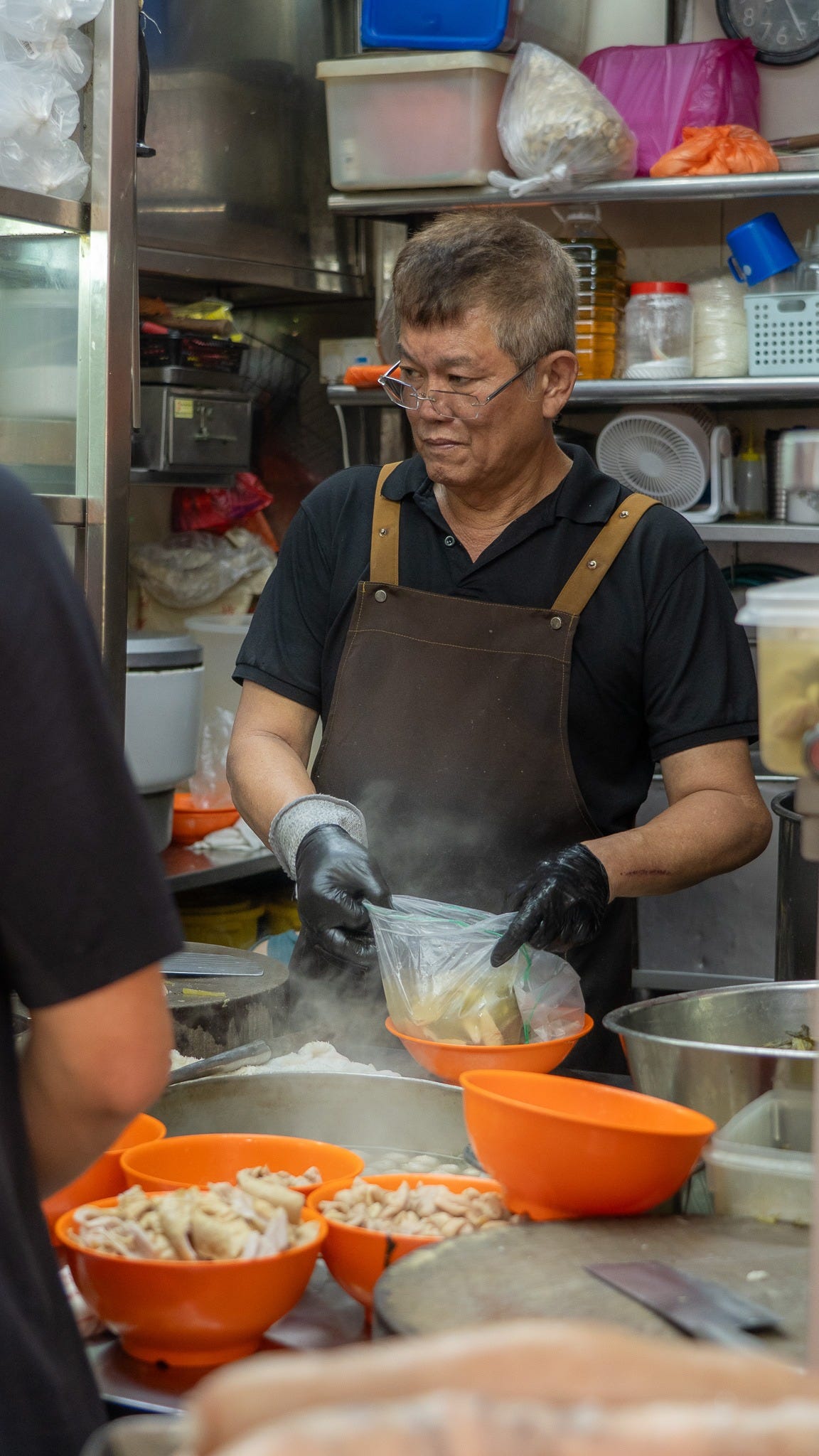
On the other side is uncle (Thomas’s dad) who is in charge of putting the soup together. He may look fierce, but I think that is just his “in the zone” look. Lastly, there’s Thomas, in charge of the front of the house and cutting up all the innards to order. The family communicates without actually communicating and watching them work with such fluidity is quite satisfying. They are able to handle the crowd effortlessly.
Honestly I only stood there for maybe an hour tops, tried my hand at chopping some innards, with multiple breaks in between, and my feet and my wrist were already hurting. I was also sweating profusely from all the heat that was coming from the pot. So I was truly amazed at how they persevered for hours without complaint. I couldn’t help wondering: what is their drive? What is their motivation? How do they do this 6 times a week? Hawkers are truly made of steel. No amount of gym workouts can prepare you for it, only a heart of perseverance and drive.
Beyond the physical exhaustion, there are other things like logistics and cost prices that keep rising over the years. Thomas was transparent about their financial struggles: the imported European intestines are getting more expensive, but he also can’t raise his soup prices without losing customers (if I remember correctly, he has only raised it by $1 so far). It’s a balancing act every hawker has to find. And seeing how much work goes into each bowl, without skimping on quality, what is there to complain about guys?
What’s In The Bowl
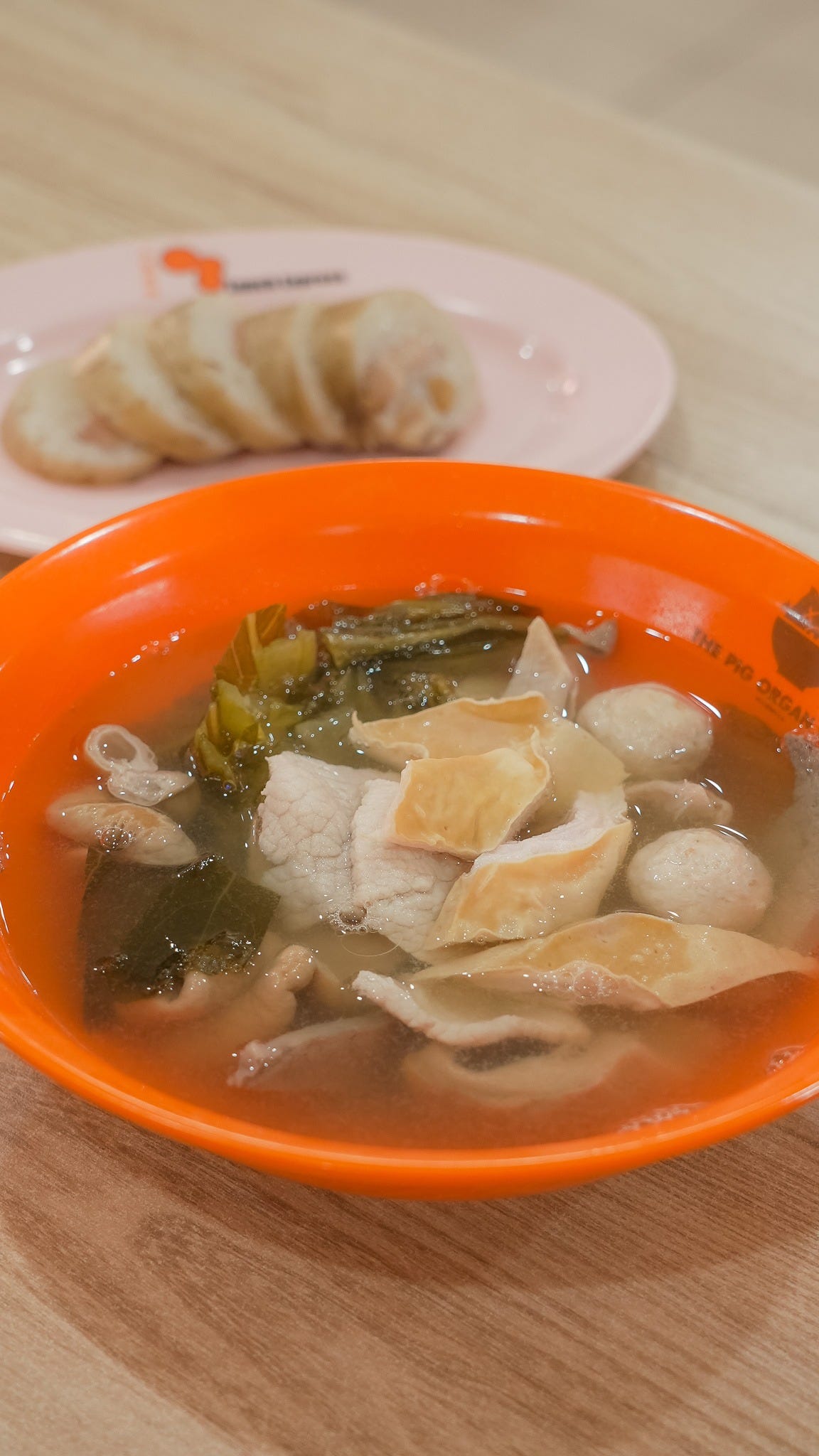
I have been yapping about the work behind this dish, but what’s most important is the taste right? Well let me tell you: hearty and delicious.
Truth be told, I have never had pig organ soup in my life because I can’t quite stand the smell and texture of innards. But Koh Brother’s opened my mind and made me more willing to try offal-heavy dishes in the future (looking at you, Kway Chap).
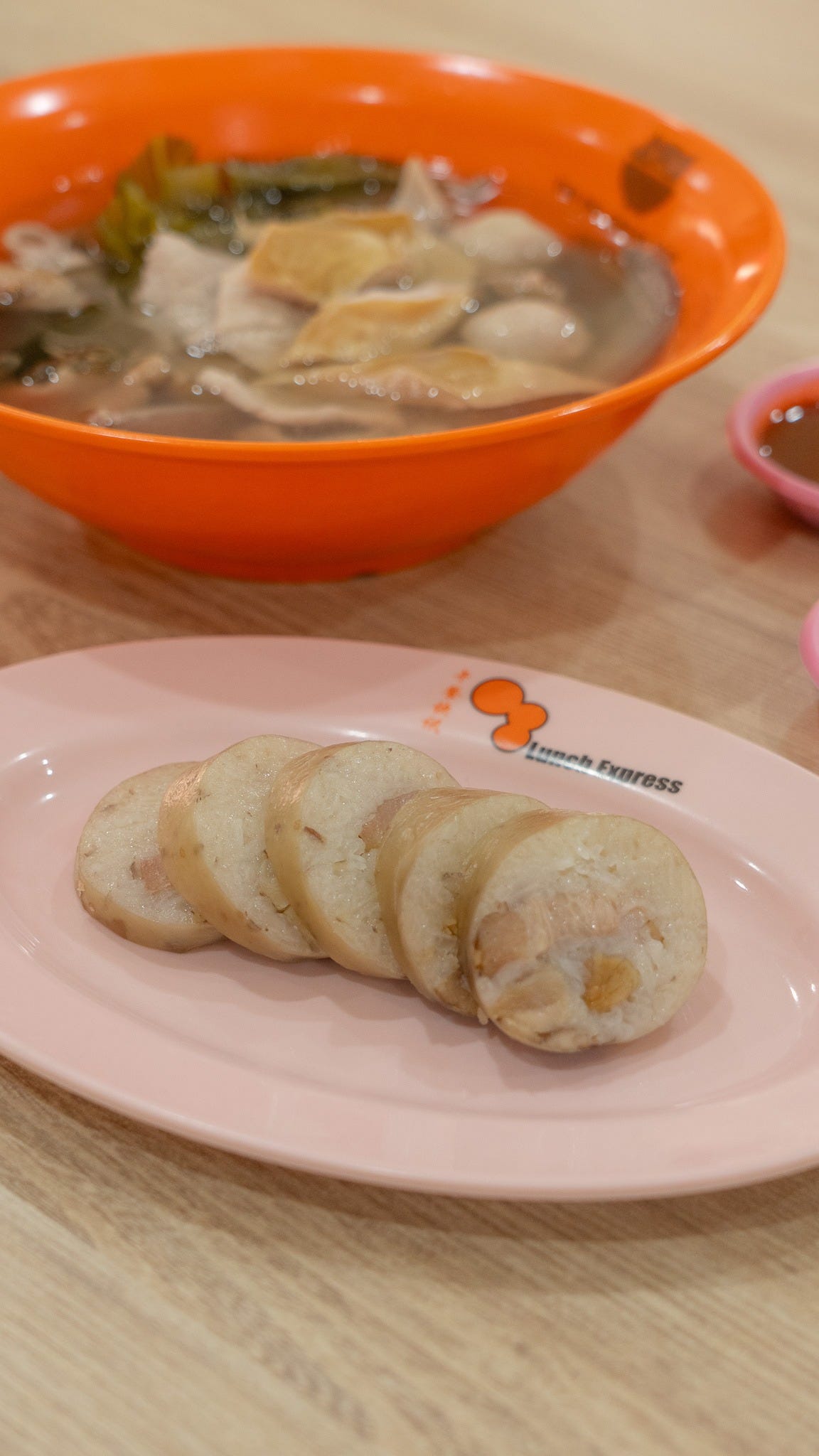
What makes their soup unique is that it’s clear! It is rare for pig organ soup to run clear. It’s darker, with some residues. There is some secret to this, but Thomas briefly shared that it comes down to constant cleaning and skimming of the fats. Because it’s so light and clean-tasting, the soup is super moreish, and the slight tang of the salted veggies keeps you going back for more. I believe the layering of the soup also gives it a depth that goes beyond just umami and meaty. To me, it is important that there’s no intestine smell, though apparently the older generation looks out for it, so I guess it boils down to personal preference. Needless to say, every meat and intestine was cooked to perfection!
Top tip: you can customise your bowl here! I saw a customer requesting just a bowl of pork meat and pork balls. Honestly, if you aren’t into innards, I would recommend that, so you still get a taste of their delicious soup!
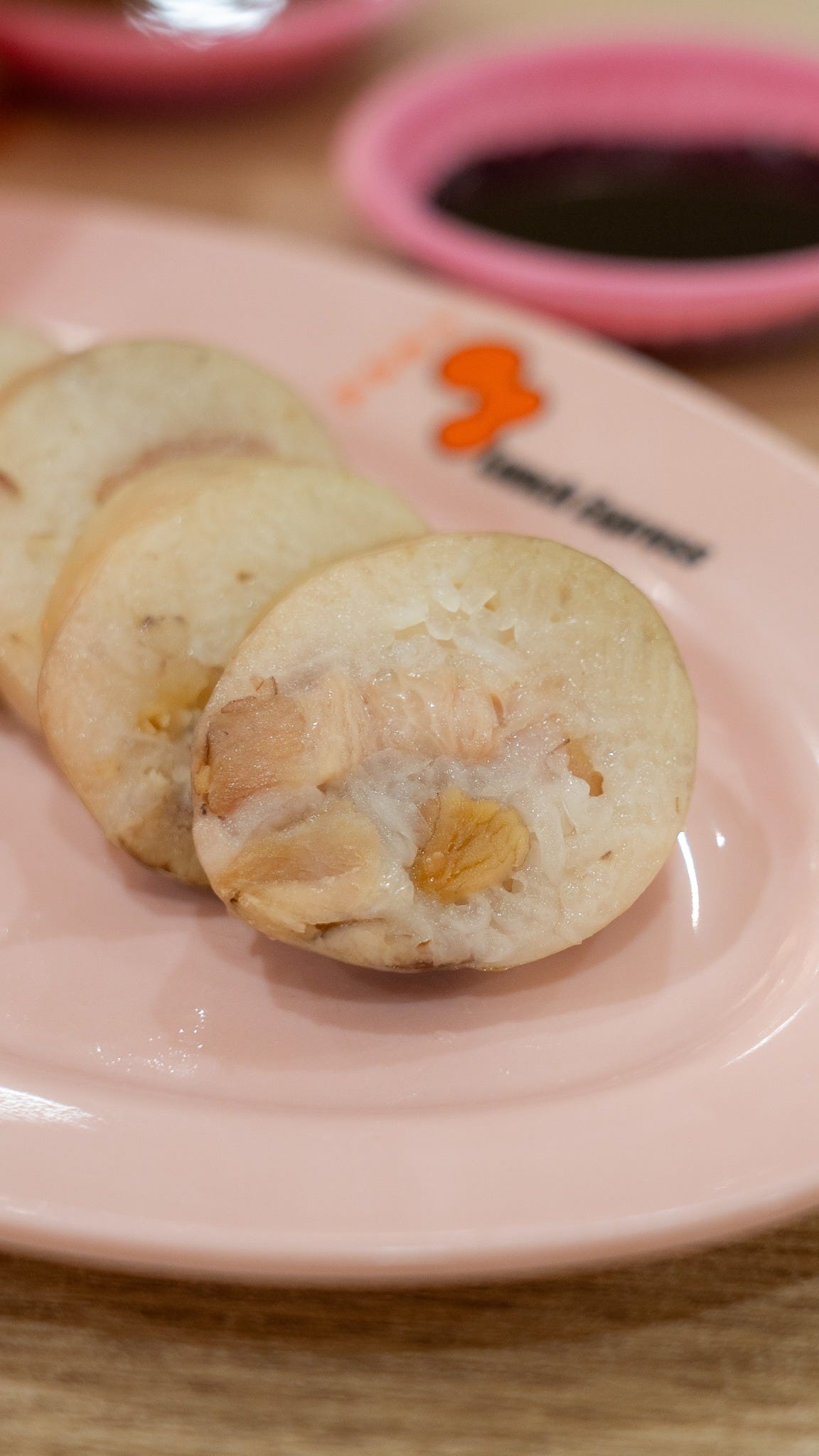
The other dish I’d like to highlight is the pig intestine glutinous rice! It’s like biting into a sausage, but with a chew from the glutinous rice. The ratio of the skin to rice matters, so it’s not just chewy but there is a bite too! Honestly, I prefer this pairing with the soup over plain white rice! According to auntie, labourers in the past chose this combination because it’s not too filling for breakfast. Her tip is to eat it with a dip of sweet sauce and chilli on the side, and I couldn’t agree more! It kinda brings out the porky taste a little more and adds a touch of sweetness which I enjoyed.
The Price of a Bowl
After a day with Thomas, I felt guilty as a customer for taking hawkers for granted. I cook for myself at home, so I sometimes compare the price I am paying against what it would cost me to make, and I always conclude that I can do it better at home. But at Koh Brother’s, there is something more at stake. Thomas put it nicely: he’s holding a piece of history and hawker culture in this store. When it closes, that is also the end of the chapter of his family’s legacy, and I get it. There is so much weight to this name that letting go isn’t easy, even when the work is hard or people are losing interest.
So next time when you are at a hawker centre, maybe think again: am I just getting food to fill my belly, or am I supporting a culture that is rich and uniquely part of Singapore? I can’t imagine a day when all hawker centres in Singapore are filled with franchises and plain, boring staple food. What do you think?
Ah, as for my dream of being a hawker? I think I’ll keep fantasising for now.
watch the video over here:
looking for some inspiration, check out our recipes below:
day one of preserving my grandma’s recipe: pig trotter vinegar

here is how my grandma makes her famous pig trotter at home
Mdm Aishah's Nasi Rawon - a hearty beef soup from across the Archipelago

our recent feature on a neighbourhood Malay hawker stall in eastern Singapore offered a rewarding opportunity to uncover the stories, traditions, and culinary heritage behind one of the community’s mos…